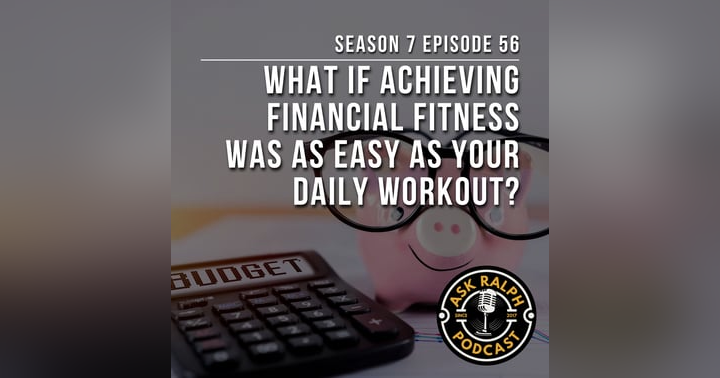
What If Achieving Financial Fitness Was as Easy as Your Daily Workout?


Feeling overwhelmed by your finances? You're not alone! Today, we're diving into how managing your money can be as easy as sticking to a daily workout routine. Just like getting fit takes consistent effort, so does achieving financial fitness. I’m here to share some practical steps that can turn your financial worries into strengths, and trust me, it’s all about those small daily changes! So grab your favorite drink, settle in, and let’s get ready to tackle those money challenges together and start achieving financial fitness!
Check out the full podcast episode here
Feeling like your finances are a never-ending rollercoaster? Trust me, you're not alone! In this episode, we dive into the world of financial fitness, and boy, it's just like hitting the gym. You don’t just wake up one day with a six-pack; it takes sweat, determination, and a solid routine! Our financial evangelist, Ralph Estep Jr., shares practical tips that can transform your financial life from ‘whoa, what’s happening?’ to ‘I got this!’ We explore how small daily steps, like packing your lunch or brewing coffee at home, can save you big bucks. And just like that daily jog to the mailbox, these small actions can lead to a more robust financial health. So, if you’re ready to flex those financial muscles, this episode is your workout plan!
Podcast Timestamps:
00:00 Episode Overview
02:14 Listener Question: Emily's Financial Struggles
03:04 If You Have A Question You'd Like Answered, Head Over To https://justaskralph.com/
03:17 Live Show Reminder: https://askralphpodcast.com/live
03:43 Bible Verse - Matthew 6:21
04:40 Today’s Gratitude Statement
04:55 Ralph’s Personal Story: Overcoming Physical Challenges
12:02 Daily Saving Strategies: Small Steps to Financial Fitness
23:36 Practical Tips: Building Financial Momentum
31:46 Practical Steps for Prioritizing Needs vs. Wants
43:20 Visit https://www.askralphpodcast.com/blog/ for Free Financial Resources
43:39 Reflection Questions
47:00 You Can Support the Show by Visiting https://askralphpodcast.com/support
48:47 Tomorrow's Topic
49:07 Closing
Takeaways:
- Feeling overwhelmed by finances? You're not alone, and there are ways to tackle it!
- Managing your money can and should be as easy as your daily workout routine, trust me!
- By making small, daily changes, you can build your financial fitness and strength over time.
- Aligning your financial decisions with your values can lead to peace of mind and freedom!
- Daily efforts toward financial fitness can transform your financial future just like physical fitness!
- Ask yourself: what's one small financial change you can make today that could mean big gains later?
Links referenced in this episode:
- Ask Ralph Blog https://www.askralphpodcast.com/blog/
- Support the Show https://askralphpodcast.com/support
- Ask Ralph Insiders Community https://mailchi.mp/askralph.com/group
- Ask Ralph Show Live https://askralphpodcast.com/live
- What is your question that you would like to ask Ralph? Send Your Question here: https://justaskralph.com/
- Join our email list and get a free copy of “Mastering Your Finances” at https://askralph.com/
💛 Join the Financially Confident Christian Community
If today’s episode encouraged you, we’d love to invite you to be part of something bigger — the Financially Confident Christian Community.
This is where faith and finances come together — a growing family of believers supporting one another, sharing encouragement, and helping spread God’s truth about money.
Your membership helps keep the show free for everyone while funding new devotionals, study guides, and outreach resources.
👉 Learn more and join the mission at financiallyconfidentchristian.com/join
Together, we’re helping believers everywhere break the cycle of financial shame and live with confidence in Christ. 🙏
Get Ralph's Book on becoming a Financially Confident Christian financiallyconfidentchristian.com/becoming
WATCH NOW ON YOUTUBE (OUR VIDEO VERSION)
WATCH NOW ON RUMBLE (OUR VIDEO VERSION)
Please share our Podcast with all your friends and family!
Submit your questions or ideas for future shows - email us at
ralph@askralph.com or leave a voicemail message on our podcast page
Mentioned in this episode:
Post roll for Book Becoming
Thank you for listening to the Ask Ralph podcast. We encourage you to follow us on our social media pages and rate our show. For more information about the topics discussed on the podcast visit Saggio Accounting+PLUS.
00:00 - Untitled
00:27 - Untitled
00:28 - Transforming Financial Health: A Daily Approach
00:58 - Introduction to Financial Freedom
01:38 - Transitioning to Financial Fitness: Small Steps for Big Changes
49:43 - Introduction to Financial Guidance
Are you constantly feeling overwhelmed by your finances?
Speaker ADo you wish there was a simple daily routine that could help you get your financial life in shape?
Speaker AJust like a daily workout routine helps you stay physically fit, Imagine if managing your money was as straightforward as your daily exercise.
Speaker AWell, today I'm going to uncover practical steps that can transform your financial well being.
Speaker AJust like a workout, transform your physical health.
Speaker ASo if you're ready to turn your financial worries into financial strength, stay tuned.
Speaker BIn a world where crushing debt keeps you trapped, where living paycheck to paycheck has become your new normal, and where the dream of retirement seems impossibly out of reach, there's hope.
Speaker BJoin financial evangelist Ralph Estepp Jr.
Speaker BA man who's walked through the fire of financial failure and emerged stronger on the other side.
Speaker BWelcome to Ask Ralph, the show where real world experience meets biblical truth.
Speaker BTo break the bondage of financial despair, get ready to take an control of your money, break free from the financial stress and align your resources with God's purpose for your life.
Speaker BThis is Ask Ralph with Ralph Estepp Jr.
Speaker AWelcome to the show where we talk about mastering your finances from a Christian perspective.
Speaker AI'm your financial evangelist and today we're diving into a fascinating question.
Speaker AWhat if achieving financial fitness was as easy as your daily workout?
Speaker AWe're going to explore the steps you can take to improve your finances daily, just like a workout.
Speaker AOur main question today is what if achieving financial fitness was as easy as just getting in that daily workout?
Speaker AWell, thank you for joining me on today's show.
Speaker AI'm excited to help you find the answers you need to master your finances and grow in your faith.
Speaker ANow yesterday we talked about being overwhelmed by your tax prep and how to decide between software and an accountant with confidence.
Speaker AIf you missed it, be sure to check it out.
Speaker AYou can check out all of our episodes@askralph.com because yesterday's was packed with helpful tips to help you get through and thrive during tax season.
Speaker AWell, now let's get into today's topic.
Speaker AI received a message from Emily.
Speaker AShe's struggling with her finances and this is what she wrote.
Speaker AShe said, dear Ralph, I feel like I'm always playing catch up with my bills and never saving enough for the future.
Speaker AIt is so overwhelming.
Speaker AI exercise daily to stay physically fit, but I wish managing my money could be just as straightforward.
Speaker ADo you have any tips on how I can improve my financial situation daily, just like a workout routine?
Speaker AWell, Emily, I hear your pain and many of us deal with this same pain of managing finances and it can truly be overwhelming.
Speaker ABut I've got great news for you today.
Speaker AI have hope for you today.
Speaker AI'm going to share some concrete ways to help you overcome your financial struggles and more importantly, build a stronger financial future.
Speaker AAnd remember, if you've got a question just like Emily and you'd like me to answer it on the show, go to just ask Ralph.com because I'm here to help you with your financial questions.
Speaker AThat is the whole point of the Ask Ralph show.
Speaker AAnd don't forget to join us every Tuesday at 1pm Eastern time when I take the show live.
Speaker AThat's right.
Speaker AYou can get your questions answered in real time.
Speaker AYou can take part in our community.
Speaker AIt is a great time.
Speaker AWe have every Tuesday at 1pm Eastern time.
Speaker AAnd the easiest way to get to that is if you go to ask ralphpodcast.com live and it'll take you right there to it again.
Speaker AThat's askralphpodcast.com live.
Speaker AEmily, let's transition into today's Bible verse because I always like to ground ourselves in scripture and I found a great one.
Speaker AThis one comes to us from the book of Matthew.
Speaker AIt's chapter six, verse 21.
Speaker AAnd it says this for where your treasure is, there your heart will be also.
Speaker ASo Emily, as I thought about your question, I thought about that treasure.
Speaker AYou put a lot of treasure in your daily fitness.
Speaker AYou're putting a lot of effort into that.
Speaker AYou're putting your heart into that.
Speaker AAnd this verse is a powerful reminder that our financial decisions are not just about money.
Speaker AThey're so much bigger than that.
Speaker AThey're about our values and they're really about what we treasure.
Speaker AAnd if we treasure God and His kingdom, then our financial decision should reflect that.
Speaker ALet me say that again.
Speaker AThink about that and think about that deeply.
Speaker AReflect on that.
Speaker AIf we treasure God and His kingdom, then our financial decision should reflect that well.
Speaker AToday I'm grateful for the opportunity to help you align your financial decisions with your faith.
Speaker AEmily I am excited about what I'm going to share today because when we truly focus on what matters, when we focus our efforts on that, we can achieve financial fitness and peace of mind.
Speaker ASo I thought today I'd share a personal story that illustrates how making small, consistent changes can transform your financial well being.
Speaker ANow I've talked about this on the show.
Speaker AI'm going to revisit it today.
Speaker ATwenty years ago, I found myself grossly overweight.
Speaker ANow I'm still a big guy and I was at the doctor.
Speaker AI don't remember why I was at the doctor at the time, he said, ralph, how about getting on the scale?
Speaker AAnd I got on this.
Speaker AThis was a thing I didn't like to do.
Speaker AIt was very embarrassing for me because I was a big dude.
Speaker AGot on the scale, and it's one of those.
Speaker AThose doctor scales where they got the little weight you pull across.
Speaker AAnd I'm watching the nurse, or whoever she was, the tech, and she's moving it over and drops.
Speaker AAnd she moves it over again.
Speaker AIt drops.
Speaker AShe got it over the £400 and it dropped.
Speaker AAnd I'm thinking, I can't believe this.
Speaker AI'm over £400.
Speaker AAnd that was the maximum that the little big.
Speaker AThe big thing went on the scale.
Speaker AAnd she started to slide this other little one at the top over.
Speaker AAnd slowly the scale started to tip up.
Speaker AWell, it got to £420.
Speaker AAnd it was at that moment I realized I had problems.
Speaker AAnd I walked into the doctor's room.
Speaker AThey sat me down and said, the doctor will be right in to see you.
Speaker AAnd before she left the room, she took my blood pressure.
Speaker AWhen a doctor came in, he said, ralph, how are things going today?
Speaker AI said, well, Doc, I gotta be honest with you, I don't feel great.
Speaker AI don't know if I was suffering some.
Speaker ASome kind of sinus infection or whatever it is.
Speaker AAnd he goes, ralph, he says, I gotta be honest with you.
Speaker AYour blood pressure right now is 200 over a hundred.
Speaker AHe said, I should have you go right to the hospital.
Speaker AAnd he said, I just got your lab work back.
Speaker AHe says, you've got type 2 diabetes.
Speaker AYour A1C is almost 12.
Speaker AHe says, listen to me, Ralph.
Speaker AYou need to change the dynamic or you're going to pop.
Speaker AI remember him using that word.
Speaker AI said, that's rough.
Speaker AAnd remember just looking at my two boys when I got home that day from the doctor's office.
Speaker AAnd I said, these kids are young.
Speaker AI think at the time, maybe seven and maybe four years old.
Speaker AAnd here I am, I'm having a hard time walking from one end of the living room to the other.
Speaker AI'm out of breath.
Speaker ANone of my clothes fit.
Speaker AI am just this big guy.
Speaker ABut it was in that tough time that I realized that I had lost complete control of my health.
Speaker AAnd I could have just stayed there in that state and just continued down that path of what was going to come next.
Speaker ABut it was that day.
Speaker AI remember that day very candidly, very vividly.
Speaker AThat afternoon.
Speaker AI said, I need to do something.
Speaker AI need to make a change.
Speaker AAnd I remember that day we were living in a, like a townhouse type house, and we had a pretty long driveway.
Speaker AAnd I said, you know, one of the things I could do.
Speaker AI remember somebody had mentioned this on something I had watched and said, hey, start by just walking to the end of the driveway.
Speaker AJust walk to that mailbox.
Speaker ASo the next morning, I get up, I said, I can do this.
Speaker AI'm gonna.
Speaker AI'm gonna walk to the end of the driveway.
Speaker ANow, if you're a fitness person, if you're somebody that exercises every day, you're like, ralph, big deal.
Speaker AYou walk to the end of the driveway.
Speaker ABut see, I started small.
Speaker AJust started walking to that drive, that end of that mailbox.
Speaker AAnd I did that for a couple days.
Speaker AAnd then I would walk to the end of the driveway.
Speaker AI got to the mailbox, and so I feel pretty good.
Speaker ASo then we had a little cul de sac we lived on.
Speaker AI'd start walking around the cul de sac, and after a few days, that got to feel better.
Speaker AThen after I started doing that, I started going down the street and around the block a little bit.
Speaker AAnd it was a simple routine, but it made a huge difference because over time, I was able to walk more.
Speaker AI was able to start doing strength exercises.
Speaker AI was able to build up my endurance, and I could walk across the room.
Speaker AI could walk up steps without getting out of breath.
Speaker AAnd I noticed that my blood pressure was coming down.
Speaker AI noticed that my weight was coming down.
Speaker AAnd I'll never forget it.
Speaker AI saw this ad for a.
Speaker AA local shelter that my wife and I support.
Speaker AIt's an animal shelter, and they were having a 5K.
Speaker AAnd I said, you know what?
Speaker AIt would be really cool to be able to.
Speaker ATo run a 5k.
Speaker ANow when I do is not running, it's maybe fast walking.
Speaker AAnd I said, you know what?
Speaker AI'm going to sign up for this 5K.
Speaker ASo I signed up for this 5K.
Speaker AAnd I got there the day of the.
Speaker AAnd I had been practicing.
Speaker AI had been jogging here and there.
Speaker AYou know, I'd run for a minute, or what I call jog for a minute.
Speaker AI'd walk for a minute, then I jog for two minutes, walk for two minutes.
Speaker AAnd I said, you know what?
Speaker AI think I can do this.
Speaker AAnd I'll never forget that day.
Speaker AI started off on that 5K, and I said, you know what?
Speaker AI'm going to finish this.
Speaker AI don't care if it takes me an hour to do it.
Speaker AAnd I'm looking at the brochure, there's a Prize for the fastest runner male, a prize for the fastest runner female, and a prize for the fastest family or couple.
Speaker AI can't remember what it was, but that day my goal was pretty simple.
Speaker AI just wanted to finish.
Speaker AI wanted to come across that finish line.
Speaker ASo I started off and I'm jogging and, man, I can just feel it.
Speaker AI'm getting gassed out.
Speaker AAnd I had been jogging a little bit.
Speaker ASo I knew about this point where you get to a point where.
Speaker AAnd if you, if you've ever jogged or run, you get to this point where you're just about ready to stop and then all of a sudden you feel this push and you're able to go farther.
Speaker AAnd yeah, it took me 45 minutes to run that first 5K, but I finished.
Speaker AI finished.
Speaker AAnd see, that was such a success point to, to me.
Speaker AAnd I'm going to fast forward a little bit because I don't want to bore you with the rest of the story, but today I'm just under £300.
Speaker AYes, I've lost over £120.
Speaker AMy blood pressure is under control, my diabetes is under control.
Speaker AAnd I say all that because that physical fitness that I took, it saved my life.
Speaker AAnd yes, it took daily effort.
Speaker AIt's still a daily effort.
Speaker AEvery morning when I get up, the first thing I do, once my feet hit the floor, I start thinking about what is going to be my exercise.
Speaker AThat's the first thing I do.
Speaker ABecause I can't.
Speaker AI don't want to make any excuses for it.
Speaker AI get out there and I walk, or I do the elliptical or I get on the treadmill, I do some kind of exercise.
Speaker AAnd I overcame that struggle by exercising that physical area in my life daily.
Speaker ANow, you might be thinking, ralph, why are you talking about physical health?
Speaker ABecause here's the thing, and Emily, this is the beautiful connection.
Speaker AYou've got to treat your financial health the same way I decided to treat my physical health.
Speaker AIt's got to be that daily effort.
Speaker AAnd it's going to start with small steps.
Speaker AAnd I'm going to talk about that on today's show.
Speaker AI'm going to talk about the things that you can do to start small but start to build that momentum.
Speaker ABut it all started with that walk to the mailbox, your financial physical fitness.
Speaker AAnd I think, Emily, this is a great thing you've tied together.
Speaker AI think this is going to be one of our best shows because I've got some concrete ways today, Emily, that you and anyone else can listen.
Speaker AAnyone else listening can, can get to that daily routine of financial fitness.
Speaker ASo let's get right to it.
Speaker AI put these into categories, and these are just small daily saving strategies to help you get there.
Speaker AJust like I would do.
Speaker AI'd walk to the end of the driveway and walk to the mailbox.
Speaker AAnd like I said, I'm putting these into categories because I want to break them down for you.
Speaker AAnd not all of these going to apply to everybody.
Speaker ABut just bear with me.
Speaker AI'm going to talk about how much you can save on a weekly or a monthly basis by just making some small changes.
Speaker ALet's talk about the area of food and drinks.
Speaker APack your lunch.
Speaker AThis might seem very simple, but instead of buying lunch every day, pack your own lunch from home.
Speaker AAnd hear me on this.
Speaker AStatistics show that you can save around $50 a week.
Speaker AThat's $200 a month you can save just by packing your lunch.
Speaker AHere's one.
Speaker ANow, I don't drink coffee, but brew your own coffee.
Speaker ANow, you know, if you've listened to this show, I'm not a big fan of these places.
Speaker APeople go out and spend 8, 10, $12 on a cup of coffee.
Speaker ABut brew your own coffee at home instead of buying it from a cafe.
Speaker AAnd this could save you anywhere from three to five, maybe $7 a day.
Speaker AAnd that adds up.
Speaker AThat could be 90 to $150 a month.
Speaker AAnd here's one a lot of people don't think about, but it's meal prep.
Speaker APlan your meals for the week and do your grocery shopping accordingly.
Speaker AAnd trust me, my wife and I do this.
Speaker AMy wife is great at putting this together.
Speaker AShe makes great plans for what she's going to cook for the meals.
Speaker ABecause be honest with you, I got so much going on, I don't have time.
Speaker AAnd my wife is such a great support system for that.
Speaker ABut if you plan your meals, if you do that meal prep, this can help you avoid those impulse buys.
Speaker AAnd it's going to ensure that you're using all the food you purchase.
Speaker ABecause in this country, we waste so much food.
Speaker AIt's also going to cut down on the door dashes and the grubhub and let's go out to eat.
Speaker AAnd the final one in this area, and this one I thought was kind of interesting when I did some research.
Speaker AAnd it's refill water bottles.
Speaker AYou're not even think about this one.
Speaker ASo easy to pick up that case of water.
Speaker ABut instead of buying those cases of water, use a reusable water bottle and refill it throughout the day.
Speaker AInstead of buying that bottled water.
Speaker AAnd listen to this one.
Speaker AThis one can save you anywhere from 20 to $50 a month.
Speaker AYou might be saying, ralph, those are small things.
Speaker AYes, they're small things, but think about this.
Speaker AEach one of those, pack your own lunch.
Speaker AThat's $200 a month.
Speaker ABrew your own coffee.
Speaker ALet's say that's $100 a month.
Speaker AThat's $300 a month meal prep.
Speaker AI don't even put a number for that.
Speaker ARefill water bottles.
Speaker AYou could save up to three to $400 a month just in that first category.
Speaker ALet's talk about transportation.
Speaker ANow, depending upon where you live, this might not be possible.
Speaker ABut consider walking or biking to work.
Speaker AYou've got that physical fitness and you got that financial fitness because you're going to save money on gas, you're going to save money on car maintenance.
Speaker ACould save you between fifty and a hundred dollars a month.
Speaker AYou can use public transportation.
Speaker AAgain, this depends on where you live.
Speaker AIf you live out in the country like me, there's no bus services or trolley cars out here.
Speaker ABut that could save you money on gas, it could save you money on parking, could save you money on car maintenance.
Speaker AIt could be one to two hundred dollars a month.
Speaker ALet's focus our efforts now on shopping and purchases.
Speaker AOne of the things my mom used to do, you know, we, like I've said on the show before we grew up, it was tough around our place.
Speaker ABut my mom was the coupon queen.
Speaker ASo use coupons and discounts.
Speaker AYou can get available coupons for all kinds of things.
Speaker AYou're going online and there's all kinds of coupon codes, there's all kinds of things you can download, can save you anywhere from 20 to 50, even a hundred dollars a month.
Speaker AAnother thing I'm going to highly recommend you do is buy in bulk.
Speaker AAgain, these are small steps.
Speaker AGo buy in bulk, purchase non perishable items in bulk when they're on sale.
Speaker AI'm not saying to go buy a hundred pounds of rice, you're probably never going to use that in a year, so be wise in that.
Speaker ABut you can buy things in bulk.
Speaker ANow here's one of Ralph's pet peeves, and that just annoys me how many people pay for subscriptions that they don't use.
Speaker ASo cancel those unused subscriptions, review your subscriptions and cancel any that you don't use regularly.
Speaker ACould save you a ton of money.
Speaker ADepending upon what you're subscribed to, it could be 20, 30, 40, 50, $100 a month.
Speaker ALook over your bank Statement, look over your credit card statement, look over everything, your PayPal accounts, whatever those are.
Speaker AAnd look at those subscriptions.
Speaker ASo many people just set it and forget it.
Speaker AOne of the big culprits of this are those ones that renew annually.
Speaker ASo take a look at those.
Speaker AYou can go into your Apple subscriptions and cancel those things out.
Speaker AAnother great idea in the shopping area is using cashback apps.
Speaker AThere's Rakuten, Ibada and there's all these other ones that you can use when you shop.
Speaker AThey can save you any from 10 to $30 a month.
Speaker AAgain, these are small things.
Speaker AAnother thing you can do, and I have a lot of clients that do this is shop second hand.
Speaker ALook at thrift stores or secondhand shops for clothing or furniture and, and other items.
Speaker AYou don't need to buy.
Speaker AStuff that's brand new.
Speaker AIt may serve its purpose.
Speaker AIn that secondhand store, that thrift store, you may even find something you can't find in the normal things.
Speaker AAnd this was a big one.
Speaker AI talk about this on the show frequently.
Speaker AAvoid those impulse buys.
Speaker AMaybe you set that number that if it's going to be more than X number of dollars, you wait at least 24, 36 or 48 hours.
Speaker AAnd here's an idea that you can use instead of buying it all, maybe you can borrow it.
Speaker ALet's say you need something temporarily.
Speaker AMaybe you have a branch down in your backyard and you need to cut one branch.
Speaker AWell, maybe you ask your neighbor, can I borrow your chainsaw?
Speaker AOr maybe you've got to do some do it yourself projects around the house and you don't have the particular tool that you need.
Speaker AAsk around a lot of the home improvement centers.
Speaker AYou can actually rent tools.
Speaker AWhy buy them?
Speaker ALet's talk about entertainment.
Speaker AThis is what I see a lot of people spending money on and that's those streaming accounts.
Speaker ANow the streaming companies have gotten wise to this, but you can consider sharing those accounts with families or friends.
Speaker AIf you're not the only one that can use it.
Speaker AShare with other people and they pitch in and kind of, you know, pick up the, the cost of that.
Speaker AUse your library's resources instead of buying books and magazines or movies that you can go to your local library.
Speaker AYes, there are still local libraries where you can go get stuff for free.
Speaker AMake sure you turn it back on time or they're going to send you a fine.
Speaker ASo don't do that.
Speaker AHere's another one.
Speaker AHome workouts.
Speaker AInstead of paying for that gym membership, consider doing home workouts.
Speaker AAnd a lot of people say Ralph If I try to do it at home, I don't get it done.
Speaker AThat's fine.
Speaker AThat's an individual decision.
Speaker ABut you could save 30 to $50 a month.
Speaker AThere's.
Speaker AWell, now let's talk about some things you can do.
Speaker AThere's small things you can do in the area of financial management.
Speaker AAgain, we're trying to build that daily financial fitness routine.
Speaker ASo I talked to you about some ways to save money, some ways to keep yourself from spending a lot of money.
Speaker ALet's talk about ways to automate your savings.
Speaker AOne of the big tips I talk about on the show all the time is set up automatic transfers from your checking account to your savings account.
Speaker AEven if it's $5 or $10.
Speaker ADo $5 a day, $5 a week, $10 a day, whatever you can afford.
Speaker AAnd you'll be shocked at how you can transform that into a bigger number by the end of the month.
Speaker AHey, listen, at $5 a day, that's a hundred and fifty dollars a month.
Speaker AThat can help you build that emergency fund.
Speaker ANow, here's another novel idea, and I came up with this one.
Speaker ASomebody shared this with the show the other day.
Speaker AHave.
Speaker AMaybe you designate one or two days a week as no, spend days.
Speaker AYou don't spend anything, you do nothing.
Speaker AYou pack your lunch, you brew your own coffee, you don't do any spending at all.
Speaker ALet's talk about some do it yourself and home projects.
Speaker ANow, if you're like me, you're not very mechanically inclined, but a lot of times you can get through it.
Speaker AYou can watch a YouTube video or something along those lines.
Speaker ASo instead of buying new items and maybe you've got some furniture that's not looking so great, well, maybe you can rehab it.
Speaker AI got a client that does it.
Speaker AShe goes to these places, she buys stuff and then she resells them because maybe she puts a new coat of stain on it or she fixes the handles on the front, whatever those things are.
Speaker AThat can save you a ton of money.
Speaker AAnd it can give you furniture and things for your house that are eclectic or the things that are important to you because you see the amount of effort that you put in.
Speaker ANow here's a pet peeve.
Speaker AI don't hear a lot of people talking about this one.
Speaker AI remember when I was a kid, this was a big thing.
Speaker AI was a 70s kid.
Speaker AI was born in the early 70s, and we had this whole thing about when you leave the room, turn the lights out.
Speaker AWell, guess what?
Speaker AYou can do the same thing.
Speaker AIt floors me when I Go past rooms and the lights on, there's not a person in there.
Speaker ASo make a habit of turning off your lights and turning off your electronics when you leave the room.
Speaker AReduce that electric bill if you've got old light system.
Speaker AIt's one of the things that I've done around my office in the farm here.
Speaker AReplace them with LED technology.
Speaker AMan, those things use almost no electricity.
Speaker AAnd yes, it's not going to be a huge savings, but every little dollar adds up.
Speaker AAnd if you can embrace just a couple of these things, I mean, just a few of them, you are going to save a ton of money.
Speaker AAnd it's just going to be like you're starting that walk just like I did.
Speaker AYou know, I'm this big guy, I'm walking to the end of the driveway, I'm getting to the mailbox.
Speaker AWell, maybe you start by packing that lunch every day.
Speaker AYou start by putting $5 a day into your savings account.
Speaker AI have a client that anytime he gets a five dollar bill, it automatically goes into his savings account.
Speaker AI think that's a novel idea.
Speaker ABut again, it creates that momentum, it creates that habit.
Speaker AAnd if you think about it, just like my weight loss journey was, these small daily saving strategies can help you overcome those financial struggles.
Speaker AIf you've got that habit of paying attention to where your money's going, if you've got that habit of saving, well, in the end that's going to build a stronger future.
Speaker AJust like my weight loss and me getting healthy, it makes it more likely that I'm going to have longevity, that I'm going to grow to see my grandchildren.
Speaker AI'm not going to die early.
Speaker AAnd just like me with the financial or with the physical thing, you know, by making small and they don't have to be huge, you know, for me, it's like I cut out any eating after dinner.
Speaker ADo I like pies and cakes?
Speaker AAbsolutely.
Speaker ABut I saw the impact that had on my health.
Speaker AI saw the impact that I had on my sugar.
Speaker AWell, you can do the same thing with your finances.
Speaker AMaking small, consistent changes can build financial strength and it can build that endurance.
Speaker AWhen I ran that 5k, I had to have endurance.
Speaker AAnd I walked some of it.
Speaker AI jogged some of it.
Speaker AThere were times when I just wanted to walk away and be done.
Speaker ABut I had that endurance.
Speaker AI built up that endurance because I looked back at that walk to the mailbox and then I looked at the walk to the end of the road and I looked at that walk around the cul de sac and that walk around the Block.
Speaker ASo, Emily, if you think about it just like my journey to better health, your journey to financial fitness is achievable.
Speaker AIt requires intentionality.
Speaker ASee, that's the thing about if you put intention into things, it's not going to happen by itself.
Speaker AYou know, no one was going to take me and scoop me off the couch as a couch potato and get me walking or get me paying attention to my health.
Speaker AThe same thing goes along with your financial fitness.
Speaker AYou got to be intentional about it.
Speaker AYou gotta be disciplined about it.
Speaker AAnd the big thing you've gotta do is you gotta make a commitment to making wise financial choices.
Speaker AAnd that's not easy.
Speaker ASometimes we're bombarded with this needs versus wants.
Speaker AIt's such a struggle.
Speaker ASo I'm gonna talk about some tips to assist you in your financial journey.
Speaker AI talked about some simple ways to save money, but let me tell you about some tips that you can implement right now to start building that momentum and that endurance.
Speaker AI always believe the best place to start is with prayer.
Speaker AAnd you hear me, I say this all the time because it's so powerful.
Speaker ABegin your day by seeking God's guidance in your financial decision.
Speaker AYou might say, ralph, wait a minute.
Speaker AYou're talking about faith and finances.
Speaker AAnd yes, I put stuff on YouTube.
Speaker AI put stuff out on Twitter and on TikTok.
Speaker AAnd man, you should see the comments.
Speaker AOh, you can't talk about faith and finance.
Speaker AYou know, those two things don't go hand in hand.
Speaker ABut they do, because the Lord wants us to be prosperous.
Speaker AThe Lord wants us to steward our resources.
Speaker ASo pray for that wisdom every day.
Speaker APray for that discernment.
Speaker APray for him to give you that discipline in managing your resources.
Speaker ASo you might say, ralph, how do I do that?
Speaker AWell, Emily, here's the first thing I want you to do.
Speaker AYou got to monitor your finances.
Speaker AIt starts by making an assessment of where you are and what's going on.
Speaker ASo start your day by reviewing your budget.
Speaker AMaybe you have a weekly budget.
Speaker ALike, I'm going to spend this much on groceries.
Speaker AI'm going to spend this much on utilities.
Speaker ATrack your spending.
Speaker AIf you're not tracking it, you're not going to know where your money's going.
Speaker AAnd then identify where you can cut back and ensure you're allocating your resources according to your priorities.
Speaker ASo you got to set those priorities.
Speaker AYou got to be intentional.
Speaker ASet that intentional spending plan.
Speaker ABut you can have the best plan.
Speaker ABut if you're not tracking it, you're never going to know where you are.
Speaker ASo you got to Keep a detailed record of your expenses.
Speaker APeople think I'm a broken record when I say this, but what gets measured gets done.
Speaker ASo keep track of every single dollar that you spend, because once you start to do that, that habit's going to start.
Speaker AYou're going to be able to look at that and say, okay, here's where my money's going.
Speaker AOh, I didn't realize this was costing me this much.
Speaker AI don't know how many times I've had aha moments with clients when they come in at the end of the year.
Speaker AAnd we've been keeping track of their.
Speaker ATheir financials throughout the whole year.
Speaker AAnd I said, did you realize you spent X?
Speaker AAnd I'm not judging them.
Speaker AThat's not about judgment.
Speaker AIt's about recognizing a trend.
Speaker AIt's like recognizing where their money is going.
Speaker ASo maybe you look at using a budgeting app, maybe a spreadsheet, maybe a simple notebook.
Speaker AI had a client in yesterday.
Speaker AHe's got a little small business where he sells collectibles, and he's not a computer guy, and that's okay.
Speaker AHe's got a notebook.
Speaker AAnd he said, ralph, what am I supposed to be keeping for my business?
Speaker AI said, what's in your notebook?
Speaker AHe says, well, I got this.
Speaker APerfect.
Speaker AIt doesn't have to be elaborate, but categorize your spending and identify areas for improvement.
Speaker ASo that's where it starts.
Speaker AIt starts by monitoring your finances.
Speaker ASecond step to this, you've got to build your savings.
Speaker APart of that daily physical was to build that endurance was to build that gas tank.
Speaker AWell, you've got to do the same thing with your finances.
Speaker AAnd one of the best ways to do that is to build that savings.
Speaker AMake a savings deposit.
Speaker AMake a small deposit in your savings account each day.
Speaker AYou're like, ralph, wait a minute.
Speaker ADid you just say once every day?
Speaker AYes.
Speaker AHere's one of the things I'm going to challenge you to do.
Speaker AAs you notice that you're spending less, as you're making better financial decisions, instead of just leaving that money in that checking account where it's.
Speaker AIt's so you can go spend it, Make a habit of every day, push it out to your savings account.
Speaker AHey, you might be saying, ralph, but yeah, even if it's a dollar, even if it's two dogs, I don't care.
Speaker AStart to build momentum in that.
Speaker ABecause then as that builds, you're going to start to feel, oh, you know what?
Speaker AI could throw $10 today, I could throw $8 today, I can throw $20 today.
Speaker AAnd those little Bits at a time, that's small.
Speaker AThat extra step that I took past the mailbox, the extra step that I took in the cul de sac, just like your savings account, that can build that momentum.
Speaker AOne of the best ways to do that is to automate that.
Speaker ASet up automatic transfers from your checking account to your savings account.
Speaker AJust set it and forget it.
Speaker AAnd that can allow you to consistently save without having to think about it.
Speaker ABecause if you think about it, you're probably not going to do it.
Speaker AEven if it's small, like I said, it could be something that's 10 bucks a week.
Speaker AOver time that builds up, $10 a week is $520 a year.
Speaker A$520 a year is a decent amount to start for an emergency fund that can cover a little odds and ends.
Speaker ASo the first thing, track where your finances are.
Speaker ASecond, say third thing.
Speaker AAnd this is the thing you've got to tackle.
Speaker AYou know, as I started to get more into my physical fitness, I had to start thinking about what I was putting into my body.
Speaker AWell, just like we do that for our physical health, one of the things you've got to look at is starting to manage and eliminating debt.
Speaker ADebt can be a major obstacle to your financial freedom.
Speaker AIt just is.
Speaker AThe bible talks about the borrower being a slave to the lender.
Speaker AWell, if you've got debt, you are a slave to that debt.
Speaker ASo prioritize paying off the high interest debt such as those credit card balance.
Speaker AMaybe you want to talk to somebody about debt management.
Speaker AI've done a ton of shows about this.
Speaker AYou can use the avalanche or the snowball method, but pay attention.
Speaker AManage and eliminate that debt.
Speaker AThat's got to be part of your fitness routine.
Speaker ANumber four.
Speaker AAnd I think this one is crucial as well.
Speaker AYou got to set some financial goals.
Speaker ASo you measured where you are.
Speaker AYou started that savings, started looking at reducing that debt.
Speaker AWell, now set some goals.
Speaker APut that goal.
Speaker ALike my goal was I wanted to get my blood pressure down to a manageable number.
Speaker AI wanted to get my, my blood glucose, my, my A1C.
Speaker AThat's a big number.
Speaker AI actually wear a, a thing right now.
Speaker AIt's a constant glucose monitor.
Speaker AI can look down on my watch right now and see what my sugar is.
Speaker AAnd it helps me make better decisions because I've got a goal.
Speaker AI've got a goal.
Speaker AI want to be.
Speaker AAt this point, I wanted to finish that 5k.
Speaker AI didn't care how long it took me.
Speaker AIt wasn't about the destination, it was about that journey.
Speaker AIt was about Being able to do it well, you've got to do the same thing with your finances.
Speaker AYou've got to build that.
Speaker AThose goals.
Speaker APut those.
Speaker AEverybody's goals are different.
Speaker AYour goals could be something like, I want to build that three to six month of emergency fund.
Speaker AMaybe you've got a goal to pay off your debts.
Speaker AYou want to be debt free.
Speaker AHow to client in yesterday they said, ralph, we're in our mid-40s and we just paid off our mortgage because we don't want to have that debt.
Speaker AMaybe you're just starting out, you want to save money to buy a house, or maybe you want to put more into your, your investments for retirement.
Speaker ABut having those specific goals can provide you with direction and it can provide you with motivation for your financial journey.
Speaker ABecause if you don't know where you're going, I use this analogy all the time.
Speaker AIf you want to take a trip, you got to start by understanding where you are and then you got to see where that destination is and you got to figure out how to get to there.
Speaker AWell, that's what this is all about.
Speaker APut those goals together.
Speaker AOne of the things I talked about there is building an emergency fund.
Speaker AYes, it's like a broken record, but this is the thing I see that that derails people.
Speaker AIt absolutely derails them in their financial fitness routine.
Speaker ABecause life is full of surprises and there are unexpected expenses that can happen at any time.
Speaker AListen, people go through car issues.
Speaker AI had a client in yesterday, he just bought a brand new house.
Speaker AHe had a brand new roof put on it.
Speaker AWe had a big windstorm come through here and he said, ralph, the top of my house, it's called a ridge event, started to come off.
Speaker AWell, he's got to have some money to fix that.
Speaker AAnd that emergency fund can help you provide.
Speaker AIt provides you with that financial safety net and it prevents you from going into debt.
Speaker AIt prevents you from hitting that credit card.
Speaker AAnd that is so very crucial.
Speaker ANow, I'm going to park here for a minute because I think this is important too, because this is where a lot of people get stuck.
Speaker AYou've got to learn to prioritize needs over once.
Speaker AYou got to differentiate between those things you need and the things that you want.
Speaker ABecause that's all part of this financial decision journey.
Speaker AIt's all part of that daily fitness routine.
Speaker AReal simple needs are essential for your well being.
Speaker AFood, clothing, shelter.
Speaker AWants are things you desire, but you can live without it.
Speaker AYou've got to learn to prioritize these needs to ensure that you're Allocating your resources to what truly matters.
Speaker AYou might be saying, ralph, that sounds good.
Speaker ABut hey, how do I do that?
Speaker AWell, I'm glad you asked because I've got some great things to share with you right now about how to prioritize these needs and these wants, because this is where a lot of people struggle.
Speaker ASo let's get to some practical steps for prioritizing needs versus wants.
Speaker AThe first thing you've got to do, it all starts here.
Speaker AYou've got to identify your essential needs.
Speaker AAnd when I say identify them, I want you to make a list of those essential needs.
Speaker AYou got to have a place to live, housing.
Speaker AYou got to have utilities.
Speaker AYou got to have water.
Speaker AYou got to have light, you got to have heat, groceries.
Speaker AYou got to eat, and those necessary transportation costs.
Speaker AThese got to be your non negotiables.
Speaker AThese are at the very top of your intentional spending plan or your budget.
Speaker AThese are your absolute essentials.
Speaker AYou can't survive without them.
Speaker AIt's like we can't survive without water.
Speaker AWe can survive without food for a little bit longer, but water is something that is essential to us.
Speaker ASo that's the first thing.
Speaker AIdentify your essential needs.
Speaker AIt's going to help you understand that needs versus wants balance.
Speaker AThe second thing you're going to do is set those financial goals.
Speaker AAnd I've talked about this a couple times, but if you set clear financial goals, and like I said, maybe that's building that emergency fund that's paying off those debts, that's saving for a major purchase, then all of a sudden these goals need to align with your needs and your long term financial well being.
Speaker ALike for example, when I started my physical fitness routine, my need was to get up off the couch.
Speaker AMy need was to put on some shoes and go out and walk.
Speaker AThat was a need.
Speaker ANow, did I want to have the best music to listen to while I was walking shore?
Speaker AThat would have been great.
Speaker AI wanted to have the best clothes and the newest sneakers and all that kind of stuff.
Speaker ABut those were once not means I needed to get up and do something.
Speaker ASo the third thing, once you've done those two things, create that budget.
Speaker AYes, Ralph's going to talk about budgeting again.
Speaker ABut what gets measured gets done.
Speaker ASo develop a budget that allocates your income to covering your essential needs first.
Speaker ALike I said, that's going to be the top.
Speaker AYou're going to start with that.
Speaker AFood, clothing, shelter.
Speaker AThat's where you're going to start.
Speaker ABecause what you might find is even getting to your wants right now in the financial situation you're in is doggone near impossible.
Speaker AThen you got to think about some other things.
Speaker AWe could talk about that on another show.
Speaker ABut start with that budget in mind.
Speaker AStart with that end in mind because you're going to have to fund these needs before you can even consider any kind of discretionary or want spending.
Speaker AAnd then once you figure out your needs, you're not going to like what I'm going to say.
Speaker ABut the next step is to allocate your funds for savings and debt repayment.
Speaker AYou didn't hear me mention once yet.
Speaker AI started off with needs, now I'm into savings and debt repayment.
Speaker ASo after you cover those essential needs, then you gotta allocate funds for savings and for debt repayments.
Speaker AThat's part of building that emergency fund, paying off those high interest debts.
Speaker AThose have got to be your priorities.
Speaker AAnd then once you get to that, then we can finally talk about some discretionary or that want spending.
Speaker AAnd these could be things that you've got to really think about.
Speaker AYou know, you got to think about things like entertainment, dining out, luxury purchases.
Speaker ANow maybe the way you can fund those is you can identify areas where you can reduce or eliminate spending to free up some more money so that you can not have that need.
Speaker AThose needs are met because you found some ways to save money.
Speaker AAnd if you're still meeting your financial goals and I say great, then go to it, do some money for discretionary spending.
Speaker ANow one of the things that a lot of people recommend is what's called the 5030 rule.
Speaker AAnd it basically works like this.
Speaker A50% of your income goes into those essential needs at food, clothing, shelter, all those things.
Speaker A30% goes into discretionary spending.
Speaker AThat's those wants, that's those things that, yeah, I'd like to do this.
Speaker AAnd then 20% goes into savings and debt repayment.
Speaker AIt depends on your situation.
Speaker AYou might not be able to to get to that 50% of your income handling all your needs.
Speaker AMaybe you're struggling, Emma, that may be where you are.
Speaker AYou said you're having a hard time getting, making ends meet.
Speaker AWell, maybe your number is like 9010 or 95 5.
Speaker ABut this can help you maintain that balance.
Speaker AIt can help you maintain that.
Speaker AAnother thing you've got to do is you've got to evaluate your purchases.
Speaker AI talked about this a few minutes ago with that decision at Impulse Buy.
Speaker ABut before you make any purchase, I'm talking about anything.
Speaker AHave a real test, have a little test and say, okay, is this a need or a one?
Speaker AWhen you're at the coffee shop and you're thinking, well, I'd really like to have a mocha.
Speaker AI don't drink coffee.
Speaker ASo I apologize, whatever those things are called, ask yourself, is this a need or a want?
Speaker AI suspect that cup of coffee is a want because your body doesn't need coffee.
Speaker ANow, some people would argue with me and say, ralph, if I don't have my coffee, I'm a bear.
Speaker AYou don't want to see me around that, fine, whatever.
Speaker ABut what I'm saying to you is, is it a need or is it want?
Speaker AAnd then the second step to that is consider whether this purchase aligns with your financial goals and whether it helps build that long term value.
Speaker ABecause if it's a want, evaluate if it's worth the trade off in terms of your financial well being.
Speaker ALike, I, this is where the, the rubber met the road for me.
Speaker ABecause like I said, I love donuts, I love snacks, I love all that kind of stuff.
Speaker AAnd when I finally said, okay, Ralph, I'm sitting at the donut shop or I'm walking.
Speaker AOne of the best places to get donuts around here is the local farmer's market.
Speaker AAnd I'll tell you what it's like.
Speaker AIt's like a crack dealer, man.
Speaker AI go past this donut thinking, I know if you've ever been past one of these.
Speaker ABut like, all these donuts look fantastic.
Speaker AAnd I'm standing there and drools running down my face.
Speaker AI'm thinking about how good that glazed donut's gonna taste.
Speaker AAnd I realized the first question I asked myself, okay, is a need or a one?
Speaker AWell, I've already had breakfast, I don't need this donut.
Speaker ASo it's a one.
Speaker AOkay, great, it's a one.
Speaker AAnd then I have to ask myself the most complicated question of that's all is like, okay, what is this going to be?
Speaker AWhat is the trade off?
Speaker AIs it worth seeing my sugar spike to 300?
Speaker AIs it worth knowing that I'm going to not do good on my diet today?
Speaker AIs it, is it worth trading off maybe a couple more days on the end of my life?
Speaker AAnd I know I'm being dramatic, but you've got to think about your spending in the same way.
Speaker AIf it's going to be a physical fitness routine or a financial health routine, every single spending decision has to be that decision of need versus want.
Speaker AAnd then what is the trade off here?
Speaker AIf you're going to buy that new big screen TV for your living room, are you taking that money out of your Emergency savings?
Speaker AAre you running up a credit card?
Speaker AWhat are you doing?
Speaker AAre you taking out of retirement?
Speaker AYou got to understand those things.
Speaker AAnd what I'm really talking about here is the big term.
Speaker AAnd people in this large society don't like this term.
Speaker AIt's called delayed gratification.
Speaker AWe don't do a very good job of this.
Speaker AWe teach kids at a very young age to get it now and get it right now.
Speaker ABut you, if you're going to build that, that, that physical fitness routine, you're going to have to practice delayed gratification.
Speaker AYou're gonna have to make some time and just wait for those non essential purchases.
Speaker AThose wants are going to have to wait.
Speaker AMaybe I should trademark that.
Speaker AI like that.
Speaker AWait for the once.
Speaker ABut if you have that mentality, if you have that, that predisposition, this can help you avoid those impulse buys and ensure that you're making intentional choices with your money.
Speaker ABecause in the end, that's really what I'm getting at here.
Speaker AThe rear, the real decision between needs and wants is intention.
Speaker AIt's that intentionality of your spending.
Speaker AAnother thing you must do to get past this needs versus want cycle is track your spending.
Speaker ABecause you gotta go back and look at it and say, hey Ralph, you know what?
Speaker AGet that understanding of where your money is going.
Speaker AI, I've seen somebody do this and I thought, this is a great idea.
Speaker AEvery 30 days they write down all their expenses and they put it in the two columns.
Speaker AHere's what I spent on needs and here's what I spent on wants.
Speaker AAnd I go back to that 50, 30, 20 rule.
Speaker AAre you out of balance?
Speaker AAre Your needs at 20% and your wants are at 70%?
Speaker AYou got a problem.
Speaker AAnd then once you make that decision, once you track that spending, then you got to review and adjust it.
Speaker AIt's not a set it and forget it thing.
Speaker AThis is going to take time.
Speaker AThis is going to take effort.
Speaker AJust like me walking to the end of the drive.
Speaker AI keep going back to that, but it's that endurance.
Speaker AIf I had decided when I left the doctor's office that day that tomorrow I'm going to run a 5k, guess what?
Speaker AI would have never been able to do it.
Speaker AI probably would have dropped out of a heart attack because my body wasn't ready for the shock of that.
Speaker AOver time, those little small, consistent walks, all of those things that I did, built up this endurance.
Speaker AAnd then I was able to go back and make better decisions because I could review where I was.
Speaker AI knew what my goals were.
Speaker AI didn't want my kids to be, you know, orphans.
Speaker AI wanted to see my children graduate from college.
Speaker AI wanted to see my, my children have children of their own.
Speaker ANow we're still in that minor 23 and 27, so I haven't even got to that point yet.
Speaker ABut that's what motivates me.
Speaker AAnd so your financials can be a motivator for you.
Speaker ADo you want to struggle in retirement?
Speaker ADo you want to be one of these people who is trying to figure out how they're going to make ends meet?
Speaker AListen, I deal with these people every day in my practice.
Speaker AI was talking with a client yesterday.
Speaker AWe were talking about, I have clients in their 70s that have 30 year fixed rate mortgages that they just started.
Speaker ADo you want that to be you?
Speaker AAnd I'm not judging them, don't misunderstand me, because I don't know what they went through in their life.
Speaker ABut do you really want to be there?
Speaker AAnd so Emily and everyone else, listen, remember this.
Speaker AYou do have the power to overcome your financial struggles.
Speaker AI had the power to overcome my health struggles.
Speaker AI had the power to make those changes.
Speaker AI think I made those before it was too late.
Speaker ANow, do I still suffer ill effects?
Speaker AYes.
Speaker AI'm still a type 2 diabetic.
Speaker AI probably will be the rest of my life.
Speaker AI'm always going to have to pay attention to those things that I eat.
Speaker AI'm going to have to pay attention.
Speaker AYou may be a person that is a compulsive overspender.
Speaker AYou may be a person that says, like a lot of people say, Ralph, I'm not good with managing money.
Speaker AWell, that's your choice.
Speaker AThat's a decision you're making.
Speaker AYou're making a decision to say I'm not good at doing something before I even fathom running a 5k.
Speaker AAnd I'm no marathon runner, don't misunderstand me.
Speaker ABut for me, that was life changing.
Speaker AI could have had a defeatist attitude.
Speaker AI could have said, you know what, Ralph, don't even bother, don't even try.
Speaker AYou're never going to finish.
Speaker ABut you do have the power, Emily, listen to me.
Speaker AYou've got the power to overcome your financial struggles.
Speaker AAnd yes, you can get to that daily financial fitness routine, just like your daily physical fitness routine.
Speaker AAnd if you take just a few of the steps I've talked about today, you can build a stronger financial future and you can achieve what we're all trying to achieve.
Speaker AAnd that's that financial peace of mind.
Speaker AAnd listen, just by doing one or two things today and one or two things this week and one or two things this month.
Speaker AYou're going to start to see real progress.
Speaker AI remember when I first started my fitness routine, it was really cool to be able to walk across the room and not feel like I was out of breath and walk up steps and my kids would look around like, wait, dad just ran around the backyard and never seen that in me.
Speaker AWhen I was, I mean, my kids were young.
Speaker AI was this big dude.
Speaker ALike, I'm always a big guy.
Speaker ALike, I'm not trying to say I'm, I'm, I've reached the destination.
Speaker AYou know, it's for me, it's all about the journey.
Speaker ABut embracing this, taking those daily routines and taking that endurance is going to reduce financial stress.
Speaker AIt's going to build a financial safety net and it's going to help you achieve your financial goals the same way that your daily workout helps you achieve your fun, your, your fitness goals.
Speaker ANow, I went pretty deep today, but if you want to go even deeper, you can check out my blog post.
Speaker AI write a blog article for every show.
Speaker AYou can get that ataskralpodcast.com blog.
Speaker AThat's where I post some great resources.
Speaker AI talk about the references I used in the show.
Speaker ASo again, you can get that@askralphpodcast.com blog well, now let's get to our reflection questions because I always like to spend a few minutes meditating at the end on what we've covered today.
Speaker ASo let's get right to it.
Speaker ANumber one of my reflection questions today.
Speaker AWhat is one small financial change you can make today?
Speaker ANot tomorrow, not next week.
Speaker AOne small financial change you can make today that will have a big impact over time?
Speaker AWhat's that one thing?
Speaker AIs it packing your lunch?
Speaker AIs it planning your meals?
Speaker AIs it starting to save even a $2, $3, whatever those things are, what is that one financial change today, small that you can start that momentum?
Speaker AAnother thing I'm going to encourage you to do is my second question.
Speaker AHow can you incorporate gratitude into your daily financial routine?
Speaker AYou might be saying, ralph, what do you mean by that?
Speaker AHere's the thing I'm going to tell you.
Speaker AI said this to my son on Sunday.
Speaker AMy youngest son lives here in town where we're at.
Speaker AMy oldest son actually lives, he's in the Coast Guard.
Speaker AHe lives away from us.
Speaker ABut I said to my son, I said, you know, son, he was, he was belly aching about something was bothering him.
Speaker AI said, have you ever considered how grateful you should be for what you already have.
Speaker AAnd he goes, what do you mean by that, Dad?
Speaker AI said, think about it, son.
Speaker AYou're not worrying about where your next meal is coming from.
Speaker AYou've got.
Speaker AYou've got a food, you got clothing, you've got shelter.
Speaker AThere are people in this world that don't have running water.
Speaker AThere are people in this world that are ducking bullets.
Speaker AThey're living in war zones.
Speaker AHave some gratitude.
Speaker AYou can do the same thing with your finances.
Speaker AThank God every day and be grateful for what he's given you.
Speaker AHe's already given you so much.
Speaker AIf you live right now in the culture we're in, especially in the United States, if you're listening somewhere else, I can't speak to that.
Speaker ABut in the United States, most people are living a place where they're really in pretty good shape financially.
Speaker ASo incorporate that gratitude.
Speaker AStart by starting the day with that prayer and being thankful for what you have.
Speaker AAnd the third thing I want to answer my reflection questions.
Speaker AWhat financial goals are you most excited about achieving and what steps will you take to get there?
Speaker AAfter listening to this or watching this, what is the thing you're like, Ralph?
Speaker AOh, yes, right.
Speaker AI'm going to start that savings plan or I'm going to start keeping track of my expenses.
Speaker AI'm going to write that budget.
Speaker AI'm going to write that intentional spending plan.
Speaker AI'm going to pay down debt.
Speaker AWhat is that one thing that you can do that you're excited about?
Speaker ASo start doing it for me.
Speaker AIt was getting in shape.
Speaker AIt was running that 5K.
Speaker AWhat is that thing for you?
Speaker AIt will motivate you.
Speaker AAnd if you're feeling overwhelmed by your finances, you might be saying, ralph, I hear what you're saying, but, man, I need some help.
Speaker AI need some guidance.
Speaker AI can't do this on my own.
Speaker AI'm going to encourage you to book a call with me.
Speaker AJust go to askralph.com you can click on.
Speaker ABook a call with me and I'll work with you.
Speaker AI'll sit down with you one on one.
Speaker ADoesn't matter where you are.
Speaker AWe can do it in person.
Speaker AWe can do a zoom call.
Speaker AWe can do a phone call.
Speaker AWhatever works for you.
Speaker ALet me come alongside you.
Speaker ALet me help you start that journey.
Speaker ALet me help you start making that walk to the mailbox.
Speaker ALet me help you start making that walk around the block or around the cul de sac, and then we'll work to get to that 5k for you, whatever that looks like.
Speaker AI'll help you create a tailored Plan that can to can meet your unique situation, your goals, your dreams, your aspirations.
Speaker ALet me help you achieve that financial success.
Speaker AAnd it all starts with you booking that call@askralph.com and if you find value in the Ask Ralph show, I want to ask you to consider supporting it by buying us a virtual cup of coffee.
Speaker ANow like I've said before, no one's going to show up in here with a tray of coffee.
Speaker ALike I said a few times in the show, I don't drink coffee.
Speaker ABut it's a virtual way to support the show.
Speaker AAnd you might be saying, ralph, why do I do that?
Speaker AWell, here's why.
Speaker ABecause those people who are supporting the show are part of our community and they help us reach more people.
Speaker AThey help us reach more people with a message of hope, with a message of, you know, not despair, of.
Speaker AThere's, there's, there's, there's ways to get past this, that, that Christian faith, that Christian hope.
Speaker AAnd you can play a part in that.
Speaker AYou can be a member of the team by going to ask Ralph podcast.com support and consider that.
Speaker ADo you want to be a member of the team?
Speaker ADo you want to help us reach more people?
Speaker ADo you want to help us change lives?
Speaker AConsider that support, it can be a one time support, it can be a recurring support, whatever you feel compelled to do, again, you do that by going to ask Ralph.com/support.
Speaker AAnd remember this, if you don't take away anything else from today, this is not a sprint.
Speaker AAchieving financial fitness is a journey, just like my physical fitness.
Speaker AAnd your physical fitness is a journey.
Speaker AIt's not a destination.
Speaker AThere isn't some finish line.
Speaker AThere was a finish line on that 5K.
Speaker ABut listen, now, I was just getting started.
Speaker AAnd if you can incorporate daily financial we'll call them workouts into your routine and apply those biblical principles, you can make significant progress towards your goals.
Speaker AYou can and you will.
Speaker AYou just have to take that first step.
Speaker AYou got to get off the couch, you got to make that first step.
Speaker AYou got to take that, start that momentum.
Speaker ANow tomorrow we're going to talk about something a little bit similar to today.
Speaker AWe're going to be discussing a fantastic topic.
Speaker AI got a question from a listener and that is this.
Speaker AShould you always pay cash when you buy something or is there a better way?
Speaker AI'm not going to give you any spoilers, but tomorrow I'm going to break it down.
Speaker AWhen you should pay cash, when you shouldn't pay cash.
Speaker ASo make sure you tune in and remember this as I close today.
Speaker AMy passion is to help you achieve financial success.
Speaker AI want to see you live out your dreams and I want to see you grow in your faith.
Speaker AAnd I know together, working together, we can master your finances from that Christian perspective.
Speaker ASo as they're always on the show, stay financially savvy out there and may God bless you abundantly.
Speaker BThank you for joining us on the Ask Ralph show, and with a simple click to subscribe, we'll invite you back to our next episode.
Speaker BAnd remember, financial issues don't have to be complicated.
Speaker BJust Ask Ralph.
Speaker BThe information contained in this episode of Ask Ralph is based on data available as of the date of its release.
Speaker BSagio Accounting plus and Ask Ralph Media, Inc.
Speaker BIs under no obligation to update this content if changes occur.
Speaker BApplying this information information to your specific situation requires careful consideration of all facts and circumstances, and any information provided is not to be considered as financial, tax, or legal advice.
Speaker BPlease consult your tax advisor or attorney before acting on any material covered.