
She Lost Everything by 46. Here's Why Her Retirement Plan Still Works

She Lost Everything by 46. Here's Why Her Retirement Plan Still Works
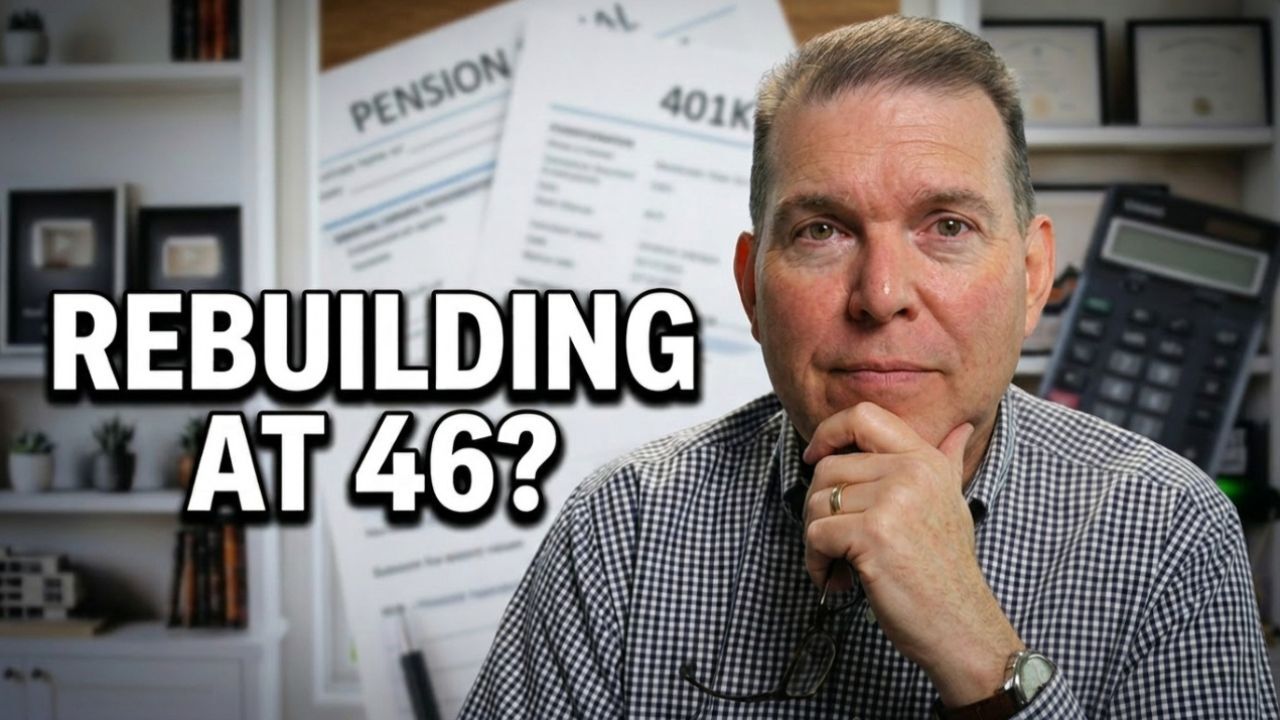
A woman wrote in this week asking if it's too late to start saving for retirement at 46, and by the time you finish her letter, you'll wonder how she's still standing, let alone asking smart questions about her 401(k). Divorce. Reconciliation. Bankruptcy. Two cancer diagnoses eight months apart. She cashed out her retirement savings just to keep the lights on during treatment. And now, on the other side of all of it, she wants to know if there's still time to build something. There is. And the math behind it surprised even me. She Lost Everything by 46. Here's Why Her Retirement Plan Still Works
The letter
Here's roughly what she told me. She's 46, working a new job that pays $85,000. Her husband teaches, bringing in $50,000. Combined, that's $135,000 a year, which is more than 80% of American households make. After the divorce, the reconciliation, the bankruptcy, and the medical bills from two cancer treatments running at the same time, they're left with a couple hundred dollars at the end of each month. Their mortgage is $2,500 a month with 26 years still on it.
Her new employer matches 5% of her salary for the first two years, then 10% after that. Her question wasn't complicated: is it too late, and if not, what's the minimum she needs to put away?
The number that changes everything
Here's where most people stop doing math and start doing math anxiety instead. Don't. Run the actual numbers.
Five percent of an $85,000 salary is $354 a month. Add the employer match, and that becomes $708 a month going into her account, before she's even hit year three. Hold that for 19 years at a 7% average return, and you land somewhere between $340,000 and $370,000 by age 65. That's not a guess. That's what compound interest does when you give it almost two decades to work.
Then her match jumps to 10% in year three. Same $354 contribution from her, but now the company adds $708 instead of $354. Her account is taking in over $1,000 a month for the bulk of those 19 years.
That's not starting over. That's starting smart, with a tailwind most people her age don't have.
Where the money goes first
Contribute enough to get the full match. Every dollar of that match is a guaranteed 100% return, and you will not find that anywhere else. After the match is secured, any spare dollar goes toward the high-interest debt left over from the bankruptcy years. As that debt clears, the payment that used to go to a creditor goes straight into raising the 401(k) contribution instead. One percent more a year, maybe two. It adds up faster than it feels like it will.
What about that mortgage?
Twenty-six years left on a $2,500 mortgage means payments stretching into her late 60s, and I get why that number alone feels like a verdict. It isn't. Extra principal payments as income grows will chip into the timeline. But the real fix is looking at the whole picture instead of one scary line item. Her new 401(k). Her husband's teacher pension, which she needs to call and get the actual number on. Social Security starting around 65, which anyone can estimate for free at ssa.gov.
One number by itself looks like a problem. Three numbers together usually look like a plan.
What this is really about
She told me finances aren't her strong suit. I'd push back on that. In the middle of two cancer diagnoses and a bankruptcy filing, nobody is thinking about asset allocation. They're thinking about getting through the day. That's not financial illiteracy. That's survival, and it bought her and her husband the time to be sitting here now, asking the right question.
Jeremiah 29:11 says God knows the plans He has for your future, plans for good and not for disaster. No age limit attached to that verse. Not 46, not any age. And Joel 2:25 talks about restoring what was eaten by the swarming locust, the hopping locust, the stripping locust, and the cutting locust. Her locusts had names too. Divorce. Bankruptcy. Cancer. Medical debt. They came anyway, and she's still here.
Today's win
If she's not already enrolled, the move is simple: get into the 401(k) at 5% this week and confirm it with HR. Then write down what that match is actually worth in dollars over a year. Seeing the real number on paper does more to keep someone committed than any pep talk I could give.
So, is 46 too late?
No. Nineteen years of compounding, a match that doubles after year two, and a full retirement picture that includes a pension and Social Security adds up to a real number, not a missed window. She didn't fail her way into this situation. Life happened, and she's rebuilding anyway.

Christian Financial Consulting
Ralph V. Estep, Jr. is a Delaware-based licensed accountant, author, rancher, and media host with more than 30 years of experience in finance, taxation, and small-business leadership. As the founder of Saggio Accounting+PLUS and the creator of the Ask Ralph Media network, Ralph helps entrepreneurs, creators, and everyday families replace money confusion with clarity, confidence, and practical next steps—without shame and without hype.
Ralph’s work blends deep professional expertise with a coach’s mindset and a communicator’s heart. He has held leadership roles across public accounting, financial institutions, law firms, and technology organizations, bringing a rare combination of traditional accounting rigor and modern systems thinking to the people he serves. A graduate of the University of Delaware and Wilmington University (MBA), Ralph is known for turning complex money topics into simple, repeatable frameworks that help people make wiser decisions and build lasting financial stability.
Through Ask Ralph Media, Ralph hosts multiple shows designed to meet people where they are and guide them forward. He is the host of Financially Confident Christian, a daily, faith-based show offering warm, pastoral encouragement for listeners who want peace and practical wisdom with their finances.
He also hosts Truth Unveiled with Ralph, a weekly program that contrasts cultural pressure with biblical truth and invites listeners into deeper spiritual and practical alignment. For small business owners, Ralph leads Grit and Growth Business, spotlighting real sto… Read More

The Real Monthly Cost of Owning a Condo (It's Not Just the Mortgage)