Pension Plus IRA or 403(b): Which One Actually Makes Sense
Ralph Estep Jr. here. Someone from a state agency called me and said, "Ralph, I've got a pension. It's solid. I'm going to get about 75-80% of my final salary when I retire. But now I'm wondering—should I also be contributing to a 403(b)? Or should I open an IRA instead? Is there even a point?" Pension Plus IRA or 403(b): Which One Actually Makes Sense
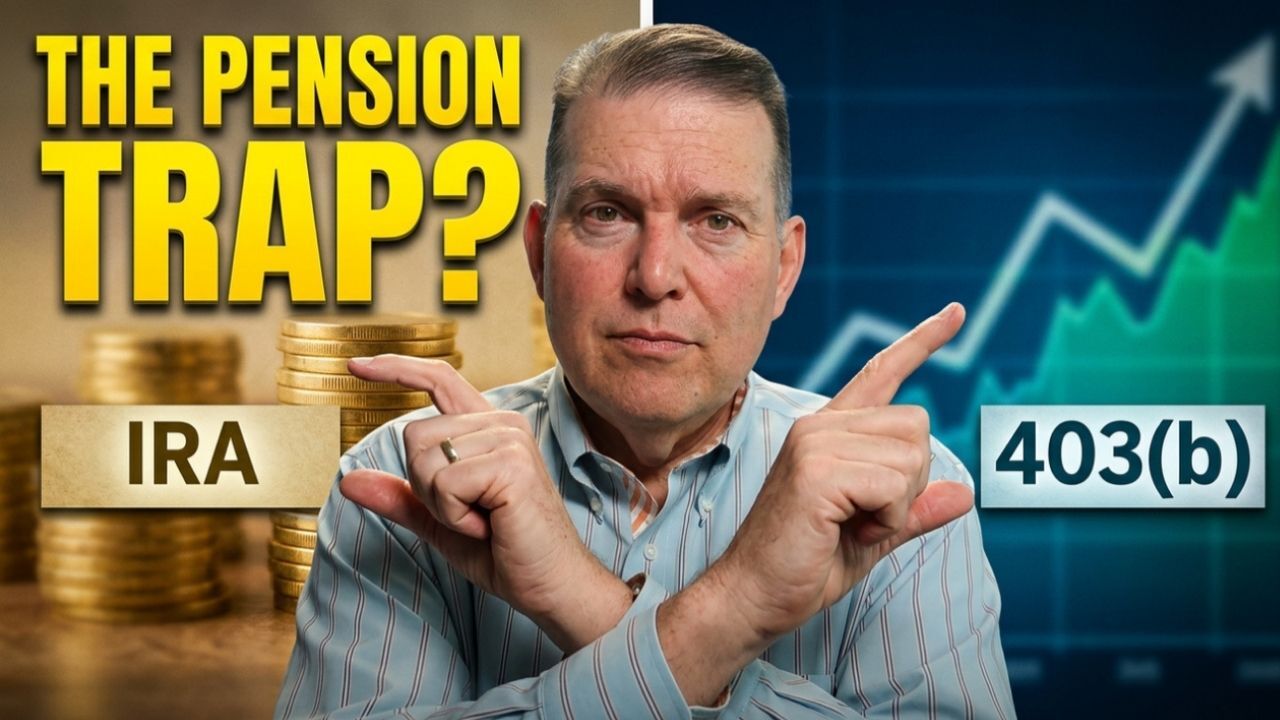
It's a really good question. And it matters more than you think.
First: You're Already Winning
Let me be direct about this: you've got a pension. That's rare. Like, really rare.
Most people have nothing but whatever they can cram into a 401(k) or IRA themselves. You? You're retiring with 75-80% of your final salary guaranteed. That covers your bills. That covers your mortgage (which will probably be paid off by then). That covers food, insurance, and the essentials.
You're not starting from zero like most people. You're starting from a solid foundation.
So the question isn't "do I need this to survive retirement?" You don't. It's "do I want more than surviving?"
The 403(b) vs. IRA Question (And Why It Matters)
Here's the thing: you can't do both. Not in the way you'd want to.
If your employer offers a 403(b), you're covered by it for tax purposes. You can technically open an IRA, but income limits and phase-outs make it messy. Most people in your situation pick one and go with it.
So which one?
Option 1: The 403(b) (Set It and Forget It)
A 403(b) is basically a 401(k) for non-profits and government employees. Here's how it works:
The good:
-
Money comes straight out of your paycheck. You never see it. You never miss it.
-
High contribution limits ($23,500/year if you're under 50; $30,500 if you're 50+).
-
It's automatic. Zero thinking required.
-
Your employer might match. Check if yours does.
The not-so-good:
-
Limited investment options. Your employer picks a handful of funds. You choose from those.
-
Fees can be higher because the insurance companies managing them know you're captive.
-
Less control overall.
The 403(b) is perfect if you like simplicity. Money gets taken out. It grows. You don't have to think about it. Ever.
Option 2: The IRA (Control and Flexibility)
An IRA (whether traditional or Roth, but that's a different conversation) is self-directed. You open it, you pick the provider, you choose the investments.
The good:
-
You can invest in anything: stocks, bonds, ETFs, mutual funds, and index funds. Thousands of choices.
-
Fees are usually lower because there's competition. You can shop around.
-
You control the money. Not your employer.
-
You can take it with you if you leave the job.
The not-so-good:
-
You have to actually do it. Open the account. Pick the investments. Monitor it (or don't, but you could).
-
Higher contribution limits ($7,000/year if you're under 50; $8,000 if you're 50+).
-
You have to discipline yourself to actually contribute.
The IRA is perfect if you like control and don't mind a little thinking.
Which One, Actually?
Here's my honest answer: it depends on you.
If you're the type of person who sets up the automatic transfer and never thinks about it again, the 403(b) wins. You'll max it out without effort. It'll grow. You won't stress about whether you picked the right fund.
If you're the type of person who enjoys picking investments, researching funds, and optimizing things, the IRA wins. You'll have more choices. You'll probably get lower fees. You'll have more control.
But here's the real talk: most people should pick the 403(b) because most people don't actually stick with investing if they have to think about it.
Automation beats willpower every single time.
The Real Question You Should Ask
Before you decide, ask yourself this: "If I set this up and forget about it, will I actually fund it?"
If yes, pick the 403(b). Payroll deduction. Done.
If you're the type who likes to tinker, research, and actively manage things, pick the IRA. You'll actually use it.
The best investment is the one you'll actually make.
How Much Should You Contribute?
You've got a pension covering your basics. So this money? This is for the fun stuff in retirement.
Travel. Hobbies. Leaving money to your kids. Giving to causes you care about. Whatever.
Start with whatever you can afford without feeling squeezed. If you do $500/month? Great. If it's $200/month? Still great. Consistency matters way more than the amount.
And here's the good news: because your pension covers the basics, even $200/month growing for 10-20 years becomes real money. Fifty grand. A hundred grand. Depends on returns.
That brings a lot of fun in retirement.
One More Thing: The Backdoor Roth Angle
If you're past the income limit for a traditional IRA (and with a pension, you might be), there's a workaround called the "backdoor Roth." It's legal, but it requires some paperwork.
Don't worry about it yet. But it's worth knowing exists if you go the IRA route.
Here's What I'd Actually Do
If this were my situation:
Pick the 403(b) if your employer offers one. Payroll deduction. Max it if you can. Forget about it.
Contribute enough that you're comfortable. Don't go broke doing it. Remember: your pension already covers your retirement. This is the bonus round.
If your employer doesn't offer a 403(b)? Open an IRA. Contribute what you can. Pick a simple portfolio (like a target-date fund) and don't overthink it.
Either way, you're good. You've got the pension. This is just icing.
The Biggest Mistake People Make
Overthinking this until they do nothing.
The difference between a 403(b) that returns 7% and an IRA that returns 7.2% is tiny. Like, negligible. The difference between starting now and starting in two years? Massive.
Don't wait for perfect. Start with good enough.
One Last Thing
You're not playing catch-up. You're not behind. You've got a pension that most people dream about.
This is about building wealth on top of security. That's a luxury most people don't have.
Don't minimize that. Appreciate it. And then use it as a springboard to do something fun with the extra money.
If you're in this situation—pension in place, wondering what to do next—hit me up at financiallyconfidentchristian.com/question. Leave me a voicemail. Tell me your numbers. Let's figure out what makes sense for you.
The best financial decision is the one you'll actually execute.
Stay financially savvy. Be blessed.

Christian Financial Consulting
Ralph V. Estep, Jr. is a Delaware-based licensed accountant, author, rancher, and media host with more than 30 years of experience in finance, taxation, and small-business leadership. As the founder of Saggio Accounting+PLUS and the creator of the Ask Ralph Media network, Ralph helps entrepreneurs, creators, and everyday families replace money confusion with clarity, confidence, and practical next steps—without shame and without hype.
Ralph’s work blends deep professional expertise with a coach’s mindset and a communicator’s heart. He has held leadership roles across public accounting, financial institutions, law firms, and technology organizations, bringing a rare combination of traditional accounting rigor and modern systems thinking to the people he serves. A graduate of the University of Delaware and Wilmington University (MBA), Ralph is known for turning complex money topics into simple, repeatable frameworks that help people make wiser decisions and build lasting financial stability.
Through Ask Ralph Media, Ralph hosts multiple shows designed to meet people where they are and guide them forward. He is the host of Financially Confident Christian, a daily, faith-based show offering warm, pastoral encouragement for listeners who want peace and practical wisdom with their finances.
He also hosts Truth Unveiled with Ralph, a weekly program that contrasts cultural pressure with biblical truth and invites listeners into deeper spiritual and practical alignment. For small business owners, Ralph leads Grit and Growth Business, spotlighting real sto… Read More
Laid Off With $50,000 Saved. So Why Does It Feel Like Nothing?