How Big Should Your Emergency Fund Be When Layoffs Are Everywhere?
How Big Should Your Emergency Fund Be When Layoffs Are Everywhere?
More than half of employed Americans say they're worried about losing their job this year. Layoff announcements keep showing up in the news, and a lot of them mention AI restructuring specific roles out of existence. So here's the real question: if your job were affected tomorrow, would your savings actually carry you through, or would panic set in immediately?
A listener wrote in facing exactly this. Her company announced restructuring, there's talk of automating parts of her role, and the office mood has been tense for weeks. She has a few thousand dollars saved but has never sat down to figure out if that would actually carry her through a job search, especially with hiring moving slower than it used to.
Here's how to build a real number instead of living with vague dread.
Start With a Starter Fund If You Don't Have One
Don't wait until you can save a full emergency fund before you start. A first $1,000, or something similar, covers everyday surprises while you build toward the bigger goal. This isn't the finish line. It's the floor.
Calculate Your Essential Monthly Expenses
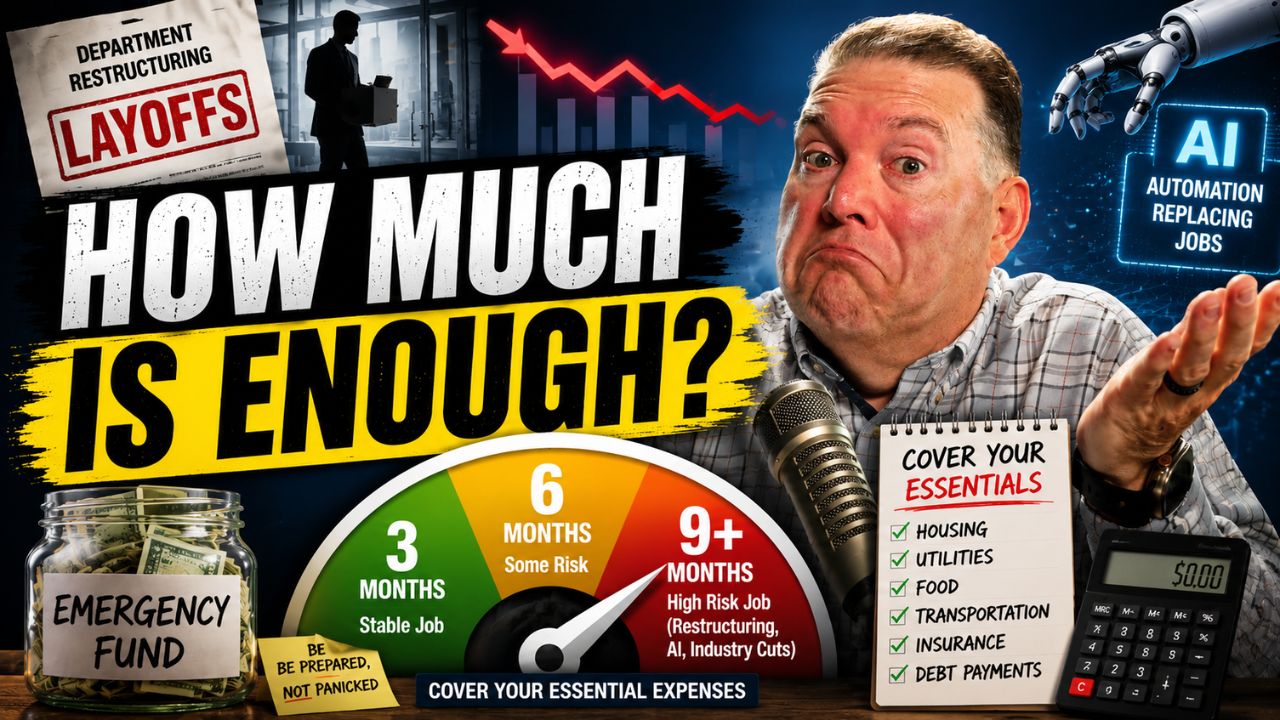
Add up only the necessities: housing, utilities, groceries, transportation, insurance, and minimum debt payments. Leave out the extras for this calculation. This essentials number is the foundation everything else builds on. You don't insure your lifestyle. You insure your essentials.
Factor In How Long a Job Search Might Actually Take
Hiring has slowed noticeably compared to recent years, and many job seekers report searches taking four months or longer. If your role is genuinely at risk of automation or cuts, plan for a longer search, not a shorter one. This isn't about fear. It's about matching your fund to this year's job market, not the market from five years ago.
Stretch Your Target If Your Role Feels Less Secure
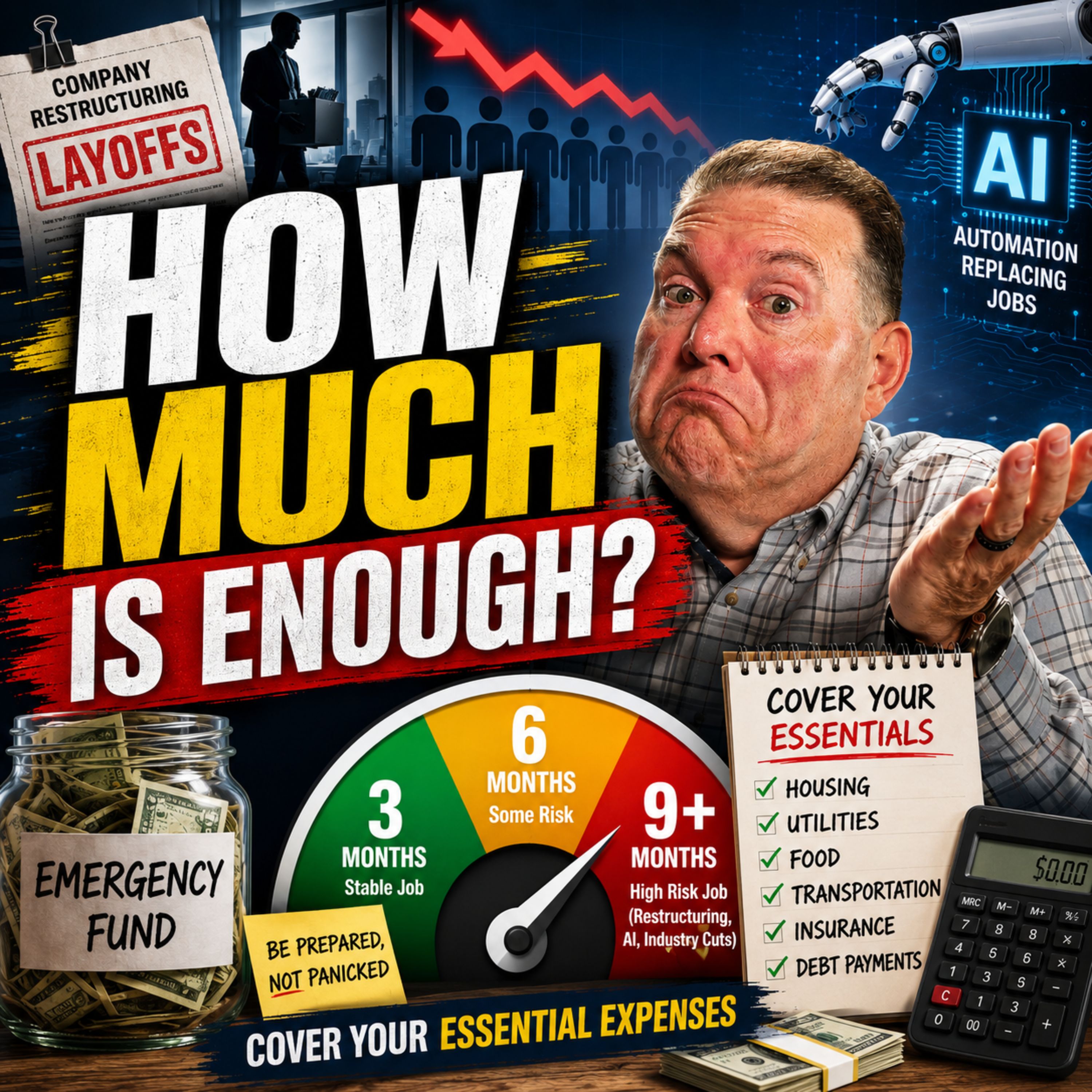
If your job is stable and low risk, three months of essential expenses may be reasonable. If your role has been touched by restructuring, automation, or industry-wide cuts, six months or more gives you real peace. The less certain your job feels right now, the more your fund matters.
Remember What This Fund Is Actually For
An emergency fund exists for job loss, medical emergencies, and major home or car repairs. It's not for vacations, holiday shopping, or a comfortable cushion for everyday spending. If you do lose your job, this is exactly why you built the fund. Use it without guilt, then rebuild it once things stabilize.
A Word on Faith and Preparation
Proverbs 6:6-8 says to take a lesson from the ants, who labor all summer gathering food for winter, without anyone forcing them to. They prepared before the need arrived, not after. Building your fund now, while you still have a paycheck, is exactly this kind of preparation. Preparing for tomorrow doesn't mean you're doubting God. It means you're faithfully stewarding what He's already provided today.
Today's Win
Calculate your essential monthly expenses this week. List only necessities and total the amount. Multiply by three, then stretch to six if your role feels genuinely at risk right now. A real number turns background anxiety into a concrete, achievable goal.
Have a financial question of your own? Send it to financiallyconfidentchristian.com/question, or leave a voicemail at financiallyconfidentchristian.com/voicemail and Ralph might answer it on the show.

Christian Financial Consulting
Ralph V. Estep, Jr. is a Delaware-based licensed accountant, author, rancher, and media host with more than 30 years of experience in finance, taxation, and small-business leadership. As the founder of Saggio Accounting+PLUS and the creator of the Ask Ralph Media network, Ralph helps entrepreneurs, creators, and everyday families replace money confusion with clarity, confidence, and practical next steps—without shame and without hype.
Ralph’s work blends deep professional expertise with a coach’s mindset and a communicator’s heart. He has held leadership roles across public accounting, financial institutions, law firms, and technology organizations, bringing a rare combination of traditional accounting rigor and modern systems thinking to the people he serves. A graduate of the University of Delaware and Wilmington University (MBA), Ralph is known for turning complex money topics into simple, repeatable frameworks that help people make wiser decisions and build lasting financial stability.
Through Ask Ralph Media, Ralph hosts multiple shows designed to meet people where they are and guide them forward. He is the host of Financially Confident Christian, a daily, faith-based show offering warm, pastoral encouragement for listeners who want peace and practical wisdom with their finances.
He also hosts Truth Unveiled with Ralph, a weekly program that contrasts cultural pressure with biblical truth and invites listeners into deeper spiritual and practical alignment. For small business owners, Ralph leads Grit and Growth Business, spotlighting real sto… Read More

Is Your Work Life Insurance Actually Enough? Here's How to Find Out