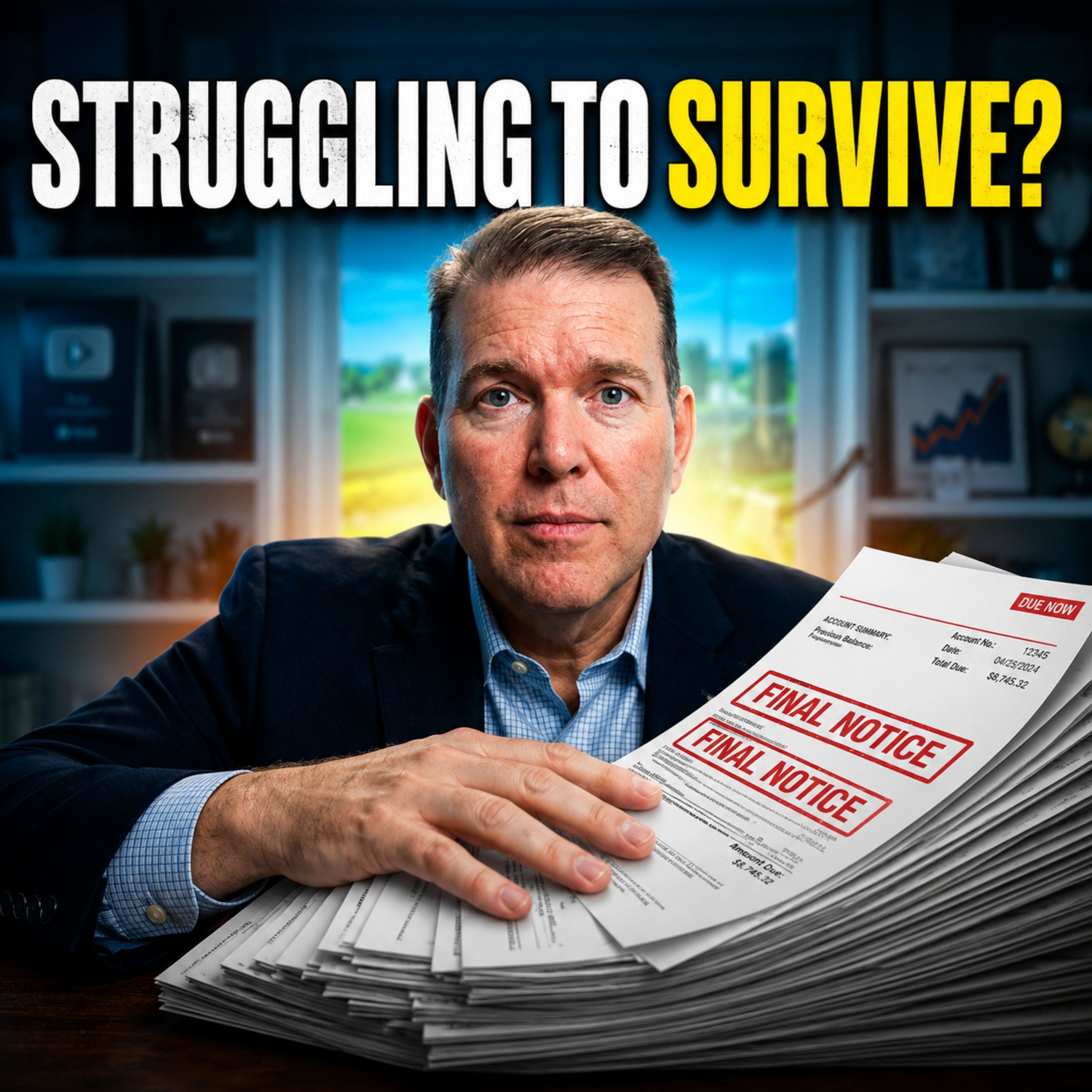
Three Money Situations You're Probably Living Right Now

I'm Ralph Estep Jr., and every week on Financially Confident Christian Live, we sit with the hard money questions most people are too embarrassed to ask out loud. Today I'm walking through three listener situations that a lot of people quietly live with: surviving on a tight income, feeling financially behind in your 30s, and figuring out whether to file taxes jointly or separately. Three Money Situations You're Probably Living Right Now
No judgment here. Just an honest conversation.
How do you survive financially when you're broke right now?
A travel nurse wrote in recently. Her husband is still in school. She has a toddler. Another baby on the way. She wanted to know how her family gets through one more year on a single income.
First thing I told her: you're doing more right than you think. The bills are getting paid. Your spouse is investing in a future income. That's not failure, that's hard work with a finish line.
Here's what I'd actually do in that situation:
Check eligibility for WIC and local food banks. A lot of people skip these because they feel like they shouldn't need help. That's financial shame talking. These programs exist exactly for this season of life. One phone call could free up $200- $300 per month.
Look into your hospital's employee assistance program. Many healthcare employers have emergency funds or interest-free loan options that most employees don't know about.
Write down the end date. This season has a limit. When your husband finishes school and his income comes in, the math changes completely. Keeping that date visible makes the in-between feel survivable.
I'm 36, single, in debt, and feel completely behind. Where do I even start?
This listener has $10,000 saved, a job she hates, student loans, and no retirement savings. She wanted to know where to start when everything feels urgent at once.
Here's what I said: stop measuring yourself against people who had a head start. Some of your peers who look financially ahead had parents who paid their tuition, gave them down payments, or bailed them out at 25. That's not the same race you've been running.
$10,000 saved on your own, while carrying debt, while working a job that drains you? That took discipline. Don't minimize it.
Now, the practical steps:
Don't try to fix everything at once. Pick one. My suggestion is to bring that emergency fund to $15,000 first. Three to six months of expenses as a buffer keeps one bad month from becoming a financial disaster.
If your employer matches 401 (k) contributions, contribute at least enough to get the full match. That's part of your compensation. Leaving it on the table is turning down a pay raise.
Look into income-driven repayment plans for your student loans. Depending on your loan type, your monthly payment could drop significantly. That breathing room matters when you're also trying to save.
Should we file taxes jointly or separately?
This one comes up constantly, and the honest answer is: it depends. The difference can be significant enough that guessing wrong costs you money.
The main tension is this. Filing separately can lower your income-driven student loan payments because repayment is based on individual income. Filing jointly usually means a lower tax bill overall. Which one wins depends on the actual numbers in your specific situation.
My advice is simple: hire an accountant or tax professional to run both scenarios before you file. The cost of one session is almost always less than the cost of picking the wrong one. Don't guess at this one.
Every week on FCC Live, we come back to the same truth: financial struggle is not a character flaw. It's a circumstance. Survival right now is success. Starting to save anything is courage. Making financial decisions as a couple is a partnership.
We go live every Friday at 1:00 PM Eastern. Join us at financiallyconfidentchristian.com/fcclive or find us on your favorite platform. Bring your questions. We'll work through them together.

Christian Financial Consulting
Ralph V. Estep, Jr. is a Delaware-based licensed accountant, author, rancher, and media host with more than 30 years of experience in finance, taxation, and small-business leadership. As the founder of Saggio Accounting+PLUS and the creator of the Ask Ralph Media network, Ralph helps entrepreneurs, creators, and everyday families replace money confusion with clarity, confidence, and practical next steps—without shame and without hype.
Ralph’s work blends deep professional expertise with a coach’s mindset and a communicator’s heart. He has held leadership roles across public accounting, financial institutions, law firms, and technology organizations, bringing a rare combination of traditional accounting rigor and modern systems thinking to the people he serves. A graduate of the University of Delaware and Wilmington University (MBA), Ralph is known for turning complex money topics into simple, repeatable frameworks that help people make wiser decisions and build lasting financial stability.
Through Ask Ralph Media, Ralph hosts multiple shows designed to meet people where they are and guide them forward. He is the host of Financially Confident Christian, a daily, faith-based show offering warm, pastoral encouragement for listeners who want peace and practical wisdom with their finances.
He also hosts Truth Unveiled with Ralph, a weekly program that contrasts cultural pressure with biblical truth and invites listeners into deeper spiritual and practical alignment. For small business owners, Ralph leads Grit and Growth Business, spotlighting real sto…Read More

Embracing financial wisdom: Setting boundaries with love