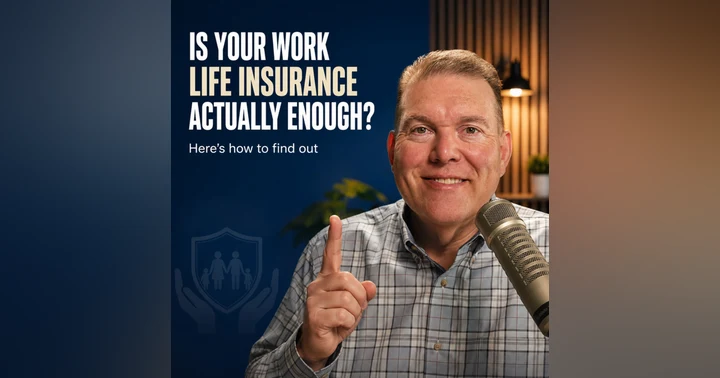
Do I Actually Have Enough Life Insurance, Or Just Whatever My Job Gives Me?


Key Takeaways
- Most workplace life insurance policies only offer a flat amount or one times your annual salary, which often falls short of a family's actual financial needs.
- It is critical to check whether your workplace life insurance is portable so you know if your coverage terminates when you leave your job.
- You can determine your actual coverage needs by calculating your outstanding debts, future expenses like college, and necessary years of income replacement.
- Purchasing an individual term life insurance policy outside of your workplace can effectively fill the coverage gap at an affordable rate.
- Reviewing your life insurance policy annually ensures that changing life circumstances like a new mortgage or a growing family do not leave your loved ones unprotected.
Alright, folks! We're diving into a super important convo today: is the life insurance you snagged through work actually enough? September is Life Insurance Awareness Month, and trust me, you don’t wanna be caught off guard. Do I Actually Have Enough Life Insurance, Or Just Whatever My Job Gives Me? Many peeps think their workplace coverage is solid, but it’s often just a flat amount or one times their salary, which, spoiler alert, might not cut it for your fam. So, let’s get real and figure out what you actually need to protect your loved ones. Stick around as we unravel the truth behind those numbers and how to calculate your real coverage needs without any sales pitch nonsense!
Check out the full podcast episode here
Life Insurance Awareness Month is here, and we’re peeling back the layers of workplace life insurance. A lot of folks believe they’re covered, but reality check: most workplace policies only offer a flat sum or one times your salary, and that’s often not even close to enough for the average family’s needs. We’re here to give you a wake-up call, because if something were to happen to you tomorrow, would that measly amount really carry your family through? We’re not just talking numbers; we’re talking about peace of mind for your loved ones. In this episode, we dive into how to find your true coverage amount and why it’s crucial to not just assume everything's peachy keen. How do you know if you need more? We’ll walk through the steps together! We start by addressing a listener’s dilemma—he thinks he has life insurance through work but has never really checked what that means. Sound familiar? We’ll explore why it’s critical to understand whether that coverage is even portable (hint: most of it isn’t!) and how to calculate your actual needs based on debts, future expenses, and your family’s financial stability. It’s all about having those hard conversations and taking proactive steps to ensure your family is covered. We’ll show you how to get the facts straight and why it’s important to have a life policy outside of work. Let’s not sugarcoat it; this is about being responsible, caring, and making sure you’re not leaving your loved ones in a lurch. So, grab a pen and paper, and let’s figure this out together!
Takeaways:
- September is Life Insurance Awareness Month, so it's time to get real about your coverage.
- Most people think their workplace life insurance is solid, but it often falls short.
- Knowing your coverage isn't just smart, it's a loving act for your family’s future.
- Check if your workplace insurance is portable; if you leave your job, are you still covered?
- Calculate what your family truly needs financially and compare it to your current coverage.
- Make it a habit to review your life insurance annually; life changes, and so should your coverage.
Links referenced in this episode:
💛 Join the Financially Confident Christian Community
If today’s episode encouraged you, we’d love to invite you to be part of something bigger — the Financially Confident Christian Community.
This is where faith and finances come together — a growing family of believers supporting one another, sharing encouragement, and helping spread God’s truth about money.
Your membership helps keep the show free for everyone while funding new devotionals, study guides, and outreach resources.
👉 Learn more and join the mission at financiallyconfidentchristian.com/join
Together, we’re helping believers everywhere break the cycle of financial shame and live with confidence in Christ. 🙏
Get Ralph's Book on becoming a Financially Confident Christian financiallyconfidentchristian.com/becoming
WATCH NOW ON YOUTUBE (OUR VIDEO VERSION)
WATCH NOW ON RUMBLE (OUR VIDEO VERSION)
Please share our Podcast with all your friends and family!
Submit your questions or ideas for future shows - email us at
ralph@askralph.com or leave a voicemail message on our podcast page
Thank you for listening to the Ask Ralph podcast. We encourage you to follow us on our social media pages and rate our show. For more information about the topics discussed on the podcast visit Saggio Accounting+PLUS.
Frequently Asked Questions
Is workplace life insurance enough to protect my family?
For most families, workplace life insurance is not enough because it typically only covers a flat amount or one times your salary, which statistics show would lead to financial hardship within six months.
What does it mean if my workplace life insurance is portable?
Portability means your life insurance policy stays with you even if you leave, get fired, or get downsized from your job. Most standard workplace policies are not portable.
How do I calculate how much life insurance I actually need?
You can calculate your need by adding up your outstanding debts, factoring in future expenses like children's college, and determining how many years of income replacement your family requires, then subtracting existing savings and coverage.
Why should I consider a term life insurance policy outside of work?
An external term life policy ensures your coverage remains active regardless of your employment status and helps close the significant gap between your workplace benefit and your family's true financial needs.
00:00 - Untitled
00:37 - Untitled
00:37 - Understanding Life Insurance Coverage
01:32 - Understanding Workplace Life Insurance
04:31 - Understanding Life Insurance Benefits
09:05 - Reviewing Your Life Insurance Needs
09:47 - Understanding Insurance as an Act of Love
13:54 - Understanding Life Insurance Coverage
Speaker A
September is Life Insurance Awareness Month, and here's a number we're sitting with. Most people who only have coverage to work believe they have enough. But typical workplace benefit is just one times their salary or a flat $20,000.If something happened to you tomorrow, would that number actually carry your family or just get them started? The truth is, a lot of people have never actually looked at their real coverage number.So today's going to be a short, honest gut check, not a sales pitch for life insurance. There's no referral links here, so stay with me today and let's find out where you actually stand with your life insurance.Hello and welcome to Financially Confident Christian. My name is Ralph Estep Jr. And I'm so happy you joined me today. Today's topic is whether workplace life insurance is actually enough.And we're doing this in honor of Life Insurance Awareness Month, which is coming up in September. And we got a listener question that is basically asking what I hear asked all the time, and that is, Ralph, is my coverage enough?And how do I even calculate what enough looks like? Do I need something outside of work?And this is a problem because a lot of people, a lot of people assume their coverage exists and it's going to be enough. And checking that number can feel a little scary to people. I've gone through that process myself.Now, if you've got a question for this show, I would love to answer your question here on the show. You can reach me by going to financiallyconfidentchristian.com/questionWe'll put a link in the show notes, but again, that's financiallyconfidentchristian.com/question Now, let's get right into today's listener question and we're going to start with the subject line because this caught my attention.And right in the subject line, the listener gives it away. This is what he said. He said, I think I have life insurance through work. Now I'm going to stop there for a second.He thinks that's not a good place to be. You got to know, but I've never actually checked. So today we're going to talk about how to figure that out. But let's get right into his question.He says this. Hi, Ralph. I've worked at my company for about six years and I know we get some kind of life insurance benefit through our job.Honestly, I've never looked closely at what it actually covers. I just always assumed it would be enough to take care of my wife and two kids if something happened to me.A co worker mentioned recently that a lot of Workplace life insurance is way smaller than people thinks. Sometimes just a flat amount or one year of salary.That kind of shook me because I've never sat down and actually calculated what my family would need if I weren't here.Now, I don't want to keep assuming everything's fine without checking Ralph, but I also don't really know where to start, how much coverage is actually enough, or whether I need something beyond what my job provides. Can you help me figure this out? Thank you. And yes, I'm going to help you figure that out today.Because assuming coverage is enough and actually checking a number are two completely different things. So today we're going to walk through how to find your real number this very week. But let's get right into it.We got to know exactly what the workplace benefit actually looks like. Here's the truth. Many workplaces life insurance benefits are a flat amount.Maybe it's $20,000 or sometimes it's as much as one times your annual salary. So just what is your annual salary? That is what your life insurance benefit is going to be through your work.The problem with that is industry research shows most people who only have this coverage believe it's enough. But when you look under the hood, it's far below what your family would actually need if you were no longer there.And nearly half of households, 50%, are relying only on workplace coverage. And if that's it, the statistics show they would face a hardship within six months if a wage earner passed away. And that's what I'll call the gap.And knowing this typical gap is the first step towards checking your own specific number. Because one times your salary sounds like a lot, but for most families it's just not enough. So how do you get to that number?Well, you've got to pull your actual benefits summary and do that this week. The best thing you can do is contact your HR department or log into your benefits portal and find out the exact coverage amount.Not some, guess, not what everyone told me around the water cooler. And then you've got to confirm whether the amount is a flat dollar amount or it's tied to your salary.But here's a bigger one a lot of people overlook. You've got to determine whether the coverage is portable.What I mean by that is if you leave your job, if you get fired from your job, if you get downsized from your job, does your insurance stop? Here's the thing, most workplace policies are not portable. If you don't work there anymore, you, you don't have coverage.But if you go and research that single thing this week that assumption you've been making is going to turn into an actual number. Because you can't plan around a guess. You've got to get the real number in writing.Now one of the things you mentioned in your question is, Ralph, how much insurance do I actually need? So let's talk about what your family would actually need. And here's a real simple way to do it.The best thing you can do is add up all your outstanding debts.What I mean by that is your mortgage balance, any kind of car loans or any personal loans you have, credit card loans, and also consider future expenses. A lot of people don't think about that, but if you've got children that are going to go to college, I would add that into that.And then you've got to think about how many years of income replacement your family would realistically need. Now, I know this is not a comfortable topic to talk about.I went through this, it's been, oh, 19 years ago now because I got a 20 year term life policy and we'll talk a little bit about policies in the end. But I remember crossing this myself and I thought, well, I'm not going to be around. Who cares?Well, obviously I need to take care of my wife and children now. Thank God my wife and my children. My children are older now and they can take care of theirselves. But it's not a comfortable conversation to have.So once you figure out what that amount of years is, then you replace you subtract that, any existing coverage and savings.If you are a person that saves a lot, if your home is paid off, if you've got a ton of investments, you might not have as much of a need for life insurance than people who don't. So that gap is the real target of the plan. You got to know what you've got and what you're going to need. The real number isn't what you have.See, a lot of people say, well, my real number must be what I've got from work. No, it's what your family would actually need. Now a few minutes ago we talked about portability of coverage.So here's one of the things I really want you to consider. You've got to consider coverage outside of work. Most policies that you get through work aren't portable.If you leave your job, if you get downsized, if you get fired, any of those type of things, they would separate you. So a lot of times it's great to have a separate term life insurance policy to fill that gap between workplace coverage and actual need.So it does two things. Number one thing it does is it gives you more insurance. Number two, it gives you that portability.And the truth is, term life for a healthy adult is often far more affordable than people assume. You can get a $500,000 policy or even a million dollar policy for almost a couple hundred dollars a month.And a lot of people just assume, oh, it's so expensive, I can never afford it. Term policy is what we're talking about. I'm not going to do a deep exposition on the different types of insurance. I've done that in the past.But the nice thing about this coverage is it stays in place even if you change jobs. Now, I'm going to tell you right now, it's not about buying more insurance than you need. It's about closing that honest gap.Because what I have found, the cost is usually smaller than that fear you have about it. So get an actual quote before assuming otherwise. There are a great number of places you can go online and actually look at this coverage.Now, here's one more thing you want to take into consideration. Life changes. So you've got to review this every few years. I actually think you should review this once a year. Put it right on the calendar.Take a look at your insurance situation. Maybe you've had a new child, maybe you've got a new loan, a new mortgage, you've got a new job.All those things can shift what this actually looks like.So set that reminder and once a year, go back and look at it, because you want to prevent that same assumption from quietly building up again over time. And then you don't realize it. And when something does happen to you, then all of a sudden you don't have coverage.Because once you check that, you can make sure you have reassurance that it's there. Because enough today isn't automatically enough five years from now. Now I want to go a little deeper.Now, there's something uncomfortable about sitting with a question like this one. I've already alluded to it. You're wondering if the people you love most would actually be provided for if you weren't here.And I'm going to tell you right now that discomfort is honest. And it doesn't mean you're being careless. It means this is generally hard to think about. But here's what our faith promises us.It promises is that providing for our household, providing that insurance is a real form of love. And facing that question directly is an act of care. It's not an act of fear.So many people think, well, if I get life insurance and I'm living in fear, it's not about fear, it's about being provisionate and it's being loving to them. Now, faith doesn't promise us that we'll face that moment unprepared or that this conversation will feel easy. Look what first Timothy 5:8 says.But those who won't care for their relatives, especially those in their own household, have denied the true faith. That's a tough one. And this verse isn't about guilt, it's about the seriousness of provision for the people entrusted to us.God has entrusted our loved ones to us, and when we check that number honestly, that's exactly the kind of care this verse describes.So face it now, when you don't need it in this calm season and it's an act of love for your wife and your children, checking that number isn't being morbid. It's one of the clearest ways you can say I love you to your family. So think about it like this.Ask the question instead of assuming it's real progress that most people never make. Just a short check today could close a gap that's been sitting for years.And in the end you can decide to provide wealth for your family, knowing the real numbers, not guessing at it. So here's today's win. I want to encourage everyone. If you're hearing my voice, you're seeing my face.Go look at your actual coverage for life insurance. If you're working, go find out what your actual insurance benefit is this very week.Write down that exact amount of coverage and determine whether it's portable if you leave your job. And then do that rough calculation of what your family would actually need to be provided for.Because you can reframe this one honest number this week can replace years of comfortable assumptions. Which takes us back to our Bible verse. I've already made it, but we're going to say it again. It's First Timothy, chapter five, verse eight.And again, this is a harsh one. But those who won't care for their relatives, especially those in their own household, have denied the true faith and are worse than unbelievers.And see, this verse speaks directly to the seriousness. And this is a serious topic. I totally get it. But it speaks to the seriousness of providing for the people God has entrusted to us.Checking this coverage, making sure you're covered, isn't about living in fear and its faithful provision in action. And that's exactly the kind of care Life Insurance Awareness Month exists to prompt us to do. How about we pray together right now?Heavenly Father, I just want to thank you for this listener and his genuine love for his wife and children. And Lord, I ask that you would give him courage to check that actual coverage instead of assuming that it's enough.Provide him clarity as he calculates what this family would truly need.Remove any fear or avoidance around this conversation Lord, and replace it with peace and guide him towards the right coverage if that gap is uncovered. And bless his ongoing effort to provide wealth for his household. And we ask this in Jesus name. Amen, friend.Again, most workplace life insurance is smaller than people assume, often a flat amount or one times your annual salary.So you got to go figure out what that actually need would be and compare that against the current coverage and reveal that gap because there are affordable life coverages out there. So here's my takeaways for today. Know the typical workplace coverage is far below what the family actually needs.Pull your benefits, calculate what you would generally need, consider affordable life term policy outside of that, and then revisit this calculation once a year. That'll give you the tools you need. Now, if you've got a question that you're thinking about, I would love to hear from you.One of the best ways you can do that is go to our website and leave me a voicemail message. You go to financiallyconfidentchristian.com/voicemail we'll put a link in the show notes.You just click on it and record your voice and I'll talk about your question on the show. Again, that's financiallyconfidentchristian.com/voicemail thank you so much for joining me today.I want to encourage you to be at peace about this decision. Stay financially savvy and may God bless you and you have a truly great day today.