At the Kitchen Table at Midnight: One Listener's Race to Protect Her Family Before Disability Hits

At the Kitchen Table at Midnight: One Listener's Race to Protect Her Family Before Disability Hits
She does the math at midnight now. Not if her job goes away, but when. She works in healthcare. She's watched this exact disease move through other people's lives for years. Now she's the one sitting at the kitchen table, watching the clock on her own.

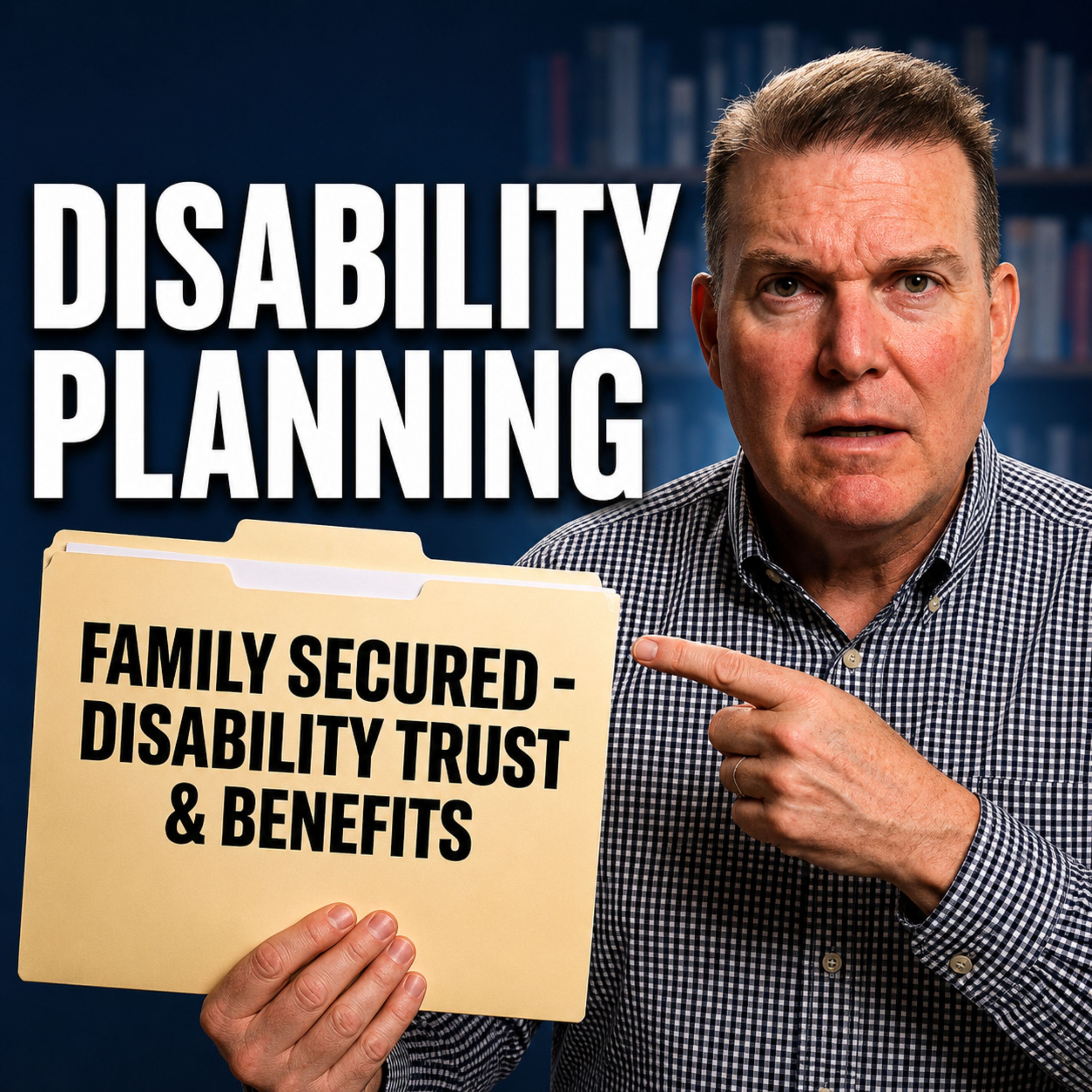
A listener wrote in to Financially Confident Christian with a subject line that stopped the show cold: likely to become disabled within the next decade, due to a progressive autoimmune disease, and one direct question underneath it. What can she do right now to protect her family?
The letter
She's in her early 40s, working in healthcare, recently diagnosed with a progressive autoimmune disease likely to lead to disability within ten years. Good insurance through her job right now. She knows that won't hold once the disease moves further along. She still sends her adult kids money most months, nothing huge, but it adds up over time.
She knows she should be planning instead of just hoping it doesn't get bad. She just doesn't know where to start.
The plan, in order
1. Lock in the legal documents now, while there's still time.
Three documents matter here: a durable power of attorney for finances, a healthcare power of attorney, and a living will. All three are only valid if signed while there's full legal capacity, which is exactly the thing this disease will eventually take away. An attorney can draft all three for a few hundred dollars. The best time to sign them is before they're needed. After that, it's too late.
2. Find out the real size of the disability income gap.
Long-term disability typically replaces about 60% of income. On a $70,000 salary, that's a $28,000 gap the moment work stops being possible. Right now, while the diagnosis is still fresh, individual disability insurance may still be available to buy. That window narrows as the disease progresses. HR can explain the elimination period, the benefit percentage, and how long benefits actually last.
3. Build a cash runway that has nothing to do with retirement.
Retirement accounts are for retirement. This is something else entirely. Social Security Disability comes with a five-month waiting period after the disability begins, and that gap needs money sitting ready before it arrives. A reasonable target: three to six months of full expenses, parked in a high-yield savings account separate from any existing emergency fund.
4. Map out healthcare coverage before standing inside the gap.
COBRA can extend coverage for up to 18 months, but the full premium, no longer subsidized by an employer, often runs $600 to $900 a month for family coverage. Medicare through Social Security Disability takes roughly two years to kick in. Marketplace coverage through healthcare.gov is worth exploring too, especially with income likely to drop. The move: ask HR to lay out the whole timeline now, whether the disability hits in five years or fifteen.
5. Tell the adult kids before it becomes an emergency.
If money flows from parent to adult child each month, write down the actual number. Not to cut it off today, but to know it honestly before a crisis forces the decision. Adult children usually sense something's already happening. A direct conversation now, something like "there may come a point where I can't help the way I do now," gives them time to build their own margin gradually. The same news delivered later, during an actual emergency, lands as a shock instead of a gift.
What faith doesn't promise, and what it does
Faith doesn't promise the disease stops progressing. It doesn't promise an insurance company makes any of this easy. It doesn't promise the kids won't worry.
What it promises is presence. Psalm 23:4 says it plainly: "Even though I walk through the valley of the shadow of death, I will not be afraid, for you are close behind me." Not watching from a distance. Close behind, every step.
Standing at the edge of something this hard and choosing to plan anyway, with eyes wide open instead of looking away, is already most of the fight most people never choose to start.
The win for today
One phone call. To HR, asking about long-term disability, short-term disability, the elimination period, the benefit percentage, the maximum benefit duration. This isn't filing a claim. It's finding out exactly what's already there. Write the real number down somewhere it won't get lost. A real number turns vague fear into an actual plan.
Stay financially savvy. God bless you.

Christian Financial Consulting
Ralph V. Estep, Jr. is a Delaware-based licensed accountant, author, rancher, and media host with more than 30 years of experience in finance, taxation, and small-business leadership. As the founder of Saggio Accounting+PLUS and the creator of the Ask Ralph Media network, Ralph helps entrepreneurs, creators, and everyday families replace money confusion with clarity, confidence, and practical next steps—without shame and without hype.
Ralph’s work blends deep professional expertise with a coach’s mindset and a communicator’s heart. He has held leadership roles across public accounting, financial institutions, law firms, and technology organizations, bringing a rare combination of traditional accounting rigor and modern systems thinking to the people he serves. A graduate of the University of Delaware and Wilmington University (MBA), Ralph is known for turning complex money topics into simple, repeatable frameworks that help people make wiser decisions and build lasting financial stability.
Through Ask Ralph Media, Ralph hosts multiple shows designed to meet people where they are and guide them forward. He is the host of Financially Confident Christian, a daily, faith-based show offering warm, pastoral encouragement for listeners who want peace and practical wisdom with their finances.
He also hosts Truth Unveiled with Ralph, a weekly program that contrasts cultural pressure with biblical truth and invites listeners into deeper spiritual and practical alignment. For small business owners, Ralph leads Grit and Growth Business, spotlighting real sto… Read More

You Beat the Spending Addiction. Why Does Buying Anything Still Feel Like Relapsing?