Can Money Actually Buy You Out of Misery? Here's What It Can't Touch
Can Money Actually Buy You Out of Misery? Here's What It Can't Touch
A listener fired off a letter this week that didn't ask for advice. He argued a position. Money solves nearly every problem, he wrote, and anyone who claims otherwise just hasn't had enough of it to test the theory. Better doctors fix health. The right stylist and the right procedures fix looks. Enough income turns fitness into something you can optimize your way through. Even speed limits start to feel like a toll once you can afford the ticket. He had an answer for nearly everything, including happiness itself, and that answer is exactly where today's episode of Financially Confident Christian starts pulling the thread.
What the listener actually argued
He laid out a real case. Health problems get easier with better doctors and treatments. Appearance gets easier with the best stylists, skincare, and procedures. Fitness becomes simple to optimize with the right resources. Housing, travel, taxes, even legal trouble, all of it bends with enough money behind it. Speed limits become a toll. Laws become negotiable with the right political contributions.
Then he got to happiness itself. His answer there was supplements, peptides, escorts, drugs, and beach vacations. Novelty, he argued, is purchasable too.
Where he's right
He's not wrong about most of it. Money does solve money problems, and pretending otherwise insults the real weight those problems carry. Better healthcare costs money. Looking and feeling your best often costs money. Legal protection costs money. None of that is fake or trivial.
The person who says money doesn't matter has usually never gone three months without paying rent.
Where the list quietly breaks down
Here's the pattern worth noticing. The list started with health, moved to appearance, moved to fitness, moved to the law, and then arrived at happiness. The solution offered for happiness specifically was supplements, peptides, escorts, drugs, and beaches.
That's not a happiness solution. That's what someone reaches for when the actual problem was never financial to begin with. It's existential.
Three things money can't actually buy
Meaning. Every workout can be optimized, every goal hit faster with the right resources, and the void underneath stays exactly where it was.
Purpose. A person can travel to every beach on the planet. If they're running from something instead of running toward something, the running never stops, regardless of the scenery.
Peace. This is the one buried underneath everything else in the original argument, and it's the one thing that can't be purchased at any price point.
The richest person on earth doesn't have a money problem
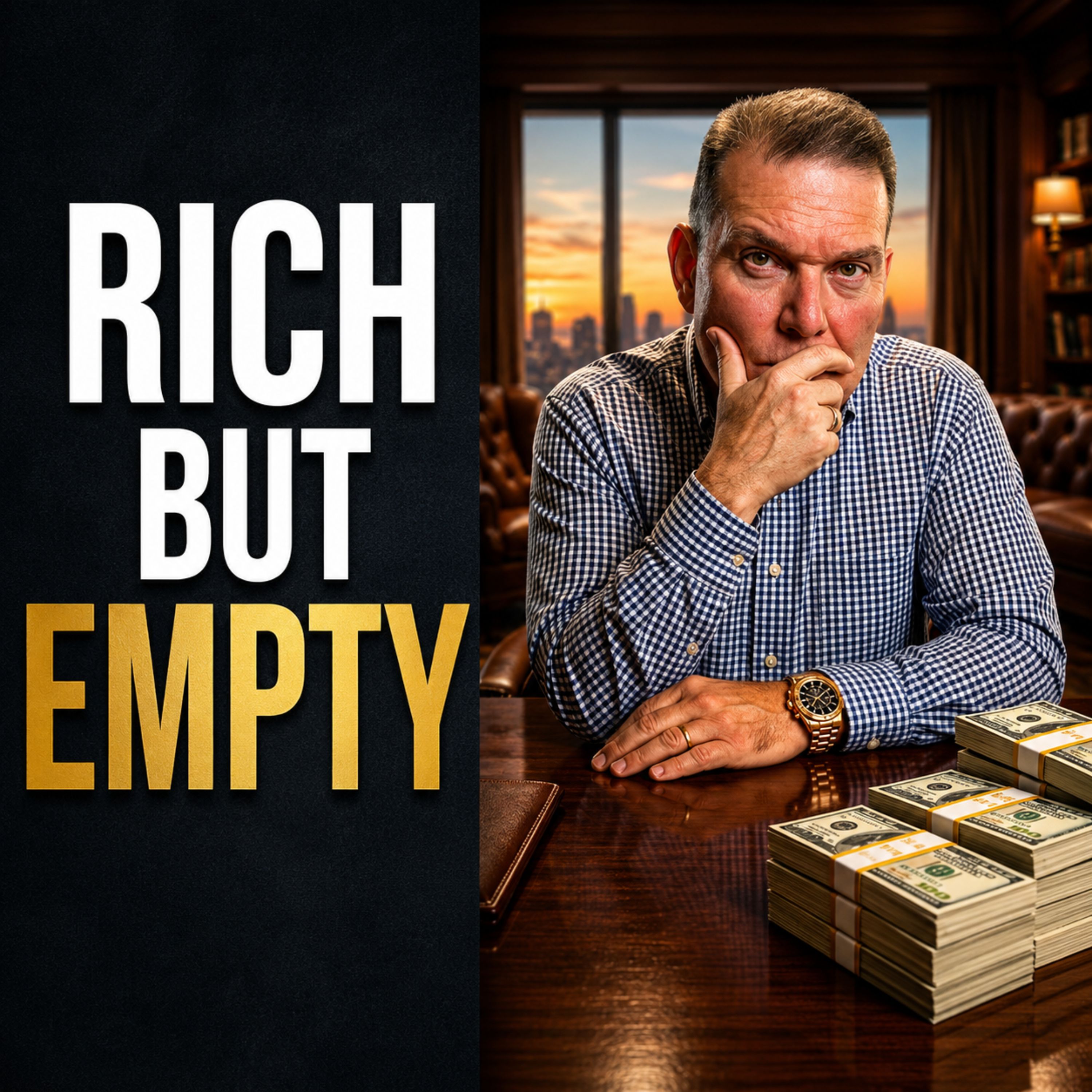
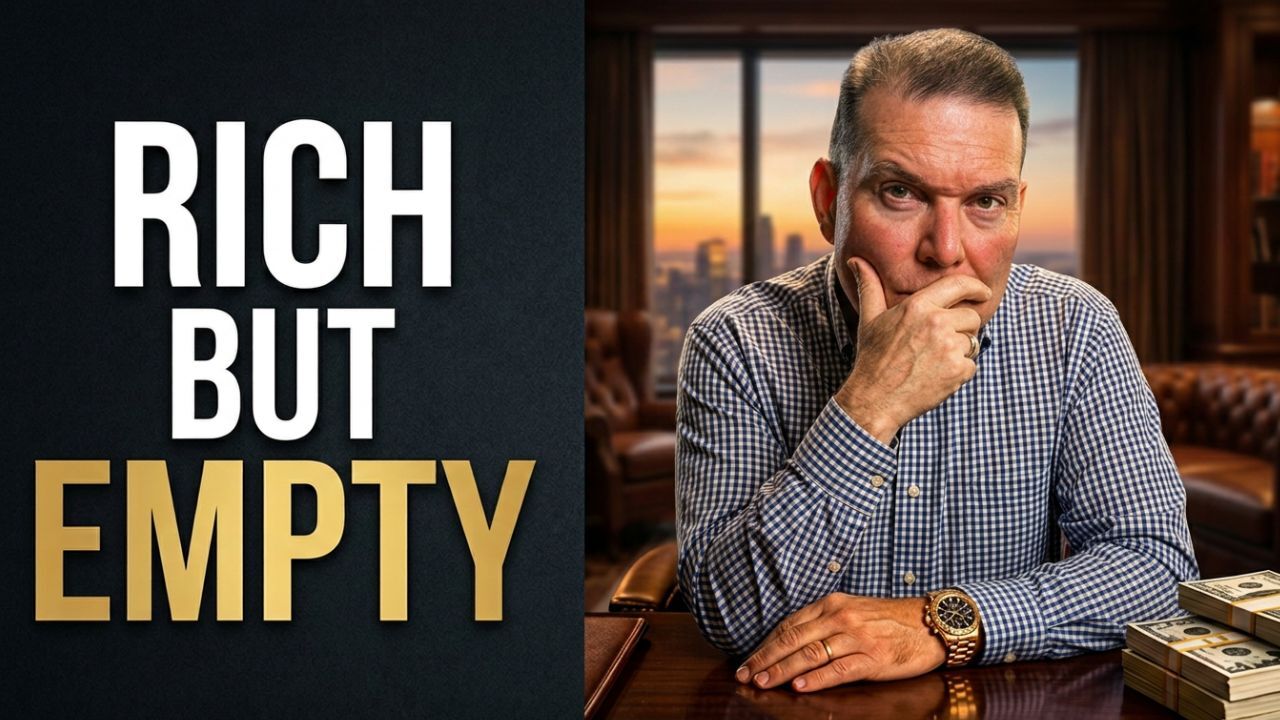
They have a meaning problem. If money actually solved everything, then logically, enough of it should fix anyone's life completely. Plenty of people chase that exact target, hit the income number, and still feel empty. Then comes the confusion, because the thing that was supposed to work didn't.
That's the trap. It was never a financial trap. It was always spiritual, and chasing money as a cure for emptiness is how someone ends up with everything and feels nothing.
So does money matter at all?
Yes. Completely. Money pays bills. It builds savings. It creates security. None of that is the goal, though. It's the foundation. Without it, everything built on top is shaky. That's worth taking seriously, not dismissing.
But once that foundation is solid, the people who actually feel at peace with money are the ones who stop treating it as the answer. They use it. They respect it. They don't worship it.
What faith says that money never will
1 Timothy 6:10 says the love of money is the root of all kinds of evil, and that some people, eager for money, have wandered from the faith and pierced themselves with many griefs.
That verse gets misquoted constantly. Money itself isn't called evil there. It's a tool, and a useful one. The love of money, trusting it to deliver what only meaning and purpose can actually provide, is what causes the damage. Falling in love with money as the solution to something money was never built to solve is what pierces a person with grief, even while everything looks fine from the outside.
Today's win
Ask one honest question: what am I actually looking for? Not what culture says to want. Not the expected answer. The real one.
Run it through four categories. Security: yes, money buys that. Status: also yes, but it's empty without anyone to share it with. Peace: money can't buy it, but it's available for free. Love: money might buy attention or company, but never actual love.
Then write down three things believed to be fixable with money, followed by what would actually be felt after getting them. The gap between those two lists is where the real conversation starts.
Stay financially savvy. God bless you.
FAQ
Does having more money actually make people happier? Research on this is mixed and depends heavily on where someone starts. Money tends to relieve real financial stress effectively, but beyond covering basic needs and security, the connection to deeper life satisfaction weakens considerably.
Why do some wealthy people still seem miserable? Wealth solves financial problems efficiently. It doesn't resolve questions of meaning, purpose, or connection, which require something other than money to address.
Is it wrong to want money? No. Wanting financial security and stability is reasonable and healthy. The issue arises when money gets treated as the ultimate solution to problems it was never designed to solve.
What does the Bible actually say about money? 1 Timothy 6:10 warns against the love of money, not money itself. Scripture generally treats money as a tool that requires wisdom and boundaries, not something inherently good or evil on its own.

Christian Financial Consulting
Ralph V. Estep, Jr. is a Delaware-based licensed accountant, author, rancher, and media host with more than 30 years of experience in finance, taxation, and small-business leadership. As the founder of Saggio Accounting+PLUS and the creator of the Ask Ralph Media network, Ralph helps entrepreneurs, creators, and everyday families replace money confusion with clarity, confidence, and practical next steps—without shame and without hype.
Ralph’s work blends deep professional expertise with a coach’s mindset and a communicator’s heart. He has held leadership roles across public accounting, financial institutions, law firms, and technology organizations, bringing a rare combination of traditional accounting rigor and modern systems thinking to the people he serves. A graduate of the University of Delaware and Wilmington University (MBA), Ralph is known for turning complex money topics into simple, repeatable frameworks that help people make wiser decisions and build lasting financial stability.
Through Ask Ralph Media, Ralph hosts multiple shows designed to meet people where they are and guide them forward. He is the host of Financially Confident Christian, a daily, faith-based show offering warm, pastoral encouragement for listeners who want peace and practical wisdom with their finances.
He also hosts Truth Unveiled with Ralph, a weekly program that contrasts cultural pressure with biblical truth and invites listeners into deeper spiritual and practical alignment. For small business owners, Ralph leads Grit and Growth Business, spotlighting real sto… Read More
Repair or Replace Your Car? A 5-Step Way to Decide