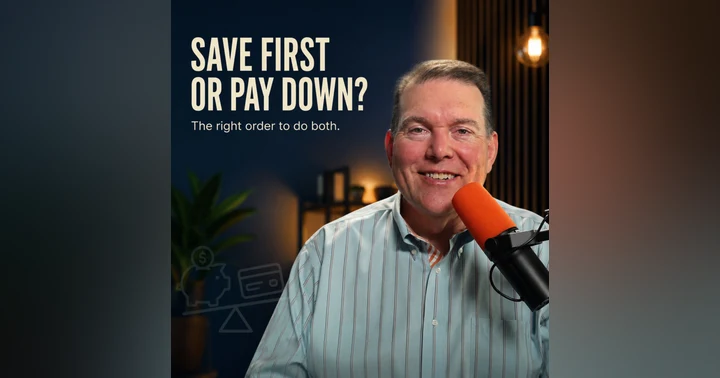
Should I Build an Emergency Fund Before Paying Off Debt?


Key Takeaways
- Building an emergency fund before debt doesn't have to be an all-or-nothing choice; it is about establishing the right financial order.
- Start your journey by building a starter emergency fund of about $1,000 to act as a financial airbag against unexpected expenses.
- Once your initial $1,000 safety net is in place, pivot to attack high-interest debt aggressively to stop interest from stealing your future income.
- Financial progress is built on consistency and small wins rather than perfection, and setbacks should not derail your long-term goals.
- True biblical stewardship involves balancing wise financial preparation with complete trust in God's provision and guidance.
Every extra dollar can feel like a puzzle, right? Do I stash it away for a rainy day or toss it at my debt? Honestly, it’s a toss-up that can leave you feeling like you're letting one side down. Should I Build an Emergency Fund Before Paying Off Debt? Today, we’re diving into that age-old question: should you save first or pay off debt first? Spoiler alert: it’s not as black and white as folks make it out to be. So kick back, relax, and let’s craft a plan that’ll give you some financial peace of mind!
Check out the full podcast episode here
Every extra dollar feels like a mini crisis, right? We’ve all been there, staring at our bank accounts like they’re about to give us the secrets of the universe. The burning question is whether to save that cash for emergencies or tackle our debt head-on. Spoiler alert: it’s a tricky balance. So, what’s the game plan? Start with a small emergency fund—think of it as your financial airbag—before going full throttle on that high-interest debt. You don’t need a massive fortress to fight debt; just a little something to catch you when life throws you a curveball. Once you’ve got that $1,000 safety net, then it’s time to unleash your inner debt-slayer. The key takeaway? Progress over perfection. It’s all about consistency and making those dollars work for you. Trust me, we’re all in this together, and we've got the wisdom to guide you through the financial jungle.
Takeaways:
- Every extra dollar feels like a decision, so plan wisely to avoid stress.
- Building a small emergency fund of around $1,000 is a solid first step.
- Pay off high-interest debt once you've got your safety net in place, folks.
- Financial progress isn't perfect; setbacks happen, so keep moving forward.
- Remember, financial freedom is the ultimate goal, not just paying off debt.
- Stewardship means balancing saving and paying off debt without sacrificing trust.
Links referenced in this episode:
💛 Join the Financially Confident Christian Community
If today’s episode encouraged you, we’d love to invite you to be part of something bigger — the Financially Confident Christian Community.
This is where faith and finances come together — a growing family of believers supporting one another, sharing encouragement, and helping spread God’s truth about money.
Your membership helps keep the show free for everyone while funding new devotionals, study guides, and outreach resources.
👉 Learn more and join the mission at financiallyconfidentchristian.com/join
Together, we’re helping believers everywhere break the cycle of financial shame and live with confidence in Christ. 🙏
Get Ralph's Book on becoming a Financially Confident Christian financiallyconfidentchristian.com/becoming
WATCH NOW ON YOUTUBE (OUR VIDEO VERSION)
WATCH NOW ON RUMBLE (OUR VIDEO VERSION)
Please share our Podcast with all your friends and family!
Submit your questions or ideas for future shows - email us at
ralph@askralph.com or leave a voicemail message on our podcast page
Thank you for listening to the Ask Ralph podcast. We encourage you to follow us on our social media pages and rate our show. For more information about the topics discussed on the podcast visit Saggio Accounting+PLUS.
Frequently Asked Questions
Should I build an emergency fund before paying off debt?
Yes, it is recommended to build a small starter emergency fund of around $1,000 first so unexpected expenses do not force you to rely on credit cards, after which you should aggressively pay off high-interest debt.
How much should my initial emergency fund be?
A starter emergency fund should be about $1,000. This acts as a financial airbag to cover most immediate surprises before you eventually build up a full three to six months of expenses.
How do I balance saving money and paying off credit card debt?
You balance them sequentially by first saving a small $1,000 safety net, then redirecting your extra cash flow to eliminate high-interest debt, and finally returning to long-term savings for three to six months of expenses.
00:00 - Untitled
00:37 - Untitled
00:37 - Navigating Financial Decisions
03:08 - Building a Financial Safety Net
05:04 - Building Financial Stability: From Debt to Peace
06:45 - The Journey to Financial Freedom
09:17 - Starting Your Financial Journey
Speaker A
Every extra dollar you have seems to come with a decision. Do I save it for emergencies or do I throw it at your debt? And whichever one you choose feels like you're neglecting the other one.So today, let's settle the debate and let's build a plan that actually gives you peace. And this is a question that keeps a lot of people stuck. And honestly, the answer isn't an extreme as most people think.So stay with me today and let's build the route foundation for from the beginning. Hello and welcome to Financially Confident Christian. I'm your guide. I'm Ralph Estep Jr. I call myself the financial evangelist.And today we're going to talk about one of the most common financial questions that I receive, and that is, Ralph, do I save first or do I pay off debt first? And can I afford to do both? And I understand the question. When every dollar you get has somewhere to go, that wrong decision often feels expensive.And you're not alone in answering that question. So I'm going to have the answer today. But if you've got a question for this show, this show is fueled by your questions.You can reach me at financiallyconfidentchristian.com/question We'll put a link in the show notes, but again, that's financially confidentchristian.com/question Well, let's get right to today's listener question.Listener writes this. Hi, Ralph. I've been trying to get serious about my finances this year, but I keep running into one question that nobody seems to agree on.Some people tell me I shouldn't save a penny until every debt is gone because the interest is costing me money. Others tell me I need a full emergency fund before I even think about paying off debt.Right now I've got about $9,000 in credit card debt and only about $600 in savings. Whenever I get extra money, I just freeze because I don't know which direction is actually the smart one.I'm tired of feeling like every decision is the wrong decision. What would you recommend? Thank you for all you do. Well, you're welcome for all I do. That's why I have such a passion for this.And thank you for sending in your question.It is a tough thing because you're, you're faced with this fork in the road and you're trying to decide, do I put the money on the debt or do I put the money in my savings account? But I want to start by saying something bold. This isn't an either or decision. It's about putting your money in the right order.So let's walk through how to build that order on today's show. Here's the first thing I'm going to encourage you to do. You said you had $600 in savings.I think you need to work a little bit on building a small safety net first. And the reason I say that is right now, every surprise becomes another credit card charge.And if you continue to live in that cycle of surprise charge, surprise charge, what's going to happen is that debt's never going to come to an end. But if you have that small emergency fund, it can change everything.Now you might be thinking, oh, great, Ralph's going to tell me I need three to six months of emergency money. That's not what I'm saying today. I think you need to set a goal of about $1,000. You said you had 600, so you got to put it out another $400.So what I would do right away is build that savings goal to about $1,000. That's going to cover most emergencies. And that doesn't have to be your forever emergency fund, but it's a place to start.It's what I'm going to call your financial airbag. You don't need to build a fortress before attacking debt, but you need to have a safety net.So once you've built that safety net, then I want you to pivot to attack the high interest debt aggressively. The things people are telling you are true. The interest is continuing to grow.But once you've got that starter fund in place, focus extra money on that high interest debt.The thing that people don't understand is that credit card interest just steals your future income because you could be making payments on it every month. But if the interest rates. And listen, right now the average interest rates are in the 20s. So every balance you eliminate gives you more freedom.And once you start to build that freedom, you start to build momentum. So stay consistent instead of chasing perfection and work on paying that down. Interest is working every day against you.Your payoff plan should be working like that, too. Now, one thing I want to mention here, a little caveat to this. Don't stop saving forever.I don't want you to think, well, Ralph, what you said is once I get to that thousand dollars set aside, I can just stop. No, once you get rid of that expensive debt, then you got to shift back to savings.And then I want you to actually build that three to six months of expenses. That really is the goal of what we want to get to.Because the truth is what I've seen working with people over 30 years, this becomes real financial stability. And when you have real financial stability, you live in a place of financial peace.Those emergencies stop becoming financial disasters and, and you don't find yourself in the same position where you're worried about that $9,000 credit card. You can get to a place where peace will replace the panic. Debt. Freedom gives you room to build lasting security.But you also have to change the mindset here. You've got this all or nothing mindset. You have to understand that financial progress isn't perfect. You're going to have setbacks.Life is going to change. It's going to require some adjustments as you go. You can't let one setback erase months of good decision. It's kind of like a diet.You know, I've been on this, this diet journey and there are days when I make bad decisions and I feel like, you know, why am I doing this? But I keep moving forward. That next day I get right back on it. You're going to have the same thing.That small progress on the debt, on changing your financial dynamic is going to compound over time. And trust me, progress beats perfection every single time. But the other thing you got to remember is this. Remember your goal.It's real easy to say, oh, my goal is to pay off debt. But for most people, that's not the goal. That's one of the things you have to get to to get to the goal.I really believe most people's goal is financial freedom. And just picture that right now. Just take a second and picture what that looks like for you.Once you get to financial freedom, you'll have the ability to be more generous. Freedom creates options. Freedom reduces that stress and it strengthens families. We talk about how debt breaks families down.Well, financial freedom just gives them a resurrection. Every wise financial decision you make is really a huge investment in your future freedom. Now I want to go a little deeper, friend.I hear the pressure you're carrying in your question because you said it out loud. Every decision feels like it has huge consequences. And our faith doesn't remove the need for wise planning at the same time.But what faith does is it reminds us that wisdom and trust can actually work together. But faith doesn't promise us that we're not going to have emergencies. Those things are going to happen even if you have the best laid plans.And it doesn't promise us that if we're faithful that debt is going to disappear overnight. It doesn't. And it doesn't promise that we're not going to have difficult seasons. I've had difficult seasons.If you're listening to my voice, Are you watching me right now? You're going to have difficult seasons, too. But here's what faith does promise us. God promises us wisdom when we ask him for that wisdom.And as you seek him and you steward what he's entrusted to you, here's the best part. He walks with you every single step. Don't forget, God calls us to wisdom. Being prepared isn't living in fear. Saving isn't a lack of faith.And paying your debt isn't a lack of trust. Both of those things are stewardship at work. Friend, you don't have to choose between trusting God and making wise financial decisions.Biblical stewardship embraces both at the same time. So hear me on this. Hear me loud and clear. You're not behind today. You're building. You're giving every dollar a purpose.And that's how financial confidence grows. And that's how you actually get to financial freedom. So here's your win for today. I want you to decide on your starter emergency fund goal.Like we talked about today, it depends on your situation. Maybe $1,000. Go check your savings balance, choose your target, and then I'm going to encourage you to automate a weekly transfer.And once that's funded, once you've got to that goal, then start redirecting those dollars towards debt. But reframe your mind. Those small wins create lasting momentum. Let's go to our Bible verse today.It comes to us from the book of Proverbs, chapter 21, verse 20. It says the wise have wealth and luxury, but full spend whatever they get. Now, that one's a little harsh, but what is it telling us?What is the word telling us today? It tells us that wise people prepare. It tells us that saving is biblical wisdom.So if you really want to find financial confidence, it grows through stewardship. It grows through planning ahead and living in those consistent habits. Well, how about we pray together right now?Heavenly Father, I just want to thank you for caring about everything, every part of our lives, including our finances. Lord, give us wisdom to know when to save. And, Lord, give us wisdom to know when to pay down our debts.Help us to become faithful stewards of every dollar you've entrusted to us right now. Lord, I ask that you would replace fear with confidence and replace that confusion, Lord, with true clarity.Teach us to prepare wisely while trusting you completely, Lord. And may our financial decisions honor you, Lord, and bless the people you've placed in our lives. And we ask this in Jesus name. Amen.Well friend, I hope you've learned something today. Today isn't that either or decision?So start with that small emergency fund, attack that high interest debt and return to long term savings, stay consistent and trust God through every single step.So again build that starter emergency fund, focus on that high interest debt, expand that savings, stay consistent and steward every dollar with purpose because I know you can accomplish this. And if you're struggling with something financial or maybe you've got a trip or a tick of how we can do it better, I'd love to hear from you.You can go to financiallyconfidentchristian.com/voicemail we'll put a link in the show notes but again that's financiallyconfidentchristian.com/voicemail I just want to thank you so much for joining me today. Thank you for giving me your time. I want to encourage you to stay financially savvy. May God bless you and you have a great day.