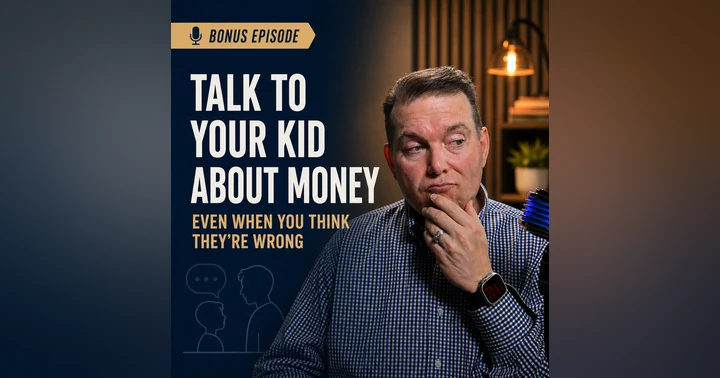
My Son Came Home From College Saying Capitalism Is Evil. How Do I Answer Him Without Losing Him?


Key Takeaways
- When your adult child expresses frustration with the economic system, listen to their underlying pain, student debt burden, and housing concerns rather than immediately arguing against political labels.
- Acknowledge the valid economic challenges facing the younger generation, such as inflated housing markets and heavy student loan debt, to build trust and keep communication channels open.
- Differentiate between government social safety nets and complete state-controlled economies when having nuanced discussions about economic systems with family members.
- Prioritize preserving your relationship and keeping your family connected over winning a heated political or economic argument at the dinner table.
- Take practical steps to help young adults address tangible financial goals, such as analyzing debt payoff timelines and exploring realistic housing budgets together.
What do you do when your kid comes home from college telling you that capitalism is evil and the whole system is trash that needs a complete overhaul? That's the question behind today's conversation: "My Son Came Home From College Saying Capitalism Is Evil. How Do I Answer Him Without Losing Him?" We dive into a heartfelt letter from a mom who fears she's losing her son over his deeply held beliefs about capitalism. It's a raw and honest discussion about navigating difficult conversations without turning the dinner table into a battlefield. Along the way, I share some surprising statistics that might challenge your assumptions and help you see the issue from a different perspective. So grab a snack, settle in, and let's figure this out together.
Check out the full podcast episode here
Navigating the tricky waters of family conversations about money can feel like walking a tightrope, right? When a mom finds herself at odds with her college-aged son, who’s convinced that capitalism is evil, it’s not just an economic debate; it's a full-blown family crisis. In this episode, we dive into the heart of that struggle. The listener writes in, worried that her son’s views on the economy could drive a wedge between them. With tears in her eyes, she shares how conversations about their finances have turned into arguments, leaving her feeling helpless. We explore the emotional undercurrents of their conflict, emphasizing that it's not just about money—it's about understanding, empathy, and, most importantly, love. The advice here isn’t to win an argument but to find a way back to the dinner table, to keep the lines of communication open, and to listen. By addressing the real fears behind her son's frustrations, she can bridge the gap and reclaim that familial bond, all while shedding light on the real issues of student debt and housing crises that are affecting his generation.
Takeaways:
- When your kid thinks the system's broken, listen to their pain, not just words.
- Acknowledging parts of their grievances shows you care about their feelings, not just winning.
- Ask your kid who they trust with political power to spark a real convo about trust.
- It's crucial to differentiate between safety nets and full government control in discussions.
- Fixing one tangible issue together can lead to meaningful dialogue and solutions.
- Being generous in front of them can make a big difference in how they see things.
Links referenced in this episode:
- financiallyconfidentchristian.com
- financiallyconfidentchristian.com/question
- financiallyconfidentchristian.com/voicemail
💛 Join the Financially Confident Christian Community
If today’s episode encouraged you, we’d love to invite you to be part of something bigger — the Financially Confident Christian Community.
This is where faith and finances come together — a growing family of believers supporting one another, sharing encouragement, and helping spread God’s truth about money.
Your membership helps keep the show free for everyone while funding new devotionals, study guides, and outreach resources.
👉 Learn more and join the mission at financiallyconfidentchristian.com/join
Together, we’re helping believers everywhere break the cycle of financial shame and live with confidence in Christ. 🙏
Get Ralph's Book on becoming a Financially Confident Christian financiallyconfidentchristian.com/becoming
WATCH NOW ON YOUTUBE (OUR VIDEO VERSION)
WATCH NOW ON RUMBLE (OUR VIDEO VERSION)
Please share our Podcast with all your friends and family!
Submit your questions or ideas for future shows - email us at
ralph@askralph.com or leave a voicemail message on our podcast page
Thank you for listening to the Ask Ralph podcast. We encourage you to follow us on our social media pages and rate our show. For more information about the topics discussed on the podcast visit Saggio Accounting+PLUS.
Frequently Asked Questions
How do I answer my college-aged child when they say capitalism is evil?
Instead of arguing against the political label, focus on listening to their underlying pain, such as student loan debt and housing frustrations. Acknowledge the valid economic challenges their generation faces to keep communication open without sacrificing your relationship.
Why are young adults so frustrated with the current economy?
Young adults face unprecedented economic hurdles, including soaring student loan debt averaging $40,000 and a median first-time homebuyer age reaching an all-time high of 40. These systemic pressures make them feel that traditional paths to financial success are blocked.
How can I talk about politics and economics with my kids without fighting?
Shift the conversation away from abstract ideological debates by asking curious, non-judgmental questions about their specific financial concerns. Validate their feelings of frustration first so they feel heard rather than defensive.
00:00 - Untitled
00:37 - Untitled
00:37 - Confronting the System
05:07 - Understanding the Pain Beneath Arguments
09:16 - The Conversation About Generational Differences
15:57 - The Limits of Compassion: Understanding State and Charity
21:05 - The Importance of Listening
23:16 - Navigating Family Conversations About Money
Speaker A
What do you say when your kid tells you the whole system is rotten and needs to be torn down?
Speaker A
Now, that's not a debate on television.
Speaker A
That's a mother sitting at her kitchen table watching a conversation with her son turn into a wall.
Speaker A
And she wrote to me because she's scared she's about to lose him over it.
Speaker A
I've got some numbers on this one that might surprise even you, and the answer isn't the one most parents are reaching for.
Speaker A
So stick around.
Speaker A
We're getting into it right now on this bonus episode today.
Speaker A
Hello there, and welcome back to Financially Confident Christian.
Speaker A
I'm Ralph Estepp Jr. And I'm so glad you're here today.
Speaker A
Now, this episode is going to be a little different.
Speaker A
This one isn't about a budget or a debt payoff or an insurance policy.
Speaker A
Today we're talking about what to do when somebody you love has lost faith in the whole economic system and you really don't know how to answer them without blowing up the relationship.
Speaker A
The listener who wrote me is 58 years old.
Speaker A
Her son is 24, and he came home from college convinced the whole game is rigged and ought to be replaced.
Speaker A
And now every single conversation about money in that house ends in a fight.
Speaker A
And she's genuinely afraid that if she pushes back one more time, she loses him.
Speaker A
Now, I want to name something right off the top because I think it's the real story here.
Speaker A
This isn't a political question, not really a political question.
Speaker A
This is a mother who's terrified that being right is going to cost her her relationship with her son.
Speaker A
And if you've ever been in that spot with a kid, with a sibling, maybe with somebody at church, you know exactly what she's feeling.
Speaker A
And if you've got a question you'd like me to take on head on just like this, no questions are off the rails here.
Speaker A
Go to financiallyconfidentchristian.com question.
Speaker A
I read every single question and I will answer every single question.
Speaker A
Again, that's financially confidentchristian.com?
Speaker A
So let me read you what she wrote in and imitate right now.
Speaker A
The subject line stopped me.
Speaker A
Cole said this.
Speaker A
My son came home from college saying capitalism is evil.
Speaker A
As soon as I saw that, I said, this is one I got to talk about.
Speaker A
But here's her question.
Speaker A
She said, Hi, Ralph, I'm 58 and I've listened to your show for about two years now.
Speaker A
I've never written in before.
Speaker A
I'm writing because I don't know who else to ask about this.
Speaker A
Without it Turning into an argument.
Speaker A
My son is 24.
Speaker A
He's a good kid, he's kind, he's hard working, he finishes degree, has a job.
Speaker A
But something changed the last couple of years.
Speaker A
He came home at Christmas and told my husband and me that capitalism is evil and the whole system is rigged and that people like us got ours and pulled the ladder up.
Speaker A
He said it right at the dinner table.
Speaker A
Ralph, my husband, got angry and it went downhill fast.
Speaker A
Nobody talked for the rest of the night.
Speaker A
The thing is, Ralph, I know he's hurting underneath.
Speaker A
He's got about $40,000 in student loans.
Speaker A
He and his girlfriend have been looking at houses for two years and they can't touch anything.
Speaker A
He works harder than I did at his age, honestly, and he has less to show for it.
Speaker A
So when he says the game is rigged, part of me understands why he feels that way to him.
Speaker A
But I've also read enough history to be genuinely frightened by where he's heading with it.
Speaker A
I don't think he understands what he's actually asking for.
Speaker A
And every time I try to say that, all he hears is your problems aren't real and shuts down.
Speaker A
Raph, I've prayed more about this than I've prayed about anything in years.
Speaker A
I don't want to just win an argument.
Speaker A
I want my son back at my table.
Speaker A
How do I talk to him about this without losing him?
Speaker A
Thank you.
Speaker A
Alright, first thing, I want to say this to you.
Speaker A
Thank you for writing this and thank you for that sentence at the end.
Speaker A
I don't want to win an argument.
Speaker A
I want my son back at my table.
Speaker A
And that sentence tells me you already understand something most people never get to.
Speaker A
Here's the big idea I want to hold onto for this entire episode.
Speaker A
You will never argue somebody out of a conclusion that you refuse to understand.
Speaker A
The road back to your son doesn't go around his pain, it goes straight through it.
Speaker A
And I want to be honest with you about the urgency here, because there is some urgency here.
Speaker A
He's 24.
Speaker A
The beliefs a person settles into in their 20s tend to be the ones they carry for the rest of their life.
Speaker A
So this matters.
Speaker A
But here's the hard part, and I'm going to say it plainly because I think you can handle it.
Speaker A
Some of what your son is angry about is true.
Speaker A
And until you say that out loud, can't hear the other words that come out of your mouth.
Speaker A
But let me walk you through six steps to bring this back to where it needs to be.
Speaker A
Step number one, you got to stop arguing with the label and find the pain underneath of it.
Speaker A
The word he used is not the point.
Speaker A
I want you to really hear that.
Speaker A
The word is just a container he found for a feeling he already had underneath that statement.
Speaker A
The system is rigged.
Speaker A
There's almost always something concrete and personal.
Speaker A
And in your son's case, you already told me what it is.
Speaker A
$40,000 In student loans that he can't outrun.
Speaker A
Two years of looking at houses with nothing to show for it.
Speaker A
And that feeling that he's doing everything right and losing anyway.
Speaker A
So don't debate the word.
Speaker A
Ask about the feeling.
Speaker A
Try this.
Speaker A
Maybe you say to him, when did you start first feeling like the game was rigged?
Speaker A
And then this is the whole trick.
Speaker A
Be quiet.
Speaker A
So many times you want to talk and talk.
Speaker A
Just be quiet.
Speaker A
Let him talk all the way to the end.
Speaker A
Not until you find an opening all the way to the end.
Speaker A
Because here's why that matters so much when you argue with the label.
Speaker A
He's got to defend an entire ideology.
Speaker A
He's got to defend things he's never even thought about.
Speaker A
So he digs in.
Speaker A
And you're not talking to your son anymore.
Speaker A
You're talking to a position.
Speaker A
So many of us are living in these positions.
Speaker A
But when you ask him about the pain, he doesn't have to defend anything.
Speaker A
He just got to tell you the truth.
Speaker A
And a young man telling his mother the truth about why he's scared is a completely different conversation than you wanted had at Christmas when everybody got upset.
Speaker A
He didn't pick up an ideology.
Speaker A
He picked up an explanation for something that was already hurting him.
Speaker A
Here's the second step.
Speaker A
Say out loud the part that's actually true.
Speaker A
This is a step that almost every parent skips.
Speaker A
And it's one that opens the door.
Speaker A
His grievances are not imaginary.
Speaker A
I've got numbers right here in front of me and I want you to have them too.
Speaker A
Here's some real numbers.
Speaker A
The national association of Realtors put the median age of a first time home buyer at 40 years old last year.
Speaker A
40.
Speaker A
That's an all time high.
Speaker A
When your parents bought their first house, the number was in the high 20s.
Speaker A
When I bought my first house, I was 23.
Speaker A
Here's another one that's scary.
Speaker A
Americans collectively owe about $1.84 trillion in student loans that spread across roughly 43 million borrowers.
Speaker A
Your son's 40,000 is not unusual.
Speaker A
It's the common.
Speaker A
It's the ordinary.
Speaker A
And here's the one that got my attention.
Speaker A
Gallup found last year that positive views of Capitalism in this country dropped up 44%.
Speaker A
That's the lowest they've ever measured.
Speaker A
Now sit with that last number for a second because it tells you something important.
Speaker A
This isn't your son being difficult.
Speaker A
This is a whole generation looking at the same scoreboard and reaching the same conclusion.
Speaker A
And I'm going to say something here that may not be comfortable.
Speaker A
Some of this is our doing.
Speaker A
Zoning rules in this country made it functionally illegal to build the kind of housing a young family could afford.
Speaker A
Those are just facts.
Speaker A
We handed 18 year olds a loan product that survives bankruptcy and told it was an investment.
Speaker A
And when big institutions failed, they got rescued while individuals got foreclosed on.
Speaker A
You can't run that play in front of a whole generation and deliver a lecture about personal responsibility.
Speaker A
They don't see it.
Speaker A
So here's what I want you to say to him in your own words, something like this, son, you're right that housing is out of the reach in a way that it wasn't for us.
Speaker A
You're right that your degree costs more and bought less.
Speaker A
That's real.
Speaker A
And some of that is on my generation.
Speaker A
And when you do that, watch what happens in his shoulders when you say that.
Speaker A
Now hear me clearly.
Speaker A
You're not conceding the argument.
Speaker A
You're earning the right to be in it in the first place.
Speaker A
You can't talk somebody out of a bad answer until you've admitted they're asking a real question.
Speaker A
Here's step number three.
Speaker A
Show them the difference between a safety net and handing over the house.
Speaker A
Because this is what we got to focus on.
Speaker A
Here's why the two of you have been talking past each other.
Speaker A
You're using one word for two completely different things.
Speaker A
When most people use the word, the polling says they're picking picturing Denmark.
Speaker A
Denmark has health care, tuition, paid leave.
Speaker A
It's a real safety net.
Speaker A
That's the picture in their head.
Speaker A
When most of us in our generation are us grayer folks, we're pixing something entirely different.
Speaker A
We're picturing the government owning the factories, setting the prices, assigning the housing.
Speaker A
Those two are not the same system.
Speaker A
They're not even the same category.
Speaker A
And that confusion is exactly why every one of these conversations explodes.
Speaker A
So let me be honest with you about Denmark, because honesty is what's going to make you credible with your son.
Speaker A
Denmark is not socialist.
Speaker A
And the Danes get irritated when we say it is.
Speaker A
Standing at Harvard back in 2015, Denmark's Prime Minister said this, and I'm quoting him, this is what he said.
Speaker A
He said I would like to make one thing clear.
Speaker A
Denmark is far from a socialist planned economy.
Speaker A
Denmark is a market economy.
Speaker A
The Nordic countries run aggressively free markets.
Speaker A
Sweden abolished its inheritance tax.
Speaker A
Sweden abolished its wealth tax.
Speaker A
Sweden runs a national school voucher program that will get you thrown out of an American school board meeting for suggesting it.
Speaker A
But here's the part that matters most, and I want you to write this one down.
Speaker A
They pay for those benefits by taxing the middle class heavily.
Speaker A
They don't soak the rich in Denmark.
Speaker A
Denmark charges 25% sales tax on nearly everything you buy.
Speaker A
Think about that for a second.
Speaker A
25% Sales tax.
Speaker A
And on top of their income tax brackets kick in at about one and a half times the average income.
Speaker A
Which over here would mean paying the top rate on somewhere around $90,000.
Speaker A
Think about that for a second.
Speaker A
The top rate in the US is not at $90,000, but that's what it is in Denmark.
Speaker A
And that last piece means more than anything else in this step.
Speaker A
It's not that billionaires pay for it.
Speaker A
It's everybody pays for it, including him.
Speaker A
And see, a lot of young people don't understand that.
Speaker A
Now, that's a legitimate argument between adults.
Speaker A
How much government do we want and what are we willing to pay for it?
Speaker A
I'd argue with parts of it, but there's a real conversation that you and your son are allowed to be having on both sides of that.
Speaker A
What history warns us about is something different.
Speaker A
It's not about the size of the state.
Speaker A
It's about whether there's any part of your life that the state doesn't reach.
Speaker A
That's a real conversation about how big government should be.
Speaker A
That's not the same conversation as whether anything stays outside of it.
Speaker A
So you got to understand what you're really talking about.
Speaker A
Here's the second next step.
Speaker A
I want you to ask him the question that actually lands.
Speaker A
Don't hand your son a history lecture.
Speaker A
If you lecture him, he's going to shut down.
Speaker A
I know you've read the history.
Speaker A
I've read it, too.
Speaker A
But he will hear a lecture and you will lose him in 90 seconds.
Speaker A
Ask him one question instead, and then ask it with real curiosity, not as a trap.
Speaker A
Ask him this.
Speaker A
Who specifically do you trust with that much power?
Speaker A
It's a really simple question.
Speaker A
Just ask your son, who specifically do you trust with that much power?
Speaker A
Not the government in abstract, not the version staffed by people who agreed with him.
Speaker A
The actual existing one.
Speaker A
The one whose website crashes, the one whose agencies lose records.
Speaker A
And then take it one step further.
Speaker A
Ask him to picture that same institution staffed entirely by the political side he likes least.
Speaker A
This will.
Speaker A
You'll be like, wait a minute, Raoul.
Speaker A
I can't believe you just asked me that.
Speaker A
Because sooner or later, the truth is, that's going to happen.
Speaker A
That's how elections work.
Speaker A
Every power you build for your side is a power you hand to the other side on a schedule.
Speaker A
And then give him one number.
Speaker A
Just one.
Speaker A
Don't pile on.
Speaker A
Roughly 7.9 million people have walked out of Venezuela.
Speaker A
7.9 Million.
Speaker A
That's one of the largest displacement crisis on the planet.
Speaker A
Out of a country that was within living memory.
Speaker A
The wealthiest in South America.
Speaker A
The wealthiest.
Speaker A
And here's what I want him to understand about that.
Speaker A
Nobody in Caracas voted for empty shelves.
Speaker A
They voted to stop being poor while sitting on top of the largest oil reserves on earth.
Speaker A
That was reasonable to.
Speaker A
That was a reasonable thing they wanted.
Speaker A
Nobody votes for the ending.
Speaker A
They vote for the beginning.
Speaker A
And the beginning always sounds compassionate.
Speaker A
So let me put my accountant hat on for a second because I can't help myself here.
Speaker A
Free is the most expensive word in the English language.
Speaker A
It is bounted around all the time.
Speaker A
Right now, there is no service a government provides that a citizen does not pay for.
Speaker A
None.
Speaker A
The only question is whether you pay for it visibly in a bill or invisibly in a tax, in a fee, in an inflation rate, a waiting list or a shortage.
Speaker A
And watch who actually pays, because it's never who you're told pays.
Speaker A
Wealth is mobile.
Speaker A
It hires attorneys.
Speaker A
It restructures.
Speaker A
It relocates.
Speaker A
It waits.
Speaker A
That paycheck is not mobile.
Speaker A
A small business with three employees and a leased van is not mobile.
Speaker A
When the state needs revenue, it doesn't chase the hardest target.
Speaker A
It chases the easiest one.
Speaker A
The bill for tax the rich gets mailed to the middle almost every single time.
Speaker A
A system you'd only accept under leaders you trust isn't a system.
Speaker A
It's a hostage situation with good public relations.
Speaker A
But then you've got to draw the line between compassion and a transfer.
Speaker A
Now, I want to get to the part that I think matters most.
Speaker A
And it's the spiritual piece.
Speaker A
Your son is not wrong to want the poor cared for.
Speaker A
That instinct comes straight out of scripture.
Speaker A
And I want you to tell him that out loud.
Speaker A
Say something like, hey, the thing you want, people not being crushed, that's the right thing to want, son.
Speaker A
And I'm proud of you for wanting it.
Speaker A
Because scripture is relentless about this.
Speaker A
Think about the widow, the orphan, the stranger, the poor.
Speaker A
Page after page of scripture tells Us the same thing.
Speaker A
But that same scripture protects property so firmly.
Speaker A
So firmly that it forbids not just the theft, but the appetite behind it.
Speaker A
You shall not steal.
Speaker A
You shall not covet.
Speaker A
God addressed the act and the desire underneath the act.
Speaker A
Those two things are not intention, but they are two different jobs, and only one of them belongs to Caesar.
Speaker A
But here's the distinction.
Speaker A
Charity that is compelled isn't charity.
Speaker A
It's a transfer.
Speaker A
It might be a reasonable policy.
Speaker A
I'm not saying that it isn't.
Speaker A
But it's not the same act, and it doesn't form the same kind of person.
Speaker A
And here's the piece I'd really want your son to sit with.
Speaker A
When the state takes over compassion entirely, the church just becomes redundant.
Speaker A
And ask him that.
Speaker A
Not as a gotcha, as a real question.
Speaker A
If generosity gets handled by a committee, what's the church for?
Speaker A
Now, he may have a good answer.
Speaker A
Let him give it.
Speaker A
That's okay.
Speaker A
That's a conversation worth having, and it's one you'll both walk away from thinking.
Speaker A
But then close the loop.
Speaker A
Honestly, because this cuts towards us, too.
Speaker A
Our job as Christians is not to defend an economic system.
Speaker A
Our job is to be the people who actually show up.
Speaker A
Which means the generosity in your own house has to be visible to that young man, or none of what you said today will even land.
Speaker A
Wanting the poor cared for is the right instinct.
Speaker A
The only question is whose hands do it and what it costs to hand that job away.
Speaker A
But now I'm going to tell you something you're not going to like.
Speaker A
You got to fix what's in your house first.
Speaker A
The last step, and this is the practical one.
Speaker A
You can't beat something with nothing.
Speaker A
And a lecture is nothing.
Speaker A
Give your son something real to do this month.
Speaker A
Something inside his reach.
Speaker A
I encourage you.
Speaker A
Sit down with him and put the actual numbers on paper.
Speaker A
That $40,000 balance.
Speaker A
But that interest rate, the real debt payoff date.
Speaker A
I've done this with hundreds of people over 30 years, and I'm telling you, most folks have never even seen the real number.
Speaker A
They're carrying it as a fog.
Speaker A
And when the fog becomes a figure, something changes in a person's face.
Speaker A
Then do the same thing with the house.
Speaker A
What does that starter home in your area actually require?
Speaker A
How much of a down payment is it going to be?
Speaker A
What's that monthly payment look like?
Speaker A
Build that timeline.
Speaker A
Make it a target instead of a grievance.
Speaker A
And if you and your husband are in any position to help towards a down payment, this is the conversation where that gets Said out loud.
Speaker A
And then look at your own county, your own zoning board, your own church budget.
Speaker A
Because that housing shortage he's so angry about is mostly a legal artifact, not a natural one.
Speaker A
Those meetings are open to the public, and hardly nobody shows up.
Speaker A
Ask them to come with you to one, just one of those that will do more than 10 arguments, and I'll tell you why.
Speaker A
Because the thing that changes a young person's politics faster than any statistic on earth is watching something actually get fixed in front of them when they can see it.
Speaker A
He'll stop wanting to tear it down the day he sees somebody actually repairing it.
Speaker A
Now, I want to set the economics aside completely, and I want to talk to you about what you're really carrying.
Speaker A
Because it's not economics, it's a quiet table.
Speaker A
It's the memory of that Christmas dinner where nobody spoke afterwards.
Speaker A
It's that fear that the next time you open your mouth about this, he stops calling.
Speaker A
You told me yourself you don't want to win the argument.
Speaker A
You want your son back at the table.
Speaker A
That's not a political problem.
Speaker A
That's not an economic problem.
Speaker A
That's a mother's heart.
Speaker A
And God sees it, and he sees all of it.
Speaker A
Now, I gotta be honest with you about what faith does and doesn't promise here.
Speaker A
Faith doesn't promise that he'll come around.
Speaker A
It doesn't promise that you'll say the perfect thing or that the next dinner won't get tense all over again.
Speaker A
It might.
Speaker A
It probably will, at least one more time.
Speaker A
What faith promises is that you are not doing this alone.
Speaker A
And that love you have as a mom outlasts a disagreement.
Speaker A
It almost always does, but it needs somebody willing to stay in the room.
Speaker A
James, chapter one, verse 19, says this.
Speaker A
You must all be quick to listen, slow to speak, and slow to get angry.
Speaker A
I want you to notice the order of these, because this isn't an accident.
Speaker A
Listening comes first.
Speaker A
Remember what I said.
Speaker A
Listen to him.
Speaker A
And it's not some suggestion.
Speaker A
That's an instruction.
Speaker A
I also want to say something about your husband, because he's in this story, too.
Speaker A
What came out of that dinner table was anger, but underneath of it, that was love.
Speaker A
With nowhere to go, he watched his son say something that frightened him and he didn't know where to put it.
Speaker A
That's forgivable and it's fixable.
Speaker A
And I've lived that same thing.
Speaker A
Here's the one thing you can actually control in this whole situation.
Speaker A
You can control whether that door stays open.
Speaker A
And that door is held open by listening, not by being right.
Speaker A
You haven't lost him.
Speaker A
You've lost one conversation.
Speaker A
So I want to encourage you right now, go have another conversation and another one.
Speaker A
Listen to me.
Speaker A
You're not trying to control your son.
Speaker A
You're trying to keep loving him through something hard.
Speaker A
That's not weakness, and it's not compromise.
Speaker A
That's the harder, braver thing, and you're already doing it.
Speaker A
You know, on my show, I always want to give you a win for today.
Speaker A
Just one thing.
Speaker A
Not the whole plan.
Speaker A
Here's what I want you to do.
Speaker A
I want you to send your son one text today that concedes one true thing.
Speaker A
That's it.
Speaker A
Just one thing.
Speaker A
One sentence.
Speaker A
Something like, I've been thinking about what you said.
Speaker A
You're right.
Speaker A
Housing is out of reach in a way that wasn't for us.
Speaker A
Now, here are the rules, and they matter.
Speaker A
Don't add A.
Speaker A
But.
Speaker A
If you add A.
Speaker A
But my wife says this to me all the time.
Speaker A
Ralph.
Speaker A
You always say B.
Speaker A
But don't attach an article.
Speaker A
Don't send a second text 10 minutes later explaining the first one.
Speaker A
Send it.
Speaker A
Put the phone down and let it sit.
Speaker A
This isn't a debate.
Speaker A
It's a door propped open 1 inch.
Speaker A
And here's why it matters.
Speaker A
The last conversation you two had ended with a wall.
Speaker A
This one starts with you crossing over to his side of it.
Speaker A
That cost you nothing but pride.
Speaker A
And pride was never worth what it charges.
Speaker A
Now, I want to give you a Bible verse today.
Speaker A
One Bible verse today from Second Corinthians, chapter 9, verse 7 from the New living translation says this.
Speaker A
You must each decide in your heart how much to give.
Speaker A
And don't give reluctantly or in response to pressure.
Speaker A
For God loves a person who gives cheerfully.
Speaker A
Look at what God is protecting in that verse.
Speaker A
The deciding.
Speaker A
The heart does the choosing, because generosity gets extracted, still moves the money, but it doesn't form the person.
Speaker A
And God is after the person, which means the freedom to choose is not the opposite of compassion.
Speaker A
It's the soil compassion grows in.
Speaker A
And I want to point out that this verse cuts in both directions.
Speaker A
Today, nobody can compel your son's generosity, and nobody can compel his argument either, including you.
Speaker A
How about we pray together?
Speaker A
Heavenly Father, I'm praying tonight for a mother who is scared.
Speaker A
Her son is 24 years old.
Speaker A
He's angry, and she's watching a wall go up after her own dinner table.
Speaker A
She doesn't want to be right, Lord.
Speaker A
She just wants him home.
Speaker A
She wants him back at the table.
Speaker A
I just ask right now that you would give her patience to listen all the way to the end before she answers.
Speaker A
Guard her tongue in moments that she wants most to use it, Lord, give her husband a soft answer where anger came out last time and give him grace for the night that it didn't.
Speaker A
Study that young man's hands over the debt he's carrying.
Speaker A
Let honest work still lead somewhere in this country, Lord, and let him see it.
Speaker A
And I just ask that you will protect his family.
Speaker A
Don't let a disagreement about money become a distance between people who love each other.
Speaker A
And remind all of us that you never commanded generosity by force.
Speaker A
You asked our hearts first and everything else after.
Speaker A
And I just ask this in Jesus name.
Speaker A
Amen, friend.
Speaker A
I want to say this to you before we go.
Speaker A
You wrote in instead of writing him off and that tells me almost everything I need to know about how this story ends.
Speaker A
Nothing about your son's situation changed while you listened to this episode.
Speaker A
That loan is still $40,000.
Speaker A
The houses are still too expensive.
Speaker A
But the next conversation changes because you're walking into it with a plan instead of a defense.
Speaker A
Let me give you today's takeaways.
Speaker A
Stop arguing about the word and ask about the pain underneath it.
Speaker A
Do that this week.
Speaker A
Number two, say out loud the part that's actually true before you say anything else and let him speak.
Speaker A
Number three, show him the difference between a safety net and handing over the house.
Speaker A
Number four, ask him who he trusts with that power on the day the other side is holding it.
Speaker A
You might be surprised by the answer.
Speaker A
Number five, draw that line between compassion and a compelled transfer.
Speaker A
And then go be visibly generous in front of him.
Speaker A
And number six, fix one real thing together.
Speaker A
That loan number, the down payment, one zoning meeting.
Speaker A
And if you've got a question you'd like me to go on, go to financiallyconfidentchristian.com?
Speaker A
And if you'd rather just talk it out, you can leave me a voicemail.
Speaker A
Also by going to financiallyconfidentchristian.com voicemail.
Speaker A
We'll put both of those in the show notes because I'd love to hear from you.
Speaker A
Thank you so much for joining me today on this bonus episode.
Speaker A
This was a topic that I felt like I needed to cover.
Speaker A
I want to encourage you.
Speaker A
Stay financially savvy.
Speaker A
Build that relationship with your son.
Speaker A
Because, hey, I get the mother's love part.
Speaker A
Us dads have that mother's love part too.
Speaker A
May God bless you and you have a great day.
Speaker A
We ride.
Speaker A
My wealth.