Pay Off Your Car Loan or Invest? Here's the Real Answer
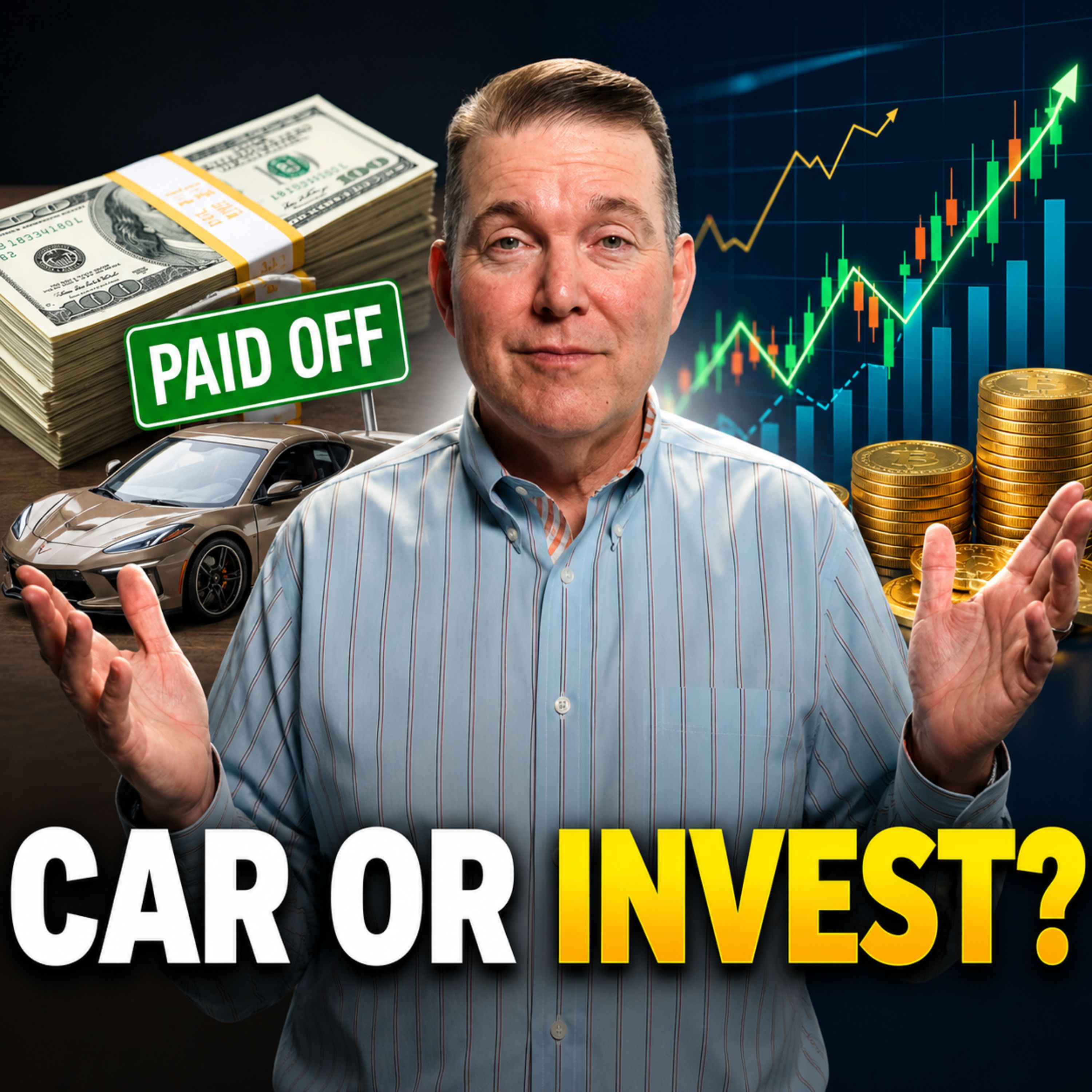
Someone asked me this recently: "Ralph, I've got a $30,000 car loan at 7%. I could pay it off right now, or I could invest that money instead. What should I do?" Pay Off Your Car Loan or Invest? Here's the Real Answer
The math says one thing. Your gut probably says something else.
Let me walk you through this, because the right answer isn't what most financial advisors will tell you.
The Math Is Deceptive
Here's what the spreadsheet says: your car loan is costing you 7% per year. Historically, the stock market averages around 10% annually. So math suggests: invest the money, beat the 7%, and come out ahead.
Sounds logical, right?
Except that's not how humans work.
What's Actually Going On Here
You're not really asking a math question. You're asking: "What will let me sleep at night?"
One choice is certain. You know exactly what happens if you pay off the car: debt disappears, you own it free and clear, and you have one less payment every month. That's tangible. That's real.
The other choice? You're gambling that the market will cooperate. Some years it will. Some years it won't. You could invest $30,000 and watch it drop to $22,000 in a market correction. Now you still have the car payment, AND you're watching your investments bleed.
That's not fun. That's stressful.
The Peace Premium
Here's what I've learned: peace has a dollar value.
If paying off the car lets you sleep better at night, that's worth something. Not in a spreadsheet. But in actual life.
Let me be specific about your situation: you have nine months of emergency savings. You can afford to pay off this car. You're not choosing between car payment or food. You're choosing between "certain peace" and "probable returns."
When you're in that position, peace usually wins.
And it should.
The Real Problem With "Just Invest"
A lot of financial advice assumes you'll stay calm when your investments tank. "Just hold it," they say. "Don't panic sell. The market always recovers."
Sure. Try telling that to yourself when you're down 20% and wondering if you made a terrible mistake.
The math on a 7% loan vs. 10% market returns sounds clean. But it doesn't account for the fact that you might bail out at the worst time. It doesn't account for the fact that you'll feel sick every time you see the market drop.
You can't math your way out of human behavior.
What Actually Works
Here's my honest take: pay off the car.
Not because it's perfectly optimal. But because:
-
You can afford to. You're not stretching. You have the money sitting there.
-
One less payment makes everything simpler. That monthly car payment goes away. That's real cash flow you get back.
-
You can start investing immediately after. Once the car is paid off, take that payment amount and invest it every single month. You've freed up maybe $400-$600 a month. Now you're investing from a position of stability, not stress.
-
Your peace is worth the math gap. If the market averages 10% but you sleep like garbage the whole time, you didn't actually win anything.
The Middle Ground (If You Can't Decide)
Some people feel uncomfortable fully committing either way. If that's you, here's what works:
Pay down the principal aggressively (maybe cut the loan in half), then invest the rest. You've reduced the debt burden significantly. You still have some money in the market. You've split the difference.
But honestly? I think that's just delaying the decision.
One More Thing About Debt
I think about Proverbs 22:7: "The borrower is slave to the lender."
I don't say that to judge you. I say it because it's true. A 7% car loan isn't a death sentence. But it's still a claim on your future. Every month, part of your paycheck goes to the bank instead of to you.
Owning your car outright? That changes something. It's not just math. It's freedom.
What Your Future Self Will Think
Fast forward five years.
Scenario 1: You paid off the car. You've been investing that payment amount every month since. Your car is paid off. You've got investments growing. You feel stable.
Scenario 2: You invested the lump sum. The market had a rough year. You're stressed. You still have the car payment. You're managing debt and volatility at the same time.
I know which one feels better.
The Decision Framework
Before you decide, ask yourself three questions:
1. Can I afford to pay it off without destroying my emergency fund? If no, don't do it. If yes, keep going.
2. Does carrying this debt stress me out? If it does, that stress is worth something. Factor it in.
3. If I paid it off, would I immediately start investing? This matters. You're not choosing between paying off the car and doing nothing. You're choosing between two paths forward. If you'd actually invest the freed-up payment, that would be powerful.
The Bottom Line
The spreadsheet says invest. Your gut probably says pay it off.
I'm siding with your gut.
Pay off the car. Own it. Then invest what you'd have been paying every month. You'll sleep better, you'll feel more stable, and you'll still be building wealth.
That's not the math answer. But it's the human answer.
And humans need both numbers and peace to actually stick with a plan.
Let's Talk About Your Situation
You've got your own numbers. Your own stress level. Your own situation.
If you want to walk through whether paying off your car makes sense for you, reach out at financiallyconfidentchristian.com/voicemail. Tell me what you're dealing with. Let's figure it out together.
The right answer isn't the one that looks best on paper. It's the one you'll actually stick with.
Stay financially savvy. Be blessed.

Christian Financial Consulting
Ralph V. Estep, Jr. is a Delaware-based licensed accountant, author, rancher, and media host with more than 30 years of experience in finance, taxation, and small-business leadership. As the founder of Saggio Accounting+PLUS and the creator of the Ask Ralph Media network, Ralph helps entrepreneurs, creators, and everyday families replace money confusion with clarity, confidence, and practical next steps—without shame and without hype.
Ralph’s work blends deep professional expertise with a coach’s mindset and a communicator’s heart. He has held leadership roles across public accounting, financial institutions, law firms, and technology organizations, bringing a rare combination of traditional accounting rigor and modern systems thinking to the people he serves. A graduate of the University of Delaware and Wilmington University (MBA), Ralph is known for turning complex money topics into simple, repeatable frameworks that help people make wiser decisions and build lasting financial stability.
Through Ask Ralph Media, Ralph hosts multiple shows designed to meet people where they are and guide them forward. He is the host of Financially Confident Christian, a daily, faith-based show offering warm, pastoral encouragement for listeners who want peace and practical wisdom with their finances.
He also hosts Truth Unveiled with Ralph, a weekly program that contrasts cultural pressure with biblical truth and invites listeners into deeper spiritual and practical alignment. For small business owners, Ralph leads Grit and Growth Business, spotlighting real sto… Read More

Why Your Budget Keeps Failing By Week Two (And How to Finally Build One That Lasts)