Is a College Degree Worth the Cost Anymore?
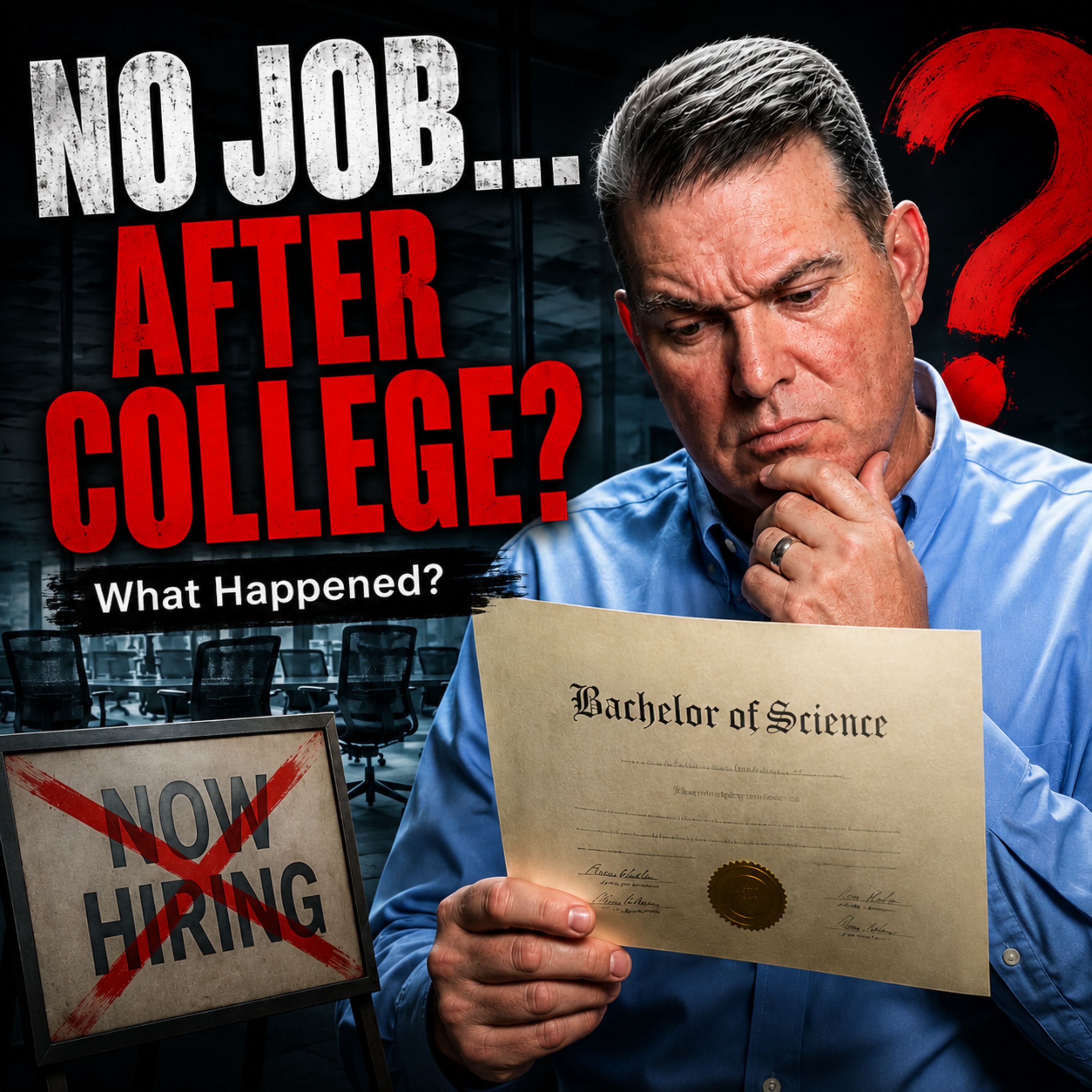
You did everything right. You got the degree, walked across the stage, and now you're drowning in student loan debt while the job market doesn't seem to care. So the question becomes real: is a college degree worth the cost anymore? I know this story because I've sat across the desk from thousands of people living it. Is a College Degree Worth the Cost Anymore?
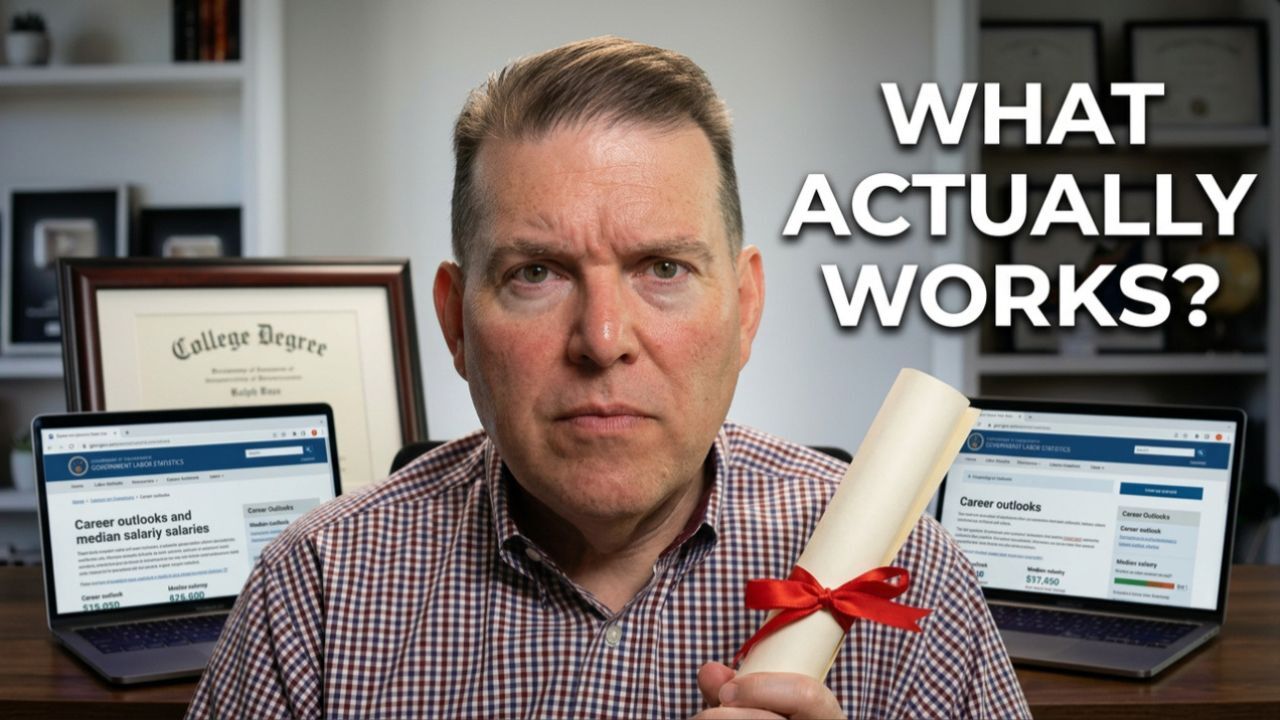
The data tells a story we don't like to admit. Recent college graduates are facing an unemployment rate of 5.7 percent, a three-year high and higher than the overall unemployment rate. These grads make up only 5 percent of the workforce but account for more than double their share of unemployment. Chemistry majors can't get hired. Computer science grads are looking at unemployment rates over 6 percent. Meanwhile, the average student loan balance sits at $39,375, nearly double what it was in 2008.
The formula you were sold is cracking. Sixty-three percent of registered voters now say a college degree isn't worth the cost, up from 40 percent just over a decade ago. Factor in loan interest and lost income, and that bachelor's degree can cost you over half a million dollars. That's real money on the line, and the question isn't theoretical anymore. It's personal.
Is college still the path to a stable career?
Here's the honest answer: it's complicated. College graduates still outearn non-graduates by about $10,400 per year on average, even after debt payments. That matters. The gap exists. But adjusted for inflation, college-educated workers are actually earning less than they did five years ago, while workers without degrees are making more. The gap is closing. The rules are changing.
The real shift isn't about whether degrees matter. It's about what changed between then and now. The economy we're in today is not the same as the one we were in five, ten, or twenty years ago. The job market is flooded with more degrees and less scarcity of people to hire.
When I was starting out, employers asked one question: Does this person have the knowledge? Today, they ask something different: Can this person actually apply it? We've moved from "Do you have knowledge?" to "Do you have the capacity to implement and use that knowledge?" A degree is knowledge in a box, but the job requires proof that you can use it.
What actually changed in the job market?
The old contract between education and employment is broken. You can't coast on the credential anymore. Look at the listener's husband: military training instead of a degree, same career outcome. Or the computer science majors you see on Reddit struggling for entry-level positions despite having the "right" degree.
Employers now look at what you've actually built, not just what you studied. Computer science majors are expected to have a portfolio of projects before graduation. Nursing majors need clinical hours and internships during school, not after. If you're looking for a job in September and you haven't been building since freshman year, you're already behind.
This is frustrating, and yes, it's not fair. But understanding what's actually happening beats getting angry about how it should be. You need to know what the degree promises before you commit to the debt.
Running the numbers before you run into debt
Here's where most people fail. They don't do the math. Before you commit to any degree, look up the average starting salary in that field, not the ceiling. Not what someone makes after fifteen years. What does someone start at?
Once you have that number, subtract the total cost of tuition, four years of lost wages, and student loan interest. Compare what you'll actually earn in years one through five against what you'll actually spend. That's your real payback calculation.
When I looked at the data, an engineering degree pays for itself in three or four years. That history degree you're considering might never pay for itself in dollars. That doesn't mean it's wrong. It might be your passion. But you have to know that going in. You're buying a diploma and a debt. Make sure you know the price.
Build your network and your portfolio before you graduate
A degree alone isn't enough anymore, and that's the reality. While you're in school, you need to build real-world work experience. School and career aren't separate things anymore. You need mentors and professionals who know your work well enough to vouch for you. You need to know the companies that hire people in your field, the salary ranges, and the actual job titles. Most students figure this out after graduation. My challenge is to do it before.
You need to know what your degree promises. Engineering and nursing are licensing degrees—you need them to do the work. But business degrees, history degrees, communications degrees? Those are filter degrees. They prove you can finish hard things; that's all. The subject matter barely matters. You're not getting a guarantee; you're getting proof of persistence.
Is this really about money?
Here's what sits underneath the practical question, and I want to sit with it for a second. So many of us were told to get that degree, and our future would be secure. We heard, "Go to college, get the degree, and you'll be fine." Now you're watching that promise not come through for people who did exactly what they were told. That's not just confusing about jobs. It's confusing about what to trust.
I'm not going to tell you that faith makes this problem go away. I wish it did, but it doesn't. There are real people with real degrees, real debt, and real financial stress right now. Faith won't erase that. What faith offers is something different. Your security doesn't come from the system being fair, because the system isn't fair. Your security comes from a God who already knows you, who already loves you, and who isn't surprised by the world changing.
Faith lets you be practical and smart with money without being controlled by fear. You can ask the hard questions about debt. You can study those fields and make a plan. And while you do, know you're not abandoned. Your worth isn't on your resume. Your future isn't locked behind some diploma someone told you to buy.
This changes the question entirely. You're not asking, "Will this guarantee me everything?" You're asking the real question: "Is this a wise step forward with what I know right now?" That's a question you can actually answer.

Christian Financial Consulting
Ralph V. Estep, Jr. is a Delaware-based licensed accountant, author, rancher, and media host with more than 30 years of experience in finance, taxation, and small-business leadership. As the founder of Saggio Accounting+PLUS and the creator of the Ask Ralph Media network, Ralph helps entrepreneurs, creators, and everyday families replace money confusion with clarity, confidence, and practical next steps—without shame and without hype.
Ralph’s work blends deep professional expertise with a coach’s mindset and a communicator’s heart. He has held leadership roles across public accounting, financial institutions, law firms, and technology organizations, bringing a rare combination of traditional accounting rigor and modern systems thinking to the people he serves. A graduate of the University of Delaware and Wilmington University (MBA), Ralph is known for turning complex money topics into simple, repeatable frameworks that help people make wiser decisions and build lasting financial stability.
Through Ask Ralph Media, Ralph hosts multiple shows designed to meet people where they are and guide them forward. He is the host of Financially Confident Christian, a daily, faith-based show offering warm, pastoral encouragement for listeners who want peace and practical wisdom with their finances.
He also hosts Truth Unveiled with Ralph, a weekly program that contrasts cultural pressure with biblical truth and invites listeners into deeper spiritual and practical alignment. For small business owners, Ralph leads Grit and Growth Business, spotlighting real sto… Read More
How Big Should Your Emergency Fund Be When Layoffs Are Everywhere?