
Self-Employed? Here's What to Do About IRS Audits, Social Security, and 401(k) Withdrawals

Introduction
Welcome to Financially Confident Christian Live, where we tackle the real financial decisions you face every day. I'm Ralph Estep Jr., and I'm here to help you work through the money problems that keep you up at night—IRS audits, Social Security planning, early 401(k) withdrawals, and the dozen other decisions that hit without warning. We don't pretend to have all the answers, but we do have honest conversations about what actually works. These discussions are practical, not theoretical. If you're worried about an audit, confused about when to claim Social Security, or watching someone you love tank their retirement with early withdrawals, this is for you. Self-Employed? Here's What to Do About IRS Audits, Social Security, and 401(k) Withdrawals.
A Personal Moment
Quick personal update: I'm a grandfather now. My grandson, Carson Christopher Estep, was born last night—healthy and full of hair. Thank you to everyone who prayed for us. Now, back to what you came for.
IRS Audits and Self-Employment: What Actually Triggers an Examination
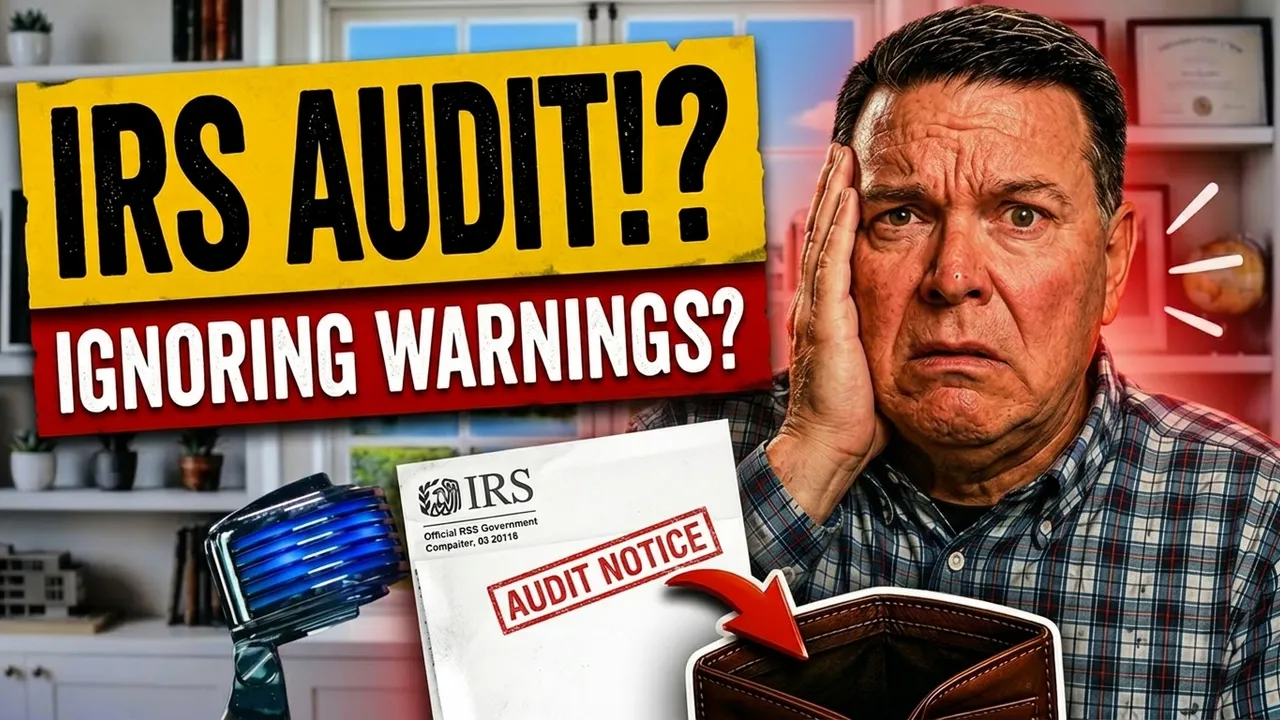
Self-employed? If you've ever claimed a home office deduction or tracked business mileage, you've probably wondered if the IRS is watching. The short answer: some claims get more scrutiny than others, and knowing which ones matters.
Home office deductions are one of the top audit triggers. The IRS wants proof that your office is exclusively for business. If your home office doubles as a guest bedroom, you're asking for trouble. Keep photos. Keep receipts. Keep a record of what percentage of your home it occupies.
Vehicle mileage is another common red flag, especially if your business mileage seems high relative to your total miles driven. The IRS assumes many people exaggerate here. A contemporaneous mileage log (you know, actually written down as you drive, not reconstructed later) is what separates people who get audited from people who don't.
Disproportionate deductions matter too. If you made $50,000 last year but claimed $45,000 in business expenses, that ratio will stand out. Be honest about what's actually a business expense and what isn't.
The real protection isn't complicated: meticulous documentation and honest reporting. A 10% home office deduction with solid records beats a 30% deduction you can't defend.
Social Security: Start Your Application Four Months Early
If you're planning to claim Social Security, most people wait until they're ready to start collecting before beginning the application. Don't do that. Apply four months before your benefits are supposed to start.
Why? Account access problems. Earnings records that need correction. Missing documentation. These aren't hypotheticals—they happen. Four months give you time to fix whatever's broken before your first check should arrive. The Social Security Administration processes thousands of applications. If yours hits a snag in month one, you want runway to solve it.
Early 401(k) Withdrawals: The Real Cost
One of the hardest financial conversations I have is with someone who watched a family member raid their retirement account in a crisis. A job loss. A medical emergency. A divorce. The money comes out, the problem gets solved, and everyone moves on until they realize what actually happened.
Let's say you withdraw $20,000 from your 401(k) at age 45. Here's what that costs:
10% early withdrawal penalty: $2,000 gone immediately.
Taxes owed: That $20,000 counts as income for the year. If you're in the 24% tax bracket, add another $4,800.
Lost growth: If that $20,000 had stayed invested for 20 years at 7% annual returns, it would have become $77,600. You just gave up $57,600 in future money.
The real solution is an emergency fund. Three to six months of living expenses in a savings account. It's boring. It's not invested. But it keeps your retirement intact when life happens.
Building Confidence Through Preparation
The theme running through every conversation we have here is the same: be ready before the crisis hits. An audit doesn't scare you if you have records. Social Security claims don't get delayed if you started four months early. Your retirement survives emergencies if you have an emergency fund.
Financial confidence doesn't come from having everything perfect. It comes from knowing what to do when things go sideways.
Join Us Every Friday
We stream Financially Confident Christian Live every Friday at 1:00 PM Eastern. If you're dealing with IRS concerns, Social Security questions, retirement planning, or just want to talk through your money decisions with real people who get it, join us. There's no cost to participate—we're here because this matters.
Visit financiallyconfidentchristian.com/join to become part of the community and access free resources on audits, Social Security planning, retirement withdrawals, and more.
Have a great week, and we'll see you Friday.

Christian Financial Consulting
Ralph V. Estep, Jr. is a Delaware-based licensed accountant, author, rancher, and media host with more than 30 years of experience in finance, taxation, and small-business leadership. As the founder of Saggio Accounting+PLUS and the creator of the Ask Ralph Media network, Ralph helps entrepreneurs, creators, and everyday families replace money confusion with clarity, confidence, and practical next steps—without shame and without hype.
Ralph’s work blends deep professional expertise with a coach’s mindset and a communicator’s heart. He has held leadership roles across public accounting, financial institutions, law firms, and technology organizations, bringing a rare combination of traditional accounting rigor and modern systems thinking to the people he serves. A graduate of the University of Delaware and Wilmington University (MBA), Ralph is known for turning complex money topics into simple, repeatable frameworks that help people make wiser decisions and build lasting financial stability.
Through Ask Ralph Media, Ralph hosts multiple shows designed to meet people where they are and guide them forward. He is the host of Financially Confident Christian, a daily, faith-based show offering warm, pastoral encouragement for listeners who want peace and practical wisdom with their finances.
He also hosts Truth Unveiled with Ralph, a weekly program that contrasts cultural pressure with biblical truth and invites listeners into deeper spiritual and practical alignment. For small business owners, Ralph leads Grit and Growth Business, spotlighting real sto…Read More

Should You Pay Off Old Debt Before It Falls Off Your Credit Report?




