
Navigating IRS Claims: What to Do When the IRS Says You Never Paid
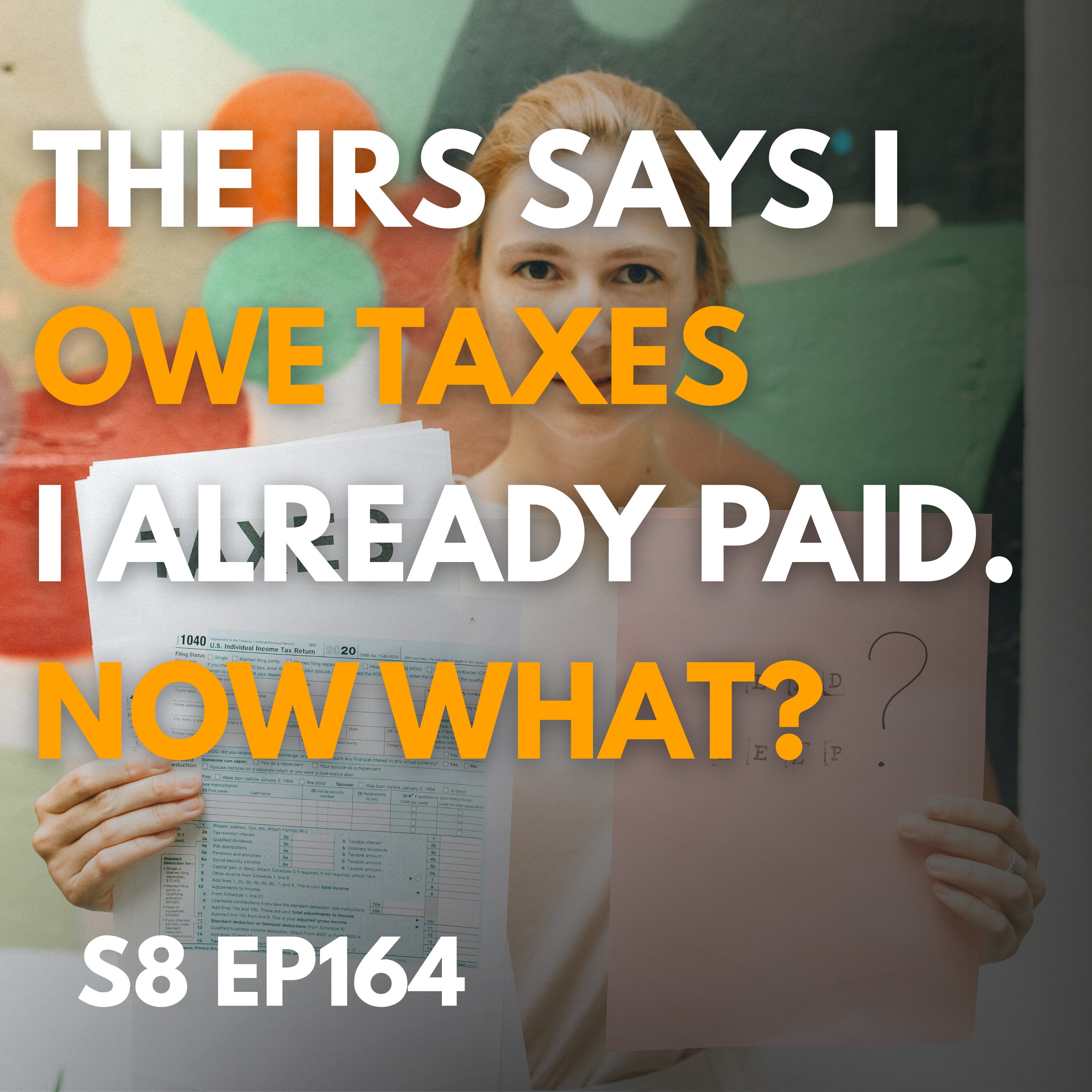
You paid your taxes. You have the confirmation number. You watched the money leave your bank account.
I'm Ralph Estep Jr., host of Financially Confident Christian. Let me walk you through what to do.

Don't panic. Gather everything first.
The worst thing you can do is ignore the notice or call the IRS without your documents in front of you. Before you do anything else, pull together:
● Your payment confirmation number
● Bank statements showing the exact withdrawal date and amount
● The IRS notice itself, including the notice number and response deadline
Put these in one folder. Physical or digital, it doesn't matter. You want everything in one place because you may need to reference it repeatedly over the coming weeks.
Set up your IRS online account
If you haven't already, go to irs.gov and create an account. You'll need to verify your identity through ID.me. It's a hassle the first time, but once you're in, you can see your IRS account balance, payment history, and any pending actions against you.
This is where you confirm whether the payment has actually been posted or is still showing as outstanding. Sometimes that's the whole story: the payment is there, just delayed. Other times it's not there at all, which means you'll need to submit proof.
Respond to the notice in writing
Every IRS notice has a response deadline. Miss it, and your options shrink. Respond on time, and you protect yourself even if the process drags on.
Write a short, clear letter. State that you made the payment, attach copies of your proof (not originals), and reference the notice number. Send it certified mail so you have a record of delivery. Keep a copy of everything you send.
Don't assume a phone call is enough. Written documentation is what protects you if this escalates.
If the IRS isn't moving, request help
If you've responded and weeks are passing without resolution, you can ask for help from the Taxpayer Advocate Service. This is a free, independent office within the IRS that steps in when normal channels aren't working.
File Form 911 to request their assistance. You don't need a tax professional to do this, but having one helps if the situation is complicated.
Keep a log of every call you make to the IRS: date, time, the representative's name or ID number, and a summary of what was said. If you escalate to the Advocate, that log becomes your case file.
A word about faith and patience here
I've been working through tax situations since I was eight years old. I've seen people spiral into fear over an IRS letter, convinced their lives are falling apart, when the actual problem was a processing delay that was resolved in 3 weeks.
Psalm 37:5 says to commit your way to the Lord and trust Him. That's not a passive instruction. It means doing the work, handling your responsibilities, and trusting that God is present in the process, even when it is frustrating.
An IRS notice isn't a judgment on your character. It's paperwork.
Let's pray
Heavenly Father, I lift up everyone reading this who is carrying the weight of an IRS dispute. Give them clear thinking, organized steps, and patience when the process moves slowly. Remind them that this is a manageable problem and that they don't have to face it alone. Amen.
Stay connected
If you're dealing with a tax dispute or any financial situation that feels too big to handle alone, I want to hear from you. Leave me a voicemail at financiallyconfidentchristian.com/voicemail. I read them all.
And join us live every Friday at 1:00 PM Eastern at financiallyconfidentchristian.com/fcclive. We tackle these questions together.

Christian Financial Consulting
Ralph V. Estep, Jr. is a Delaware-based licensed accountant, author, rancher, and media host with more than 30 years of experience in finance, taxation, and small-business leadership. As the founder of Saggio Accounting+PLUS and the creator of the Ask Ralph Media network, Ralph helps entrepreneurs, creators, and everyday families replace money confusion with clarity, confidence, and practical next steps—without shame and without hype.
Ralph’s work blends deep professional expertise with a coach’s mindset and a communicator’s heart. He has held leadership roles across public accounting, financial institutions, law firms, and technology organizations, bringing a rare combination of traditional accounting rigor and modern systems thinking to the people he serves. A graduate of the University of Delaware and Wilmington University (MBA), Ralph is known for turning complex money topics into simple, repeatable frameworks that help people make wiser decisions and build lasting financial stability.
Through Ask Ralph Media, Ralph hosts multiple shows designed to meet people where they are and guide them forward. He is the host of Financially Confident Christian, a daily, faith-based show offering warm, pastoral encouragement for listeners who want peace and practical wisdom with their finances.
He also hosts Truth Unveiled with Ralph, a weekly program that contrasts cultural pressure with biblical truth and invites listeners into deeper spiritual and practical alignment. For small business owners, Ralph leads Grit and Growth Business, spotlighting real sto… Read More
Renting vs. Buying: My 25% Rule for Figuring Out What You Can Actually Afford