
What to Do When Someone Opens a Loan in Your Name

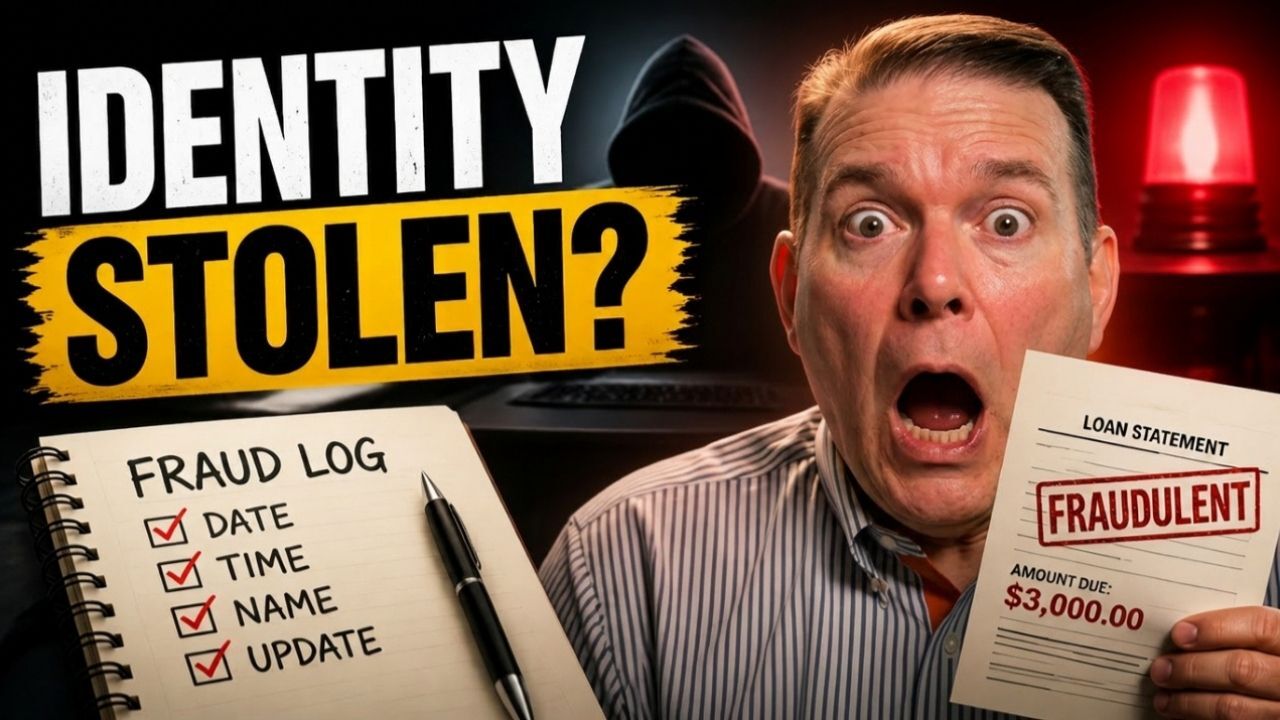
Finding out someone opened a $3,000 loan in your name is one of those moments that stops you cold. You're nineteen. You've done nothing wrong. And suddenly there's a debt attached to your name that you never agreed to. What to Do When Someone Opens a Loan in Your Name
That's exactly what one listener brought to today's episode of Financially Confident Christian. And it's more common than most people realize.
I'm Ralph Estep Jr. This is where we talk honestly about money, faith, and the mess that happens in between. Identity theft is one of the uglier intersections of all three.
The panic is normal. What comes next matters more.
When you first find out, panic is the right reaction. Something was stolen from you. But panic without a plan just burns time, and in identity theft cases, time matters.
Here's what to do, in order.
Step 1: Document everything, starting now
Before you call anyone, open a document or grab a notebook. Write down the date, the loan amount, the lender's name, and how you found out. Every phone call you make from here on, log it: who you spoke to, what they said, what they promised.
This record becomes your paper trail. You'll need it.
Step 2: Contact the lender directly
Call the lender and tell them plainly: this account is fraudulent. You did not open it. You want a formal fraud investigation opened.
Some lenders will make this easy. Others will be difficult. Don't assume one call settles it. Follow up in writing after every phone call, and keep copies of everything you send.
Step 3: Freeze your credit at all three bureaus
A credit freeze stops anyone, including the person who already stole your identity, from opening new accounts in your name. Do this at Equifax, Experian, and TransUnion. It's free, and it's one of the most effective things you can do right now.
While you're there, pull your full credit reports and look for anything else you don't recognize. Fraudulent accounts tend not to come alone.
Step 4: File a police report
Call your local police department's non-emergency line. Tell them you're a victim of identity theft and you need to file a report. Some officers will be helpful; some will act like it's not a priority. Get the report number either way.
That report is documentation. The lender will ask for it. The credit bureaus may ask for it. It also creates an official record that the debt was disputed and reported as fraud.
Step 5: Place a fraud alert on your credit report
A fraud alert tells creditors to take extra steps to verify your identity before opening any new accounts. You only have to request it from one bureau, and they're required to notify the others. It lasts one year, and you can renew it.
If you've been a victim of documented identity theft, you may qualify for an extended seven-year alert.
The part people don't talk about: how this actually feels
There's the financial side of this, and then there's everything else.
Being nineteen and dealing with debt-collection calls for a loan you never took out is disorienting in a way that's hard to explain to people who haven't been through it. It's not just stressful. It feels like a violation, because it is one. Someone used your name, your information, and your financial future as a tool for their own gain.
Psalm 46:1 says, "God is our refuge and strength, an ever-present help in trouble." That's not a platitude here. When the process feels slow and nobody seems to be listening, that anchor matters.
This takes longer than it should. Keep going anyway.
Most identity theft cases aren't resolved in a single call or within a week. Lenders investigate on their own timeline. Credit bureaus have their own process. The police report sits in a queue.
The people who get a resolution are usually the ones who kept showing up. They followed up. They documented. They didn't assume someone else was handling it.
Stay in it.
Going forward: protection worth considering
Once you're through the immediate crisis, identity monitoring services are worth looking at. They won't prevent everything, but they alert you early when something shows up under your name, and early is always better than finding out months later.
If this is happening to you right now, you don't have to figure it out alone.
Share what you're going through. Leave a voicemail at financiallyconfidentchristian.com/voicemail. Your story might be exactly what someone else needs to hear.

Christian Financial Consulting
Ralph V. Estep, Jr. is a Delaware-based licensed accountant, author, rancher, and media host with more than 30 years of experience in finance, taxation, and small-business leadership. As the founder of Saggio Accounting+PLUS and the creator of the Ask Ralph Media network, Ralph helps entrepreneurs, creators, and everyday families replace money confusion with clarity, confidence, and practical next steps—without shame and without hype.
Ralph’s work blends deep professional expertise with a coach’s mindset and a communicator’s heart. He has held leadership roles across public accounting, financial institutions, law firms, and technology organizations, bringing a rare combination of traditional accounting rigor and modern systems thinking to the people he serves. A graduate of the University of Delaware and Wilmington University (MBA), Ralph is known for turning complex money topics into simple, repeatable frameworks that help people make wiser decisions and build lasting financial stability.
Through Ask Ralph Media, Ralph hosts multiple shows designed to meet people where they are and guide them forward. He is the host of Financially Confident Christian, a daily, faith-based show offering warm, pastoral encouragement for listeners who want peace and practical wisdom with their finances.
He also hosts Truth Unveiled with Ralph, a weekly program that contrasts cultural pressure with biblical truth and invites listeners into deeper spiritual and practical alignment. For small business owners, Ralph leads Grit and Growth Business, spotlighting real sto… Read More

Debt snowball vs. debt avalanche: how to pick the right payoff method for you