How to Recover From a Costly Car Purchase (Before It Gets Worse)
I see this all the time in my conversations with listeners. Someone drives off the lot, and within weeks, the regret hits. The monthly payment sits there like a bill you can't unsee, a reminder of a decision made in excitement that no longer makes sense. This is financial regret, and it hits different when it's a depreciating asset like a car. How to Recover From a Costly Car Purchase (Before It Gets Worse)
The good news: you're not stuck. The bad news: the longer you wait, the harder it gets to fix.
Your financial mistake doesn't define you. Full stop.
I've talked with thousands of people who regret a car purchase, and I can tell you this—they all made that choice under specific conditions. Maybe the salesman was good. Maybe they were tired or emotional. Maybe they'd been driving a clunker and wanted to feel normal again. None of that means they're bad with money.
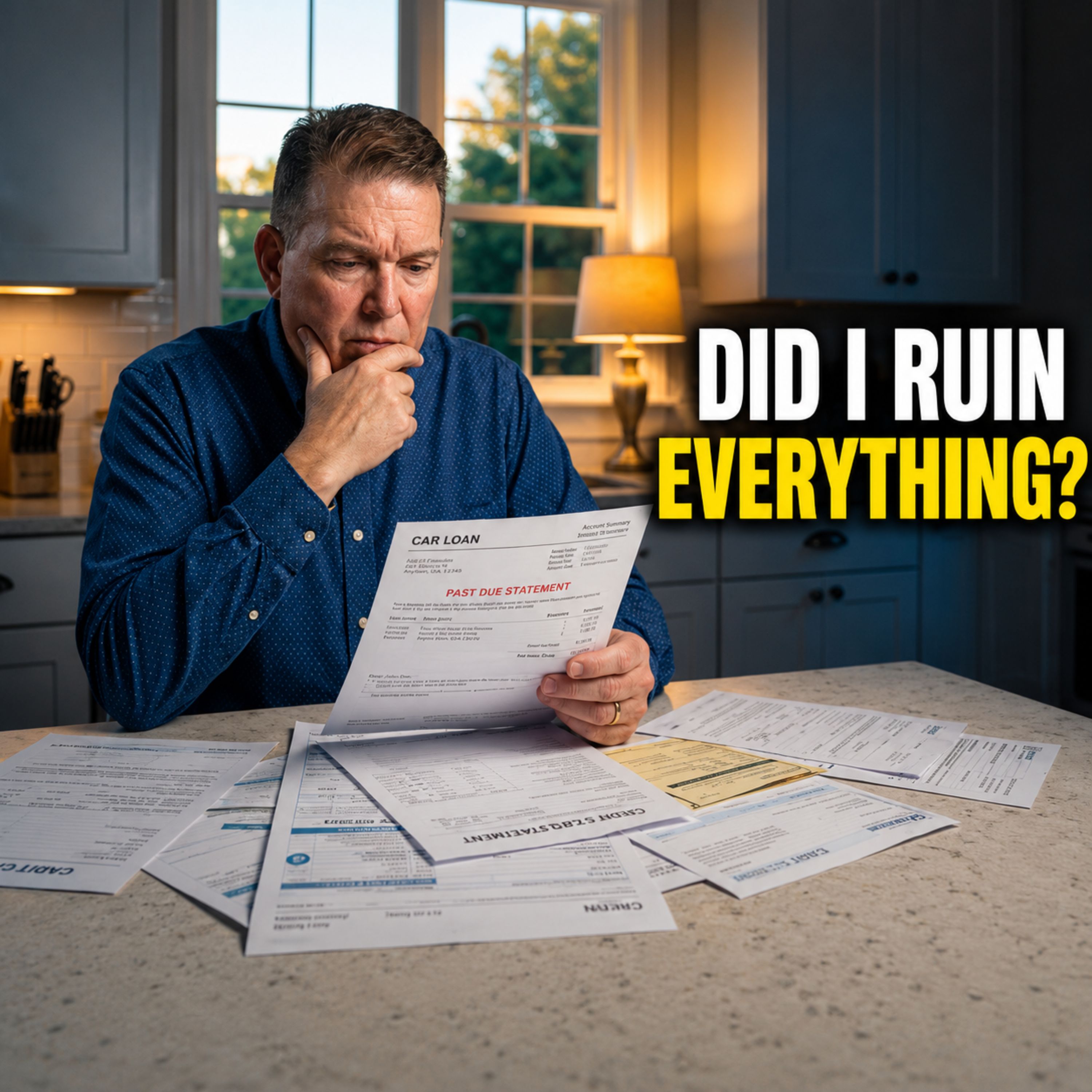
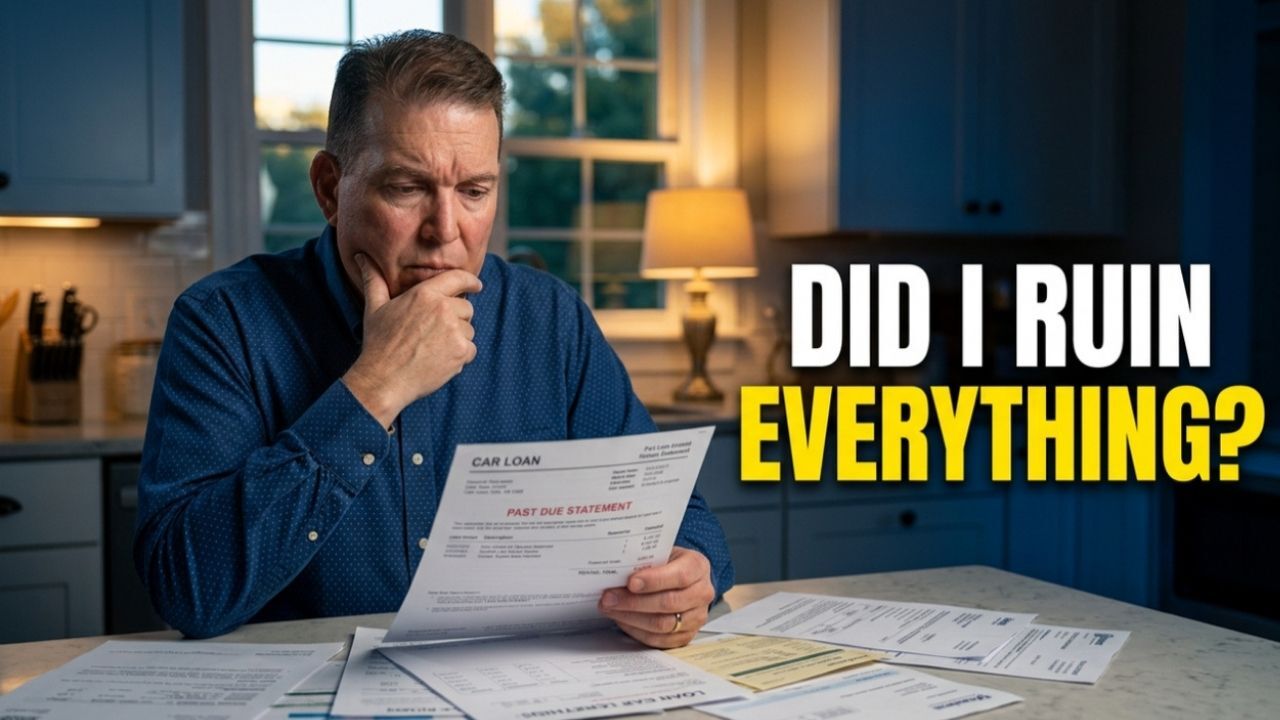
Shame, though—that's dangerous. Because shame makes people hide. They avoid opening the loan statement. They don't tell their spouse the real payment amount. They make it worse by doing nothing.
I see it happen. Someone messages me privately because they can't bring themselves to tell their family how bad it actually is. And that silence costs them months or years of their financial life.
The first move is owning it without drowning in it. You made a choice. It was expensive. Now you handle it.
Here's what I tell people to do first. Pull together everything:
● Loan payoff balance (call your lender or check your statement)
● Current market value of the car (check Kelley Blue Book or NADA Guides)
● Monthly payment and remaining loan term
● Insurance cost
● Any maintenance costs already coming up
● Registration and taxes remaining
Are you underwater (owe more than the car is worth)? By how much?
I've seen people refuse to check this number. They live in that fog because knowing feels worse. But I'm telling you from experience: fear keeps you stuck. Numbers tell you the actual situation, which means you can actually do something about it.
Once I worked with someone who had convinced themselves they were $15,000 underwater. When they finally checked, it was $3,500. Still painful, but suddenly manageable.
Option 1: Keep the car, cut elsewhere
If you're only slightly underwater or the car is reliable, sometimes the simplest move is to keep it and adjust the rest of your budget. I'm not going to lie and say this doesn't suck. But it sucks the least overall if you're stuck anyway.
Where can you cut? Not food or necessities. But if you're paying for streaming services you don't watch, a gym membership you never use, or eating out three times a week, that money can go toward the payment instead. You're buying time while your vehicle depreciates and your loan balance decreases.
I had a listener do exactly this for two years. She cut Uber Eats, downgraded her streaming subscriptions, and redirected that $400 a month to her payment. Was it fun? No. But it bought her time, and her regret car became just a regular car.
Option 2: Refinance for a lower rate
If you have decent credit and rates have dropped since you bought, refinancing can lower your payment. Here's the trade-off I need to be straight with you about: you'll probably extend the loan term, which means you'll pay more interest overall. But it gives you breathing room now, and sometimes that's the right call if cash flow is the problem.
Option 3: Sell or trade down
This is the hard one. I get resistance on this one every time I bring it up.
If you're underwater by $2,000 or less, you might be able to roll that into a much cheaper used car loan or buy something reliable outright. You take the loss upfront. It stings. But you stop the bleeding. It's not fun. But it's faster than the years-long payment plan for a car you resent every time you get in it.
If you're only slightly underwater or above water, this is the clearest win. You eliminate the regret asset and replace it with something that just works.
Option 4: Find extra income temporarily
This is what I recommend more than people think. A side gig—delivery driving, freelance work, weekend consulting—doesn't have to be forever. Just enough to cover the gap between what you can afford and what you owe. Six months of Uber or freelance writing can knock years off the regret.
I'm not saying build a second career. I'm saying do one thing temporarily to fix this.
The Numbers Change Your Decision
Here's what I actually ask myself when I'm working through this with someone:
● How much longer is the loan?
● What's the interest rate?
● Is the car reliable, or are repairs coming?
● Can they realistically cut $200/month from their budget?
If the answer to the last question is no, I push toward option 2, 3, or 4. If the answer is yes and repairs aren't coming, option 1 might actually be the right move.
Don't choose based on how the options feel. Choose the one that leaves you in the best place in 24 months. That's the question that matters.
I want to be clear about something because I talk to a lot of Christians who are carrying guilt about this.
Money mistakes don't separate you from God's grace. This isn't divine punishment. This is you learning your actual financial capacity. That's not punishment. That's growth.
Some of the most faithful people I know made expensive mistakes early. The difference between those who recovered and those who spiraled wasn't intelligence or luck. It was the willingness to look at the numbers and take one step forward rather than pretend it didn't happen.
Regret points backward. Wisdom points forward. You can actually have both.
If you're stuck in this situation, you don't have to figure it out alone.
I dig into listener questions every week on the Financially Confident Christian podcast, including the hard ones about car payments, underwater loans, and how to recover. If you want to think through your specific situation with real numbers, submit your question here.
You made one bad decision. That's not a pattern until you make it one. The fact that you're reading this means you're already looking for a way out.
That's the start.

Christian Financial Consulting
Ralph V. Estep, Jr. is a Delaware-based licensed accountant, author, rancher, and media host with more than 30 years of experience in finance, taxation, and small-business leadership. As the founder of Saggio Accounting+PLUS and the creator of the Ask Ralph Media network, Ralph helps entrepreneurs, creators, and everyday families replace money confusion with clarity, confidence, and practical next steps—without shame and without hype.
Ralph’s work blends deep professional expertise with a coach’s mindset and a communicator’s heart. He has held leadership roles across public accounting, financial institutions, law firms, and technology organizations, bringing a rare combination of traditional accounting rigor and modern systems thinking to the people he serves. A graduate of the University of Delaware and Wilmington University (MBA), Ralph is known for turning complex money topics into simple, repeatable frameworks that help people make wiser decisions and build lasting financial stability.
Through Ask Ralph Media, Ralph hosts multiple shows designed to meet people where they are and guide them forward. He is the host of Financially Confident Christian, a daily, faith-based show offering warm, pastoral encouragement for listeners who want peace and practical wisdom with their finances.
He also hosts Truth Unveiled with Ralph, a weekly program that contrasts cultural pressure with biblical truth and invites listeners into deeper spiritual and practical alignment. For small business owners, Ralph leads Grit and Growth Business, spotlighting real sto… Read More
Why Your Credit Card Balance Keeps Rising Even After You Stopped Using It