Why Your Credit Card Balance Keeps Rising Even After You Stopped Using It
Why Your Credit Card Balance Keeps Rising Even After You Stopped Using It
You cut up the card. You haven't charged a single thing to it in months. You're even paying more than the minimum sometimes. And the balance is still higher than when you stopped. If that sounds familiar, you're not doing anything wrong, and you're not imagining it.
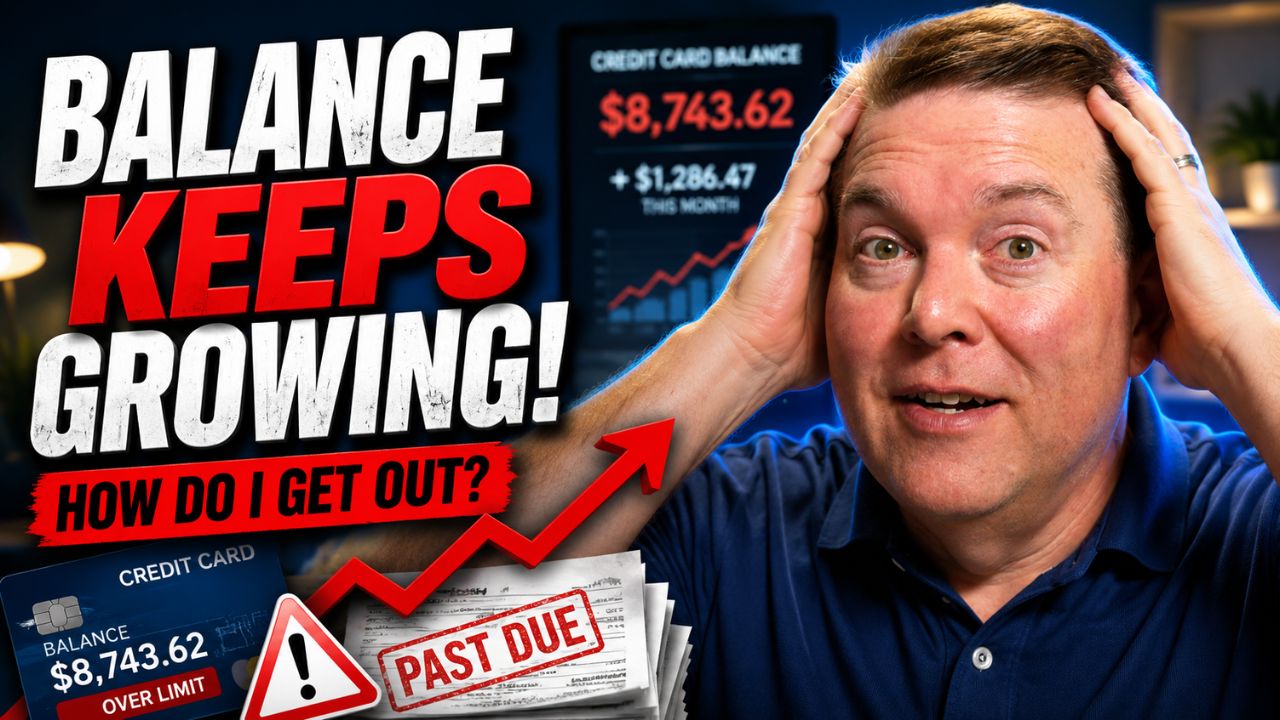
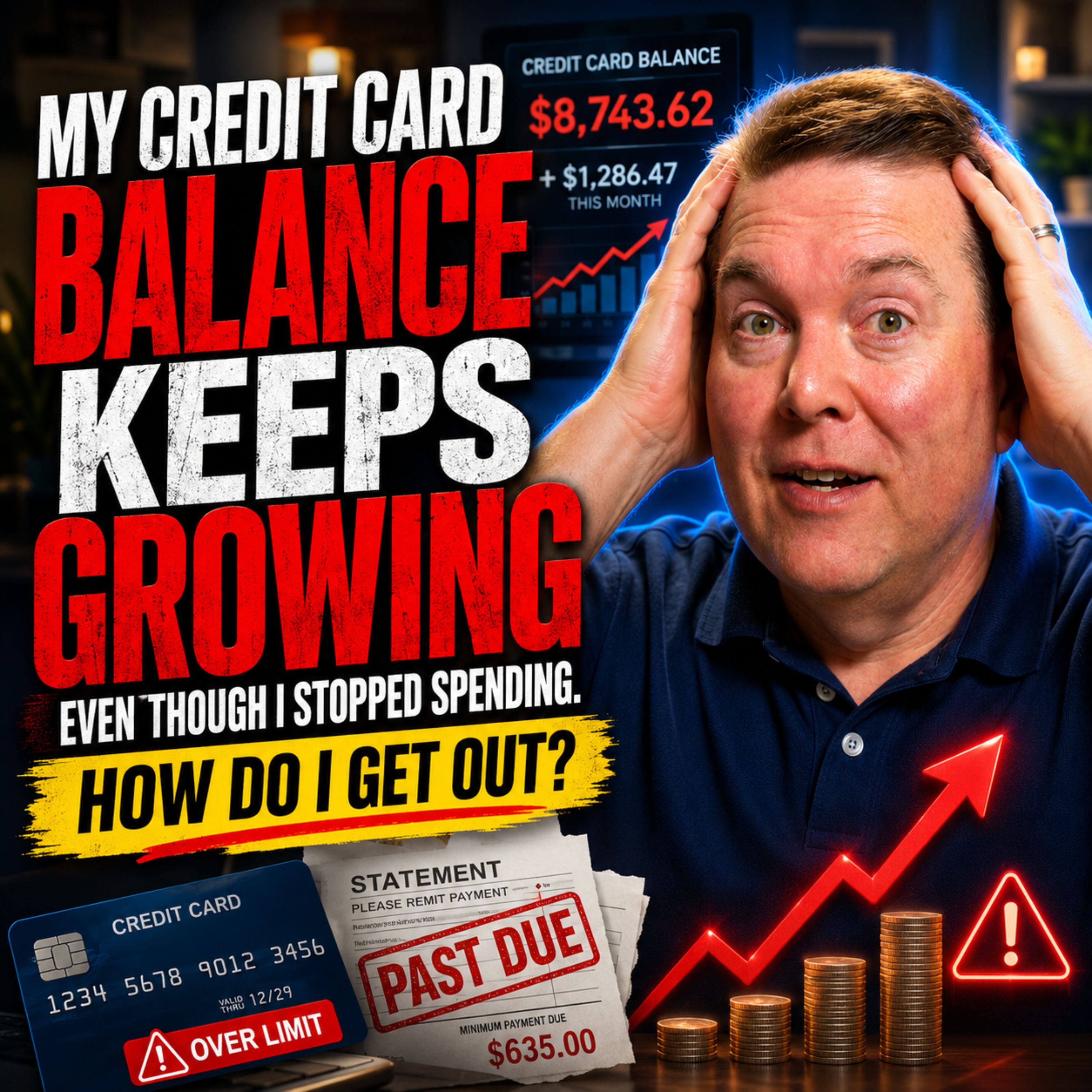
A listener wrote in with almost exactly $11,000 on a credit card she stopped using four months ago. Her minimum payments have gone out every month, sometimes more, and the number still climbs. She described it as feeling like quicksand, like the harder she tries, the more stuck she gets.
Here's the answer: it's not your spending. It's interest.
The math behind why the balance keeps growing
Credit card interest rates are running well over 20% right now. When your minimum payment is smaller than the interest accruing on the balance each month, the balance grows even if you never touch the card again. This isn't a discipline problem. It's arithmetic. Once you understand that, the next steps get a lot clearer.
Pay more than the minimum, every time
Minimum payments are designed to keep a balance alive as long as possible. Almost nothing goes toward the principal at that level. Pick a fixed extra amount above the minimum and hold to it every month. That extra is what actually moves the number down instead of just covering the interest that piled up.
Attack the interest rate directly
This step gets skipped more than it should. Call the credit card company and ask them to lower your rate. The worst answer is no. Some companies will do it to keep your business, especially if you've been a reliable customer. A balance transfer to a zero-percent card for a limited window is another option worth checking. Every point you shave off that rate means more of your payment goes toward the actual debt instead of feeding the interest.
Throw windfalls at the balance
Tax refunds, bonuses, anything from selling things you're not using, side income. All of it can go straight at the card instead of getting absorbed into everyday spending. A short season of intensity like this moves a payoff timeline from years down to months.
Build a small cushion so it doesn't refill
This part gets overlooked constantly. The moment an unexpected expense hits and there's no cash cushion, that credit card becomes the fallback again, and months of progress disappear. Even $1,000 set aside as a starter emergency fund protects the work already done. Keep the card open once it's paid off (closing it can hurt your credit report), just keep the balance at zero.
This isn't permanent
Proverbs 22:7 says, "Just as the rich rule the poor, so the borrower is servant to the lender." That's a description of where things stand today, not a life sentence. Naming the feeling of being trapped is the first step. Once it's named, it can actually be attacked.
Your win for today: find your current interest rate, call the credit card company, and ask them directly if they'll lower it. That one phone call could change how fast this balance actually moves.

Christian Financial Consulting
Ralph V. Estep, Jr. is a Delaware-based licensed accountant, author, rancher, and media host with more than 30 years of experience in finance, taxation, and small-business leadership. As the founder of Saggio Accounting+PLUS and the creator of the Ask Ralph Media network, Ralph helps entrepreneurs, creators, and everyday families replace money confusion with clarity, confidence, and practical next steps—without shame and without hype.
Ralph’s work blends deep professional expertise with a coach’s mindset and a communicator’s heart. He has held leadership roles across public accounting, financial institutions, law firms, and technology organizations, bringing a rare combination of traditional accounting rigor and modern systems thinking to the people he serves. A graduate of the University of Delaware and Wilmington University (MBA), Ralph is known for turning complex money topics into simple, repeatable frameworks that help people make wiser decisions and build lasting financial stability.
Through Ask Ralph Media, Ralph hosts multiple shows designed to meet people where they are and guide them forward. He is the host of Financially Confident Christian, a daily, faith-based show offering warm, pastoral encouragement for listeners who want peace and practical wisdom with their finances.
He also hosts Truth Unveiled with Ralph, a weekly program that contrasts cultural pressure with biblical truth and invites listeners into deeper spiritual and practical alignment. For small business owners, Ralph leads Grit and Growth Business, spotlighting real sto… Read More
Should You Keep Giving When You're Deep in Debt? Here's How to Think About It