Is Your Savings Account Quietly Costing You Money?
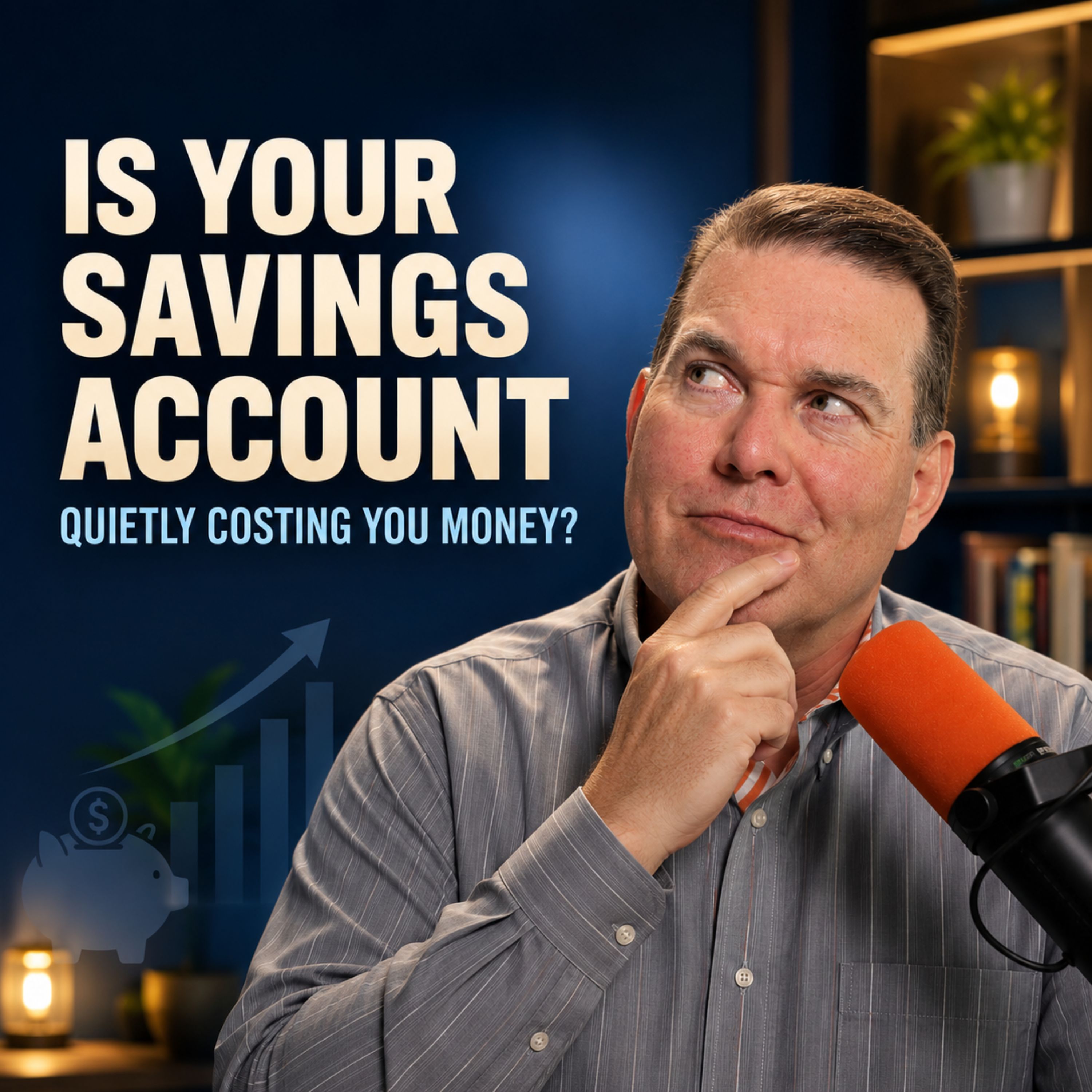
Is Your Savings Account Quietly Costing You Money?
You finally started saving. Then a coworker mentioned they're earning over four percent on their savings while yours is barely earning anything. Suddenly you're wondering if you've been doing it wrong all along.
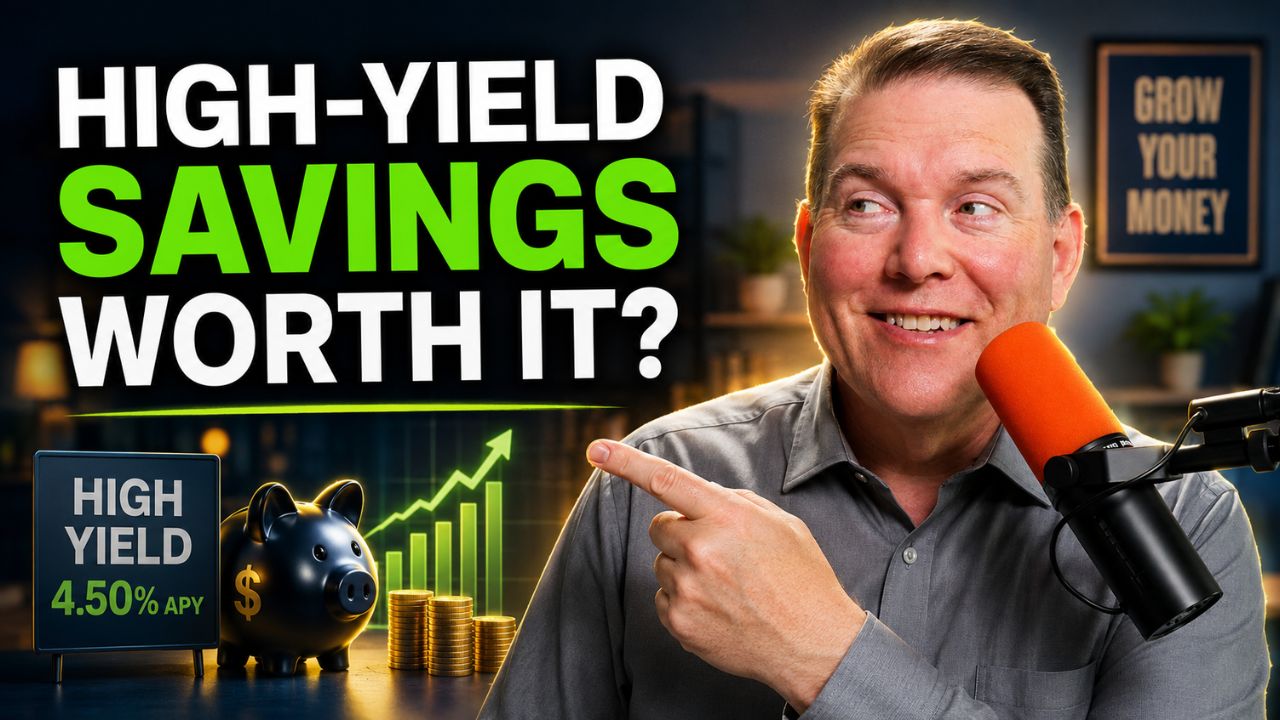
I got this exact question from a listener recently, and I want to walk through my answer here because I think a lot of people are sitting on the same worry.
The Question: Is a High-Yield Savings Account Worth It?
Here's what she wrote me:
"I've always banked at the same place my parents used. My savings account has been there for years, and I never thought much about it. Recently a coworker mentioned they're earning over four percent on their savings while mine is barely earning anything. Is a high-yield savings account really worth opening, or is this just another financial trend everyone is talking about?"
Where you keep your savings matters more than most people realize. Your savings should be safe, accessible, and growing. Here's how I think through that.
Step 1: Understand What a High-Yield Savings Account Actually Is
A high-yield savings account is still a savings account. Your money stays liquid, meaning it's still available whenever you need it. The real difference is the interest rate. Many online banks pay significantly more than traditional brick-and-mortar savings accounts, and that extra interest compounds over time.
Your savings deserve to earn more than pennies.
Step 2: Remember the Purpose of Savings
I want to separate two things here. Emergency savings are not investments. Their first job is protection. Their second job is accessibility. Growth is simply an added benefit on top of that.
Don't chase returns at the expense of safety. The purpose of your emergency fund isn't to make you rich. It's to keep you secure.
Step 3: Make Sure Your Money Is Protected
Before you move a dollar, check that the bank is FDIC-insured (or NCUA-insured if it's a credit union). That means your deposits are protected within the insurance limits, no matter what happens to the institution.
Research any bank before opening an account there. Scams and lookalike sites are common, so don't let unfamiliarity with a new bank create unnecessary fear, but don't skip your homework either. Good stewardship includes due diligence. Wisdom asks questions before moving money.
Step 4: Don't Chase Every Rate Change
We're in an environment where interest rates shift often, and I see people bouncing from bank to bank chasing tiny rate differences. I'd rather you find one trustworthy institution and stay put.
A peaceful financial life is usually a profitable one. Consistency wins over constant switching.
Step 5: Keep Saving Regularly
Here's the part I want you to actually remember. The interest rate matters, but your saving habit matters more. A higher rate can never replace consistent deposits. Automate your savings and let time do the work.
The biggest contributor to your savings isn't the interest rate. It's your consistency.
A Faith Perspective on Stewardship
Sometimes we think being a good steward only means working harder. But stewardship also means making wise decisions with what we've already been given.
Faith doesn't promise your money will multiply without effort, or that every financial decision will be obvious, or that you'll never make mistakes. What it does promise is that God delights in faithful stewardship. When you're intentional with even small resources, you're honoring the One who entrusted them to you.
Faithfulness isn't measured by account size. It's measured by obedience. As Luke 16:10 puts it: "If you are faithful in little things, you will be faithful in large ones."
Today's Win: Review Your Savings Rate
-
Check the interest rate your current bank is paying you.
-
Compare it against a reputable high-yield savings account.
-
Decide honestly whether switching makes sense for you.
-
Set up automatic monthly savings if you haven't already.
Small, wise decisions like this, repeated over years, are what actually build financial confidence.
Have a financial question? Send it to me at financiallyconfidentchristian.com/question.
Christian Financial Consulting
Ralph V. Estep, Jr. is a Delaware-based licensed accountant, author, rancher, and media host with more than 30 years of experience in finance, taxation, and small-business leadership. As the founder of Saggio Accounting+PLUS and the creator of the Ask Ralph Media network, Ralph helps entrepreneurs, creators, and everyday families replace money confusion with clarity, confidence, and practical next steps—without shame and without hype.
Ralph’s work blends deep professional expertise with a coach’s mindset and a communicator’s heart. He has held leadership roles across public accounting, financial institutions, law firms, and technology organizations, bringing a rare combination of traditional accounting rigor and modern systems thinking to the people he serves. A graduate of the University of Delaware and Wilmington University (MBA), Ralph is known for turning complex money topics into simple, repeatable frameworks that help people make wiser decisions and build lasting financial stability.
Through Ask Ralph Media, Ralph hosts multiple shows designed to meet people where they are and guide them forward. He is the host of Financially Confident Christian, a daily, faith-based show offering warm, pastoral encouragement for listeners who want peace and practical wisdom with their finances.
He also hosts Truth Unveiled with Ralph, a weekly program that contrasts cultural pressure with biblical truth and invites listeners into deeper spiritual and practical alignment. For small business owners, Ralph leads Grit and Growth Business, spotlighting real sto… Read More
Why Your Credit Card Balance Keeps Rising Even After You Stopped Using It