
How to Organize Your Bills: A Simple System That Actually Works
Bills pile up. They arrive in your inbox, your mailbox, your text messages. You pay one, two more show up. Does this feel familiar? You're not alone—and you're not lazy. The problem usually isn't willpower. Its structure. How to Organize Your Bills: A Simple System That Actually Works
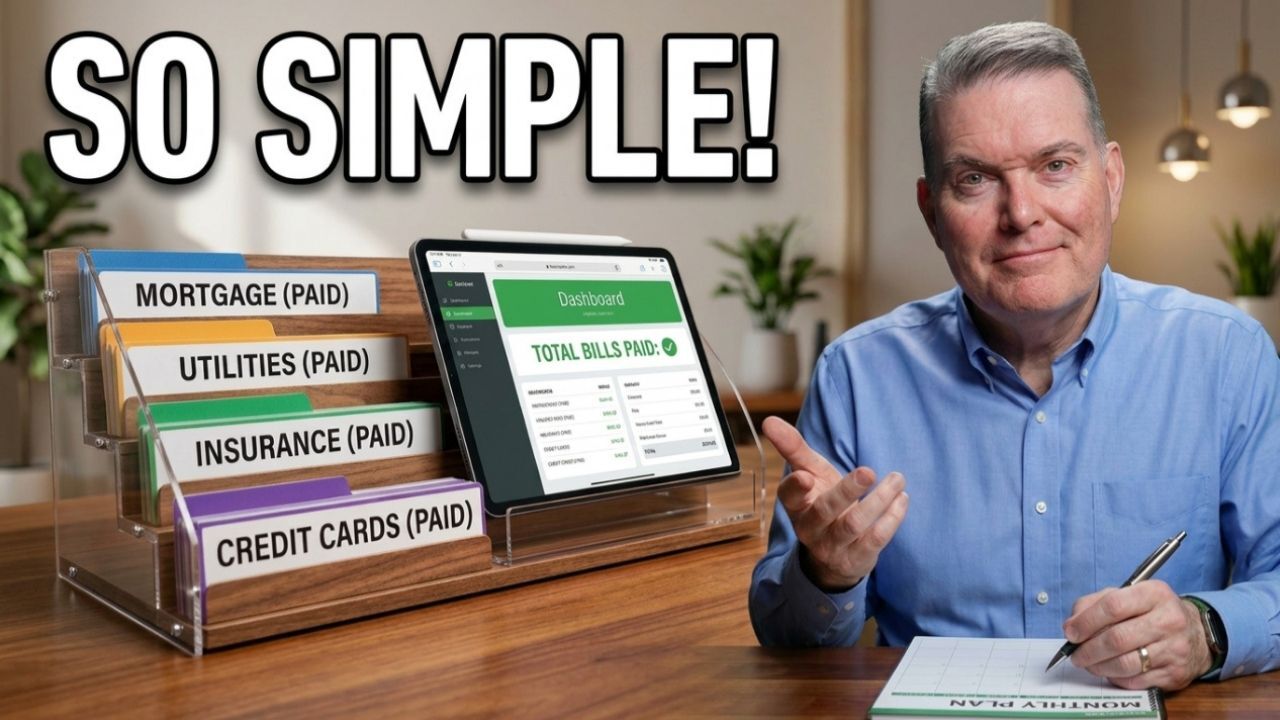
I'm Ralph Estep Jr., and I've spent over 30 years helping people stop the constant scramble and get their finances under control. Here's the system that actually works.
Why Bills Feel Chaotic (And How to Fix It)
Most people blame themselves when bills feel overwhelming. But here's the truth: a bad system beats discipline every single time. Fix the system, and the stress disappears.
The goal is simple: predictability. When you know exactly when money goes out, and you've aligned that with when money comes in, the panic stops.
Step 1: Write Down Every Bill
Seriously. All of them.
Don't try to remember. Don't spread them across three apps and your brain. Get one place—a notebook, a spreadsheet, whatever—and list:
-
The bill name
-
The due date
-
The amount
Sounds basic, right? It is. And it works because visibility changes everything. In three decades of working with clients, I've never seen someone get control of their bills without this first step.
You can't manage what you can't see.
Step 2: Split Bills by When You Get Paid
Now look at your paycheck. When do you get paid?
-
Weekly? Create four bill groups.
-
Biweekly? Create two groups—one for each half of the month.
Put bills in the group that matches your income cycle. If you get paid on the 1st and 15th, bills due between the 1st and 15th go in one pile. Bills due between the 15th and the end of the month go in the other.
This alignment is the secret sauce. Randomness creates stress. Rhythm creates calm.
And here's something most people don't know: you can ask creditors to move your due date. Call them and ask. Many will do it, especially if you have a decent payment history. This flexibility is worth its weight in gold.
Step 3: Set Up Automatic Payments
Create a separate checking account just for bills. That's it. This isn't complicated.
Transfer enough money into this account to cover what's due that week or half-month. Set up automatic payments for anything that doesn't change month to month (mortgage, insurance, utilities). Leave the variable ones (groceries, gas) to your main account.
Less decision-making means less stress. Less stress means you actually stick with the system.
The One Habit That Keeps It Working
Spend 10 minutes once a week—Sunday morning works for most people—and ask yourself three questions:
-
What's coming in this week?
-
What's already been paid?
-
What needs my attention?
That's it. Ten minutes. No complicated spreadsheets. No overthinking. Just a quick check-in so nothing surprises you.
Think of it like checking the oil in your car. You don't need to rebuild the engine every time. Just make sure nothing's about to break.
The Why This Matters (Beyond Money)
Proverbs 27:12 speaks of the prudent person who sees danger and takes refuge. There's something grounded about taking control of your finances. Order doesn't just reduce stress—it gives you actual peace.
I say this as an accountant, but also just as someone who's lived long enough to know: chaos costs you. Peace is worth something.
A Quick Prayer
Father, I'm praying for everyone reading this who's tired of the bill chaos. Not because they lack discipline, but because they never had a clear system. Give them the clarity to see what needs doing and the courage to implement it. May they find the same peace that comes from knowing exactly where they stand. In Jesus' name, amen.
Ready to Get Your Bills Under Control?
If you're dealing with bills and you need some direction, I want to hear from you. Head to financiallyconfidentchristian.com/question and send me your situation. What's keeping you up at night about money? Your question might be exactly what someone else needs to hear.
The system works. It's not fancy. It's not complicated. But it puts you back in control—and that changes everything.

Christian Financial Consulting
Ralph V. Estep, Jr. is a Delaware-based licensed accountant, author, rancher, and media host with more than 30 years of experience in finance, taxation, and small-business leadership. As the founder of Saggio Accounting+PLUS and the creator of the Ask Ralph Media network, Ralph helps entrepreneurs, creators, and everyday families replace money confusion with clarity, confidence, and practical next steps—without shame and without hype.
Ralph’s work blends deep professional expertise with a coach’s mindset and a communicator’s heart. He has held leadership roles across public accounting, financial institutions, law firms, and technology organizations, bringing a rare combination of traditional accounting rigor and modern systems thinking to the people he serves. A graduate of the University of Delaware and Wilmington University (MBA), Ralph is known for turning complex money topics into simple, repeatable frameworks that help people make wiser decisions and build lasting financial stability.
Through Ask Ralph Media, Ralph hosts multiple shows designed to meet people where they are and guide them forward. He is the host of Financially Confident Christian, a daily, faith-based show offering warm, pastoral encouragement for listeners who want peace and practical wisdom with their finances.
He also hosts Truth Unveiled with Ralph, a weekly program that contrasts cultural pressure with biblical truth and invites listeners into deeper spiritual and practical alignment. For small business owners, Ralph leads Grit and Growth Business, spotlighting real sto… Read More

Repair or Replace Your Car? A 5-Step Way to Decide