
Bankruptcy During a Divorce: What's Actually at Risk and What Isn't

Bankruptcy During a Divorce: What's Actually at Risk and What Isn't
Quick answer: In most cases, your separate assets are protected if your spouse files bankruptcy. Bankruptcy discharges the filer's own debts. It doesn't automatically reach assets held only in your name. The real risk is anything joint, co-signed, or shared under your state's property laws. Timing also matters, since filing before a divorce is finalized can complicate how the bankruptcy court treats marital property. A lawyer in your state is the only one who can confirm how this applies to your situation.
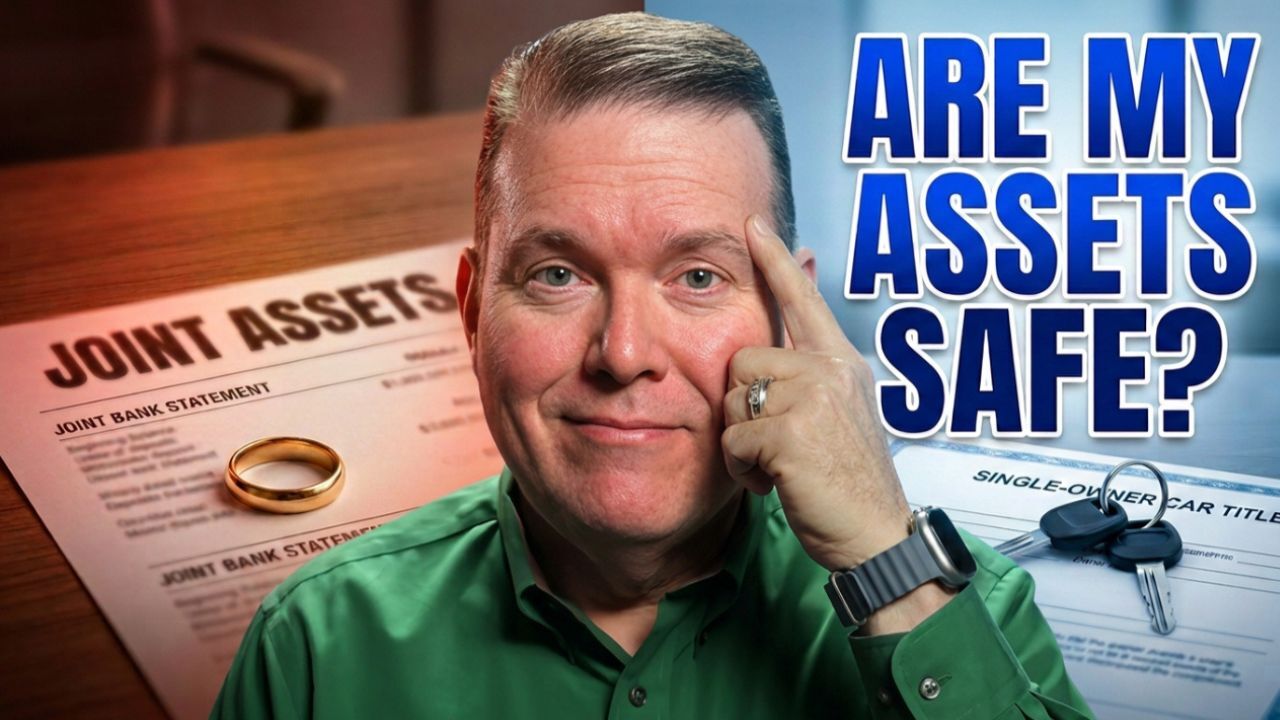
A teenager wrote in to Financially Confident Christian this week after his dad texted him out of nowhere: "I'm filing bankruptcy." His parents are mid-divorce. His mom panicked. He didn't know what to tell her.
That question- what actually happens to a spouse's assets during a bankruptcy filed in the middle of a divorce- is exactly what today's episode breaks down.
The situation
His parents' divorce should finalize in July or August. He lives with his mom. His dad has racked up credit card debt and is worried that if he waits until after the divorce to file bankruptcy, the mom's stocks could get locked up by the credit card company. The mom has her own separate stocks and her own credit cards. As far as the family knows, nothing is shared between the two parents.
They tried talking the dad into waiting. They're not convinced it would even change anything if he did.
Does bankruptcy automatically affect a spouse's assets?
No, not automatically. Bankruptcy discharges the debts belonging to the person who files. If an asset, like stocks or a brokerage account, is held only in your name, it generally isn't touched just because your spouse files.
The exception is anything joint or co-signed. Shared bank accounts, jointly held property, anything both names are attached to, all of that can be pulled into the bankruptcy regardless of whose name appears first.
There's one more wrinkle: community property states. In those states, certain debt can count as shared marital debt even when only one spouse's name is on the card. Whether that applies depends entirely on the state, which is one more reason this needs a local attorney rather than a general rule of thumb.
Does timing matter if bankruptcy happens during a divorce?
Yes, and this is the part most people miss.
If bankruptcy is filed before the divorce is finalized, the bankruptcy court may have to weigh in on what counts as marital property versus separate property, since that division hasn't been legally settled yet.
If the divorce finalizes first, the bankruptcy filing tends to be more straightforward, because the assets have already been divided on paper.
Once a bankruptcy petition gets filed, the divorce timeline is no longer fully under either spouse's control. The exact outcome depends on the state, the specific court, and the facts of the case.
What should you do if this is happening in your family?
-
Get a lawyer involved immediately. Not after the next conversation with the ex-spouse. Now. If there's already a divorce attorney, that's the first call. If not, the State Bar Association or a local legal aid organization can provide a referral.
-
Bring the bankruptcy news to that lawyer directly. The attorney needs to know a spouse is planning to file and what that could mean for the settlement.
-
Stop trying to manage the other parent's decision. It's not anyone else's job to talk a parent out of filing bankruptcy, and trying to usually doesn't work anyway.
-
Get one consultation booked this week. A single 30-minute meeting with an attorney can answer the specific question of what's actually at risk, under that state's laws.
What can you actually control in this situation?
If you're the adult child caught in the middle, your job isn't to fix the divorce or talk a parent out of a financial decision. Neither of those is yours to control.
What you can control is making sure the parent who's worried gets connected to the right legal help. That's not a small contribution. It's often the single most useful thing anyone in this position can do.
Why this matters beyond the legal details
Proverbs 14:12 says there's a way that seems right to a person, but in the end it leads to destruction. It fits here because everyone in a situation like this is usually working off assumptions instead of facts. One parent assumes filing early protects the other. The other assumes it will wipe them out. Nobody actually knows until a professional looks at the real numbers and the real laws.
Real legal advice beats guessing, every time.
FAQ
Will my spouse's bankruptcy affect my credit score? Generally no, if your accounts are entirely separate. Joint accounts or anything you co-signed can show up on your credit report regardless of who filed.
Can I lose my house if my spouse files bankruptcy? If the house is solely in your name, it's typically protected. If it's jointly owned or in a community property state, it may be treated differently. A local attorney can confirm how your state handles this.
Should bankruptcy happen before or after the divorce is finalized? There's no universal answer. Filing before finalization can complicate how the court treats marital property. Filing after tends to be cleaner since assets are already divided. The right order depends on your state and your specific case.
Do I need a divorce attorney or a bankruptcy attorney? Often both situations need to be discussed together, since they affect each other. A divorce attorney experienced with cases involving bankruptcy is a good place to start.
Today's win
Get connected with a lawyer by the end of this week. One consultation is usually enough to find out exactly what's protected and what's at risk.

Christian Financial Consulting
Ralph V. Estep, Jr. is a Delaware-based licensed accountant, author, rancher, and media host with more than 30 years of experience in finance, taxation, and small-business leadership. As the founder of Saggio Accounting+PLUS and the creator of the Ask Ralph Media network, Ralph helps entrepreneurs, creators, and everyday families replace money confusion with clarity, confidence, and practical next steps—without shame and without hype.
Ralph’s work blends deep professional expertise with a coach’s mindset and a communicator’s heart. He has held leadership roles across public accounting, financial institutions, law firms, and technology organizations, bringing a rare combination of traditional accounting rigor and modern systems thinking to the people he serves. A graduate of the University of Delaware and Wilmington University (MBA), Ralph is known for turning complex money topics into simple, repeatable frameworks that help people make wiser decisions and build lasting financial stability.
Through Ask Ralph Media, Ralph hosts multiple shows designed to meet people where they are and guide them forward. He is the host of Financially Confident Christian, a daily, faith-based show offering warm, pastoral encouragement for listeners who want peace and practical wisdom with their finances.
He also hosts Truth Unveiled with Ralph, a weekly program that contrasts cultural pressure with biblical truth and invites listeners into deeper spiritual and practical alignment. For small business owners, Ralph leads Grit and Growth Business, spotlighting real sto… Read More

From Overdraft Fees to $12,000 Saved: The Real Story Behind One Listener's Turnaround