Why a Good Job Still Won't Fix the Paycheck-to-Paycheck Trap
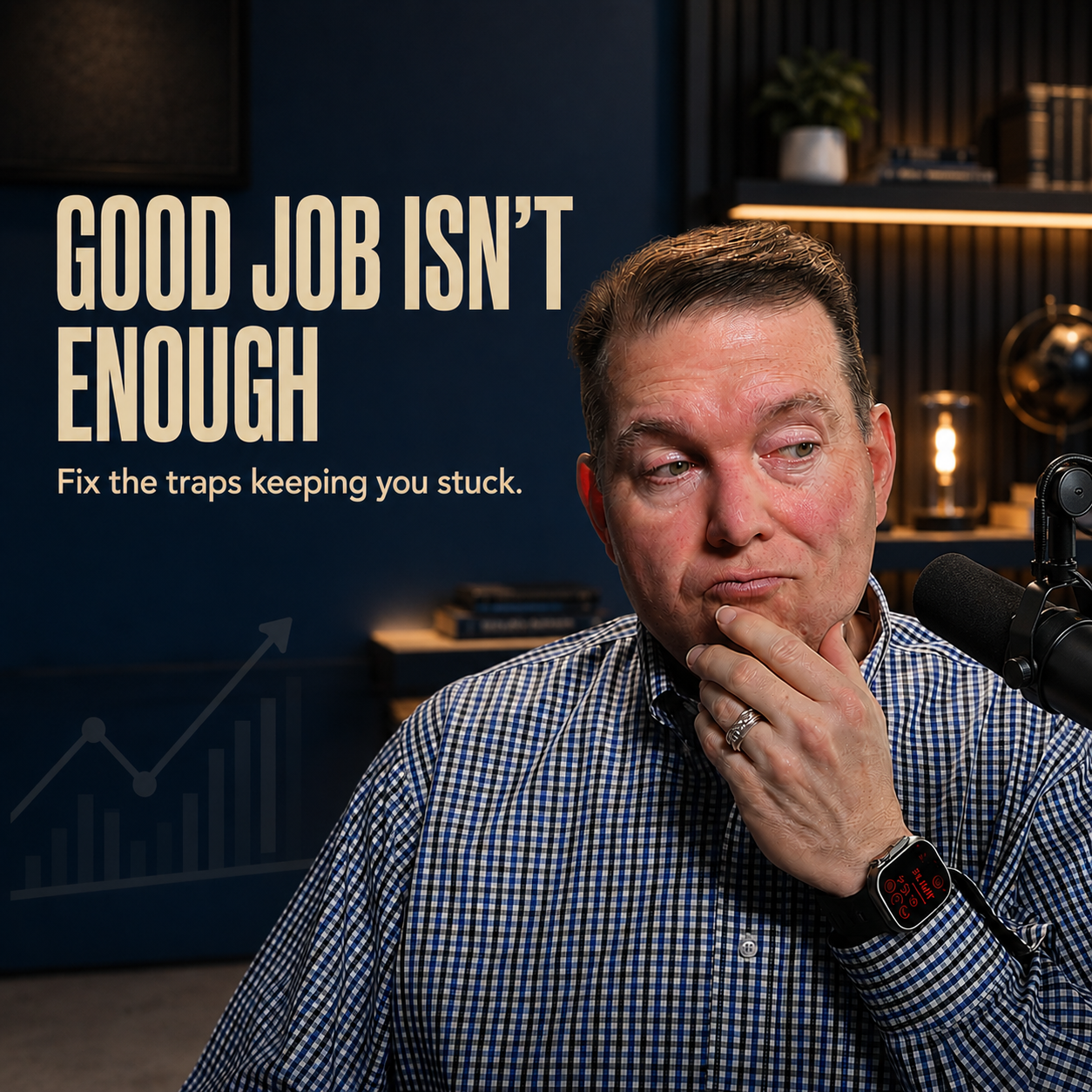
A listener in her late 20s wrote in this week feeling like she was doing everything right and still drowning, which is exactly the kind of letter that prompted today's episode of Financially Confident Christian on why a good job alone won't fix the paycheck-to-paycheck cycle. She has a job. She moved back in with her parents to cut costs. She's covering her own bills. And she still can't save a dime. Why a Good Job Still Won't Fix the Paycheck-to-Paycheck Trap
The letter
She's in her late 20s, working a solid job, living at home with her parents. Her car is paid off but old, which means it's constantly needing repairs. She's carrying about $6,000 in credit card debt plus student loans. Her tax refund this year was good, then it disappeared into bills and birthday spending before she could touch it. Every time she gets close to saving something, the car breaks again and she's back to zero.
On top of all that, she got into a grad school program she's excited about, but no word yet on scholarships or fellowships, and the thought of taking on more loans makes her sick. She tried working nonstop during the pandemic to get ahead financially. It wrecked her mental health, and she's not willing to do that again.
Her question was straightforward: what's actually going on here?
You're not failing at money. You're juggling too many things at once
Here's the reframe that matters most. She's not bad with money. She's managing a stack of competing demands that would stress anyone out: revolving debt, an unreliable car, student loans, and a major decision about grad school, all at the same time, all on a single income.
That's not a money problem. That's a weight distribution problem.
Three numbers that change everything
Before fixing anything, she needs to see exactly where the money goes. Three numbers do that:
-
Credit card interest paid per month. On a $6,000 balance, that's likely running $100 to $150 a month, money disappearing with nothing to show for it.
-
Average monthly car repair cost, estimated from the last six months. Nobody wants to look at this number. Look anyway.
-
Minimum student loan payment.
None of these numbers are about willpower or discipline. They're about visibility. Once she sees them written down, she can actually plan around them instead of guessing.
Stop the bleeding before you optimize anything
Picture an ER. The first thing anyone does when a patient comes in isn't a long-term treatment plan. It's stopping whatever is actively bleeding.
Her bleeding has three sources right now: credit card interest, unpredictable car repairs running close to $1,000 a year, and a grad school decision that could turn into a future bleed if it's funded entirely with new loans. Trying to save while these three things are still open wounds is why every saving attempt keeps failing. The holes need patching first.
One phone call this week
Here's the move: call the credit card company and ask for a rate reduction. Just ask. Plenty of people qualify simply by requesting it and having a decent payment history.
Say something like this: give your name, confirm you're a cardholder in good standing, and ask directly if they can lower your rate. Dropping from 18% to 12% on a $6,000 balance saves about $60 a month. That's not a huge number by itself, but redirected straight at the balance, it's real momentum. One phone call, this week, changes the math for months or even years.
Protect your peace before your savings account
She mentioned the pandemic specifically: working constantly, no social life, until it became unsustainable. That's not a character flaw. That's a human limit everyone has.
Mental health isn't a luxury that gets purchased after the budget balances. It's a prerequisite for the budget balancing at all. Burning out chasing extra income doesn't fix a financial situation; it just trades one problem for another. The first real win here isn't a savings account. It's deciding not to sacrifice peace for progress in the first place.
What faith actually promises here
She did the right things and still landed in survival mode, which raises an honest question a lot of people ask: if I'm doing what I'm supposed to do, why isn't it working yet?
Philippians 4:6-7 says not to be anxious about anything, but to bring every situation to God through prayer with thanksgiving, and that the peace that follows will guard hearts and minds beyond what makes logical sense. That verse isn't telling anyone to pretend the debt or the car or the tuition question doesn't exist. It's saying don't carry all of it alone.
Faith doesn't promise that hard work buys instant results or comfort. It doesn't promise a broken car gets fixed because someone prayed about it. What it promises is presence. Surviving with dignity, in a system that's genuinely stacked with obstacles, matters to God even when the spreadsheet doesn't look impressive yet.
Today's win
Write down the three numbers: credit card interest paid monthly, average monthly car repair cost over the last six months, and the minimum student loan payment. That's the whole assignment today. Not a budget overhaul. Not a side hustle. Just clarity on where the money actually goes.
So why can't a good job alone fix this?
Because a good job covers income. It doesn't automatically cover debt interest bleeding money every month, a car quietly costing a thousand dollars a year, or the mental toll of trying to out-earn a system that has real structural problems. Progress here doesn't start with making more money. It starts with stopping the bleeding, seeing the real numbers clearly, and protecting the person behind the budget.
Christian Financial Consulting
Ralph V. Estep, Jr. is a Delaware-based licensed accountant, author, rancher, and media host with more than 30 years of experience in finance, taxation, and small-business leadership. As the founder of Saggio Accounting+PLUS and the creator of the Ask Ralph Media network, Ralph helps entrepreneurs, creators, and everyday families replace money confusion with clarity, confidence, and practical next steps—without shame and without hype.
Ralph’s work blends deep professional expertise with a coach’s mindset and a communicator’s heart. He has held leadership roles across public accounting, financial institutions, law firms, and technology organizations, bringing a rare combination of traditional accounting rigor and modern systems thinking to the people he serves. A graduate of the University of Delaware and Wilmington University (MBA), Ralph is known for turning complex money topics into simple, repeatable frameworks that help people make wiser decisions and build lasting financial stability.
Through Ask Ralph Media, Ralph hosts multiple shows designed to meet people where they are and guide them forward. He is the host of Financially Confident Christian, a daily, faith-based show offering warm, pastoral encouragement for listeners who want peace and practical wisdom with their finances.
He also hosts Truth Unveiled with Ralph, a weekly program that contrasts cultural pressure with biblical truth and invites listeners into deeper spiritual and practical alignment. For small business owners, Ralph leads Grit and Growth Business, spotlighting real sto… Read More
Repair or Replace Your Car? A 5-Step Way to Decide