From Overdraft Fees to $12,000 Saved: The Real Story Behind One Listener's Turnaround
Quick answer: Breaking an overdraft cycle for good doesn't start with a budgeting app. It starts with writing down the real numbers, making a decision bigger than "I'll try to do better," and paying a real cost for a fixed stretch of time. One Financially Confident Christian listener used exactly that approach to pay off $6,000 in credit card debt and save $12,000 in six months, cutting his monthly bills from $2,500 to $1,200 while working more than 60 hours a week. From Overdraft Fees to $12,000 Saved: The Real Story Behind One Listener's Turnaround
A listener sent in a letter this week that needed no introduction. Six months ago, he was overdrafting every single month like clockwork. No savings. No plan. Just panic, spend, panic, spend, on repeat.
The letter
Here's what he wrote, almost word for word. Six months ago, he was drowning. Constant overdraft cycle, no healthy financial habits, no real foundation under any of it.
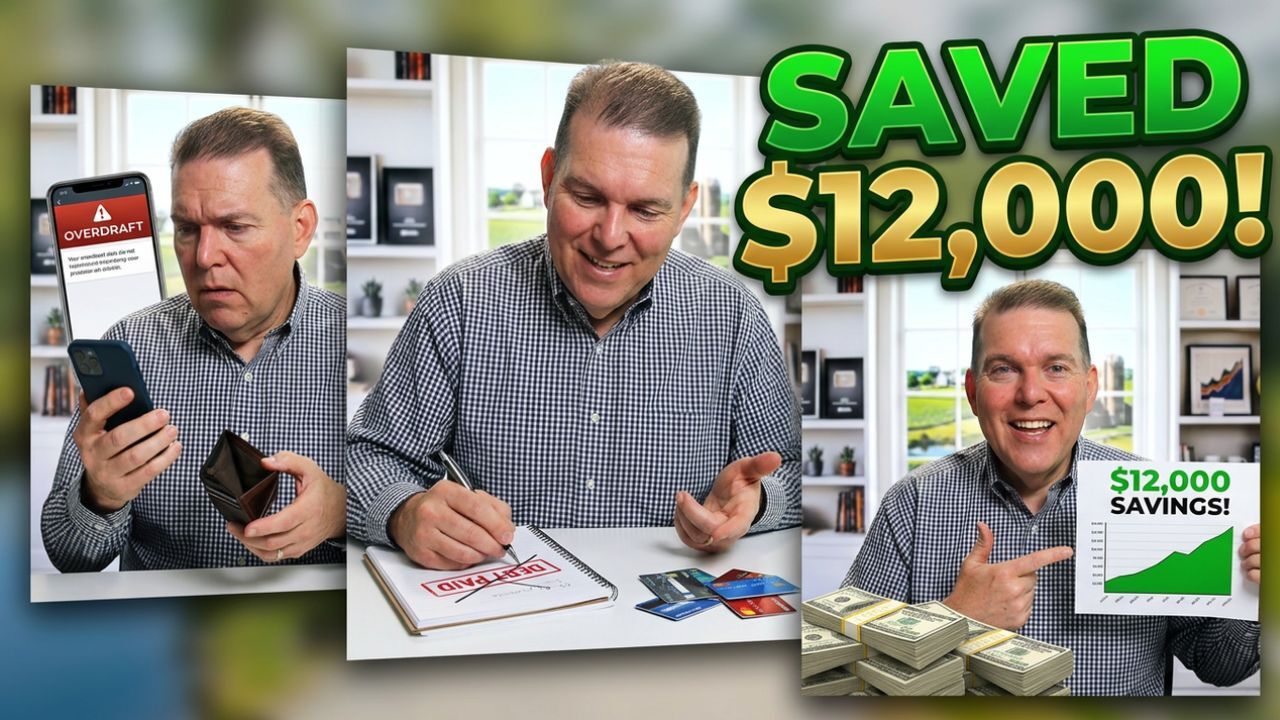
Then something clicked. He committed to actually changing it, wrote out a real plan, and stuck to it. In six months he paid off $6,000 in credit card debt and saved $12,000 in a high-yield savings account. His monthly bills dropped from $2,500 to $1,200 by cutting everything that wasn't necessary. He worked more than 60 hours a week, canceled subscriptions, and cut groceries down to the basics.
He didn't write in asking how to start. He wrote in asking why he didn't start sooner, and how to make sure it never slips back.
Step 1: Name the cycle instead of living inside it
Most people stuck in an overdraft cycle never actually look at the numbers. They just live inside it, month after month, without writing down what overdraft fees, credit card interest, and real monthly bills actually add up to.
He looked. Overdraft fees, interest charges, the full list of bills, all written down before cutting a single expense. That's uncomfortable. Once a number is on paper, it's harder to pretend it isn't there. That discomfort isn't a willpower problem. It's a clarity problem, and clarity is usually the step people skip.
Step 2: Make a decision bigger than the budget
Cutting $1,300 a month doesn't happen by trimming a subscription here and a coffee there. A number that size requires an actual decision, not a vague intention to do better with money.
He didn't say he'd try. He said he was done. That distinction carries weight. A decision without a plan tends to fade. A decision paired with a plan tends to hold.
Step 3: Pay the real cost up front
Sixty-plus hours a week. Skimping on groceries. No social spending, no financial cushion, for six straight months. None of that is glamorous, and none of it happened by accident.
That short-term sacrifice, the missed nights out, the basic groceries, the long hours, ended up costing far less than staying inside the overdraft cycle would have over the same period.
Step 4: Build a new identity, not just a new number
Six months ago, he was someone who overdrafted constantly and panicked at checkout. Today he's someone who can say yes to a coffee, a lunch, a birthday gift, without spending money he doesn't have.
That shift in identity matters more than the dollar amount, because temptation to slip back doesn't disappear just because the savings account improved. What actually protects against backsliding is remembering exactly what the old cycle felt like, the embarrassment of a declined card, the constant low hum of financial panic, alongside remembering exactly what six months of discipline bought instead.
Why "why didn't I start sooner" deserves grace, not just regret
That question carries sadness, and it also carries something worth naming: grace. Grace isn't only forgiveness for what went wrong. It's a second chance that wasn't earned in advance.
Nothing forced this change six months ago. The overdraft cycle could have continued indefinitely. Instead, something shifted, and the decision came from finally seeing that a different way was possible, not from being backed into a corner. Wishing it had happened sooner is natural. Being grateful it happened at all is the bigger truth.
What 2 Corinthians 5:17 has to do with a savings account
"This means that anyone who belongs to Christ has become a new person. The old life has gone. A new life has begun."
This wasn't a budget tweak. It was a full identity overhaul. The version that panicked at checkout and lived overdraft to overdraft is gone. What replaced it wasn't luck. It was someone counting the real cost, building a real plan, and keeping a promise to himself for six straight months.
Today's win
Write down two numbers: the bills before, and the bills now. Not for pride. For evidence. $1,300 a month in real reductions. $12,000 sitting in an account that didn't exist six months ago. On the hard days, that number becomes proof that the new way of living is real and worth protecting.
Stay financially savvy. God bless you.
FAQ
How long does it typically take to break an overdraft cycle? This listener saw major results in six months, but the timeline depends on income, total debt, and how much can realistically be cut from monthly spending. Sticking with the plan consistently mattered more than how fast it moved.
What's the first step to stop overdrafting every month? Write down the actual numbers: overdraft fees, credit card interest, and total monthly bills. Seeing the real picture removes the ability to keep avoiding it.
Is working extra hours necessary to save this much money this fast? Not for everyone, but in this case, increased income paired with reduced spending created the full $1,300 monthly swing. Cutting expenses alone, or earning more alone, tends to move slower than doing both at once.
How do you avoid sliding back into old financial habits after a turnaround like this? Remembering specifically what the old cycle felt like- the declined cards, the panic, the collection calls- tends to work better as long-term motivation than relying on willpower alone. Tracking the concrete numbers saved also reinforces the new identity over time.

Christian Financial Consulting
Ralph V. Estep, Jr. is a Delaware-based licensed accountant, author, rancher, and media host with more than 30 years of experience in finance, taxation, and small-business leadership. As the founder of Saggio Accounting+PLUS and the creator of the Ask Ralph Media network, Ralph helps entrepreneurs, creators, and everyday families replace money confusion with clarity, confidence, and practical next steps—without shame and without hype.
Ralph’s work blends deep professional expertise with a coach’s mindset and a communicator’s heart. He has held leadership roles across public accounting, financial institutions, law firms, and technology organizations, bringing a rare combination of traditional accounting rigor and modern systems thinking to the people he serves. A graduate of the University of Delaware and Wilmington University (MBA), Ralph is known for turning complex money topics into simple, repeatable frameworks that help people make wiser decisions and build lasting financial stability.
Through Ask Ralph Media, Ralph hosts multiple shows designed to meet people where they are and guide them forward. He is the host of Financially Confident Christian, a daily, faith-based show offering warm, pastoral encouragement for listeners who want peace and practical wisdom with their finances.
He also hosts Truth Unveiled with Ralph, a weekly program that contrasts cultural pressure with biblical truth and invites listeners into deeper spiritual and practical alignment. For small business owners, Ralph leads Grit and Growth Business, spotlighting real sto… Read More
Are Tariffs Really Why Your Grocery Bill Feels Higher This Year?