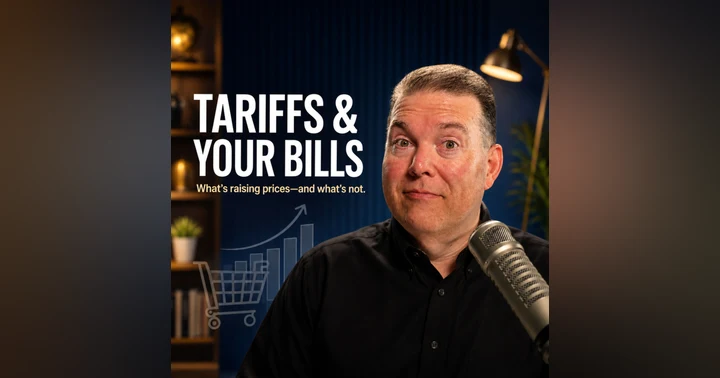
Tariffs Keep Making Headlines. Is That Actually Why My Grocery and Household Bills Feel Higher?


Key Takeaways
- Average tariff rates are currently sitting around 10 to 13 percent, marking the highest average rate since the 1940s and adding a measurable cost to yearly household budgets.
- Tariffs primarily impact imported goods such as electronics, clothing, footwear, certain foods, and household items rather than affecting every single price increase.
- Discerning shoppers can mitigate rising tariff costs by swapping out name brands for store-brand equivalents that are often manufactured in the same plants.
- Strategic timing on major purchases allows consumers to factor in real cost trends and avoid paying inflated prices driven by rising tariff schedules.
- Building a modest financial buffer into your intentional spending plan prevents surprise budget deficits caused by current economic conditions.
- Applying biblical wisdom from Proverbs 18:15 helps believers replace vague financial frustration with informed stewardship and practical action.
Tariffs are hitting American households hard this year, and trust me, they’re not just some random news buzzword. We’re diving into how these sneaky fees are affecting your wallet, and I’ll break it down so you can see what’s real and what’s just noise. Tariffs Keep Making Headlines. Is That Actually Why My Grocery and Household Bills Feel Higher? Spoiler alert: those grocery bills and household expenses probably feel heavier because of it. But don’t worry, we’ve got some practical tips to help you tackle these rising costs without losing your mind. So grab your favorite beverage, kick back, and let’s get into how to outsmart those tariffs and keep your budget on track!
Check out the full podcast episode here
Tariffs are a hot topic right now, and they’re not just a bunch of political chatter – they’re hitting our wallets hard, folks. This episode dives deep into how these tariffs, which are at their highest since the 1940s, are adding real costs to our everyday lives. We break down the numbers, showing that these tariffs are translating into higher prices on goods we buy regularly, from groceries to electronics. But don’t worry, we're all about practical solutions. We explore ways to navigate this financial headache, like opting for store brands that might not be affected by tariffs as much. It’s all about making smart choices and being savvy with our spending. By the end of the show, we’re armed with knowledge and ready to tackle those rising costs head-on, making sure we don’t just sit back and accept higher prices like it's the new normal.
Takeaways:
- Tariffs are at their highest since the 1940s, and that's not just talk, folks!
- These tariffs are pushing real costs onto our household budgets, so we gotta pay attention!
- Identifying which goods are affected by tariffs lets us make smarter shopping choices, trust me!
- Don't just go with the flow; be proactive and swap to store brands when possible!
- Timing your big purchases can save you some cash—no need to panic, just strategize!
- Building a buffer in your budget is key to handling these rising costs without breaking a sweat!
Links referenced in this episode:
💛 Join the Financially Confident Christian Community
If today’s episode encouraged you, we’d love to invite you to be part of something bigger — the Financially Confident Christian Community.
This is where faith and finances come together — a growing family of believers supporting one another, sharing encouragement, and helping spread God’s truth about money.
Your membership helps keep the show free for everyone while funding new devotionals, study guides, and outreach resources.
👉 Learn more and join the mission at financiallyconfidentchristian.com/join
Together, we’re helping believers everywhere break the cycle of financial shame and live with confidence in Christ. 🙏
Get Ralph's Book on becoming a Financially Confident Christian financiallyconfidentchristian.com/becoming
WATCH NOW ON YOUTUBE (OUR VIDEO VERSION)
WATCH NOW ON RUMBLE (OUR VIDEO VERSION)
Please share our Podcast with all your friends and family!
Submit your questions or ideas for future shows - email us at
ralph@askralph.com or leave a voicemail message on our podcast page
Thank you for listening to the Ask Ralph podcast. We encourage you to follow us on our social media pages and rate our show. For more information about the topics discussed on the podcast visit Saggio Accounting+PLUS.
Frequently Asked Questions
Are tariffs actually responsible for my higher grocery and household bills?
Yes, current tariff rates are at their highest level since the 1940s, adding documented and measurable costs to imported goods like certain foods and household items, though general inflation also plays a role.
What is the average rate of tariffs this year?
Average tariff rates are currently hovering around 10 to 13 percent depending on the specific category of imported goods.
How can I beat tariffs without changing my overall lifestyle?
You can offset tariff increases by targeting specific categories for store-brand swaps, buying domestically produced goods, and carefully timing major purchases.
How does faith guide us through confusing economic news like tariffs?
Faith reminds us that wisdom is available to help us filter out the noise, allowing us to practice good stewardship and focus on what we can control at our own kitchen tables.
00:00 - Untitled
00:37 - Untitled
00:57 - The Impact of Tariffs on Household Budgets
01:31 - Understanding Tariffs and Their Impact on Household Budgets
05:28 - Strategies to Mitigate Tariff Impact
08:30 - Understanding Tariffs and Your Budget
12:02 - Understanding Economic Changes and Practical Responses
Speaker A
Tariffs are sitting at their highest average rate since the 1940s. Researchers estimate they're adding real, measurable cost to the typical American household's yearly budget.Is that actually why your bills feel heavier lately, or is it just something everyone blames without really understanding it? But I'm going to tell you right now, this is real. It's a documented cost this year. It's not just a talking point.But the best part is there are specific practical ways to respond to it and instead of just absorbing it. So stay with me today, and let's separate the noise from the real numbers and let's build a plan around it to help you.Hello and welcome to Financially Confident Christian. My name is Ralph Estep Jr. And I just want to welcome you to our show.Today we're going to talk about how tariffs are actually, actually affecting household budgets this year. But more importantly than not, we're going to talk about what you can do about it.I got a listener email that's asking, is this really adding to my cost? How much are we actually talking about and what can I actually control here? Because we're hearing this on the news all the time.We're hearing terrorists blame for everything in the news and not knowing whether that's real or just noise. Truth is, with the news, sometimes it's just noise. But before we get to today's listener question, maybe you've got a question for the show.I would love to hear it. I would love to answer it on the show. You can get to me by going to financiallyconfidentchristian.com/questionAgain, that's financiallyconfidentchristian.com/question. Let's get right into today's listener question. Listener writes this hi, Ralph.I keep hearing about tariffs on the news, and honestly, it started to feel like background noise, something everyone blames without really explaining what it means for a real household like mine.At the same time, Ralph, I've noticed our grocery bill, some of our household goods, and a few bigger purchases we made this year all felt more expensive than I expected. I don't know if that's tariffs, if it's general inflation or just me not paying close enough attention as I did before.I don't want to make decisions based on a headline that I don't fully understand. But I also don't want to just shrug and accept higher prices if there's something I could actually be doing differently.Ralph, can you help me understand what's real and what I actually can do about it? Thank you. Well, thank you for sending in that question. And yes, these tariffs are real. There's a increased documented cost going up this year.So once you understand the actual numbers, we can turn that confusion into a plan. So today we're going to walk through what's real and, and what you can actually control. Going to be a very practical set of steps here today.First thing we got to do, we got to know the real scale of this year's tariffs. I'm going to tell you some real numbers here. The average tariff rates this year are sitting around 10 to 13%, depending on the category of goods.Now, like I said, beginning, that's the highest average rate since the 1940s, 10 to 13%. And they're just passing that along. Research estimates this adds real meaningful cost to the average household's budget over the course of the year.Well, of course it does. This isn't imaginary, it's documented. It's a measurable shift in how much goods cost to import.Well, if it costs the retailer to get cost more to get them, what are they going to do? They're going to pass it along to you in the price. That's not some talking point. That's not political. That's a real number.And it's showing up in real household budgets, but it's not on everything. So we got to identify where tariffs actually show up in your spending. The truth is this. Tariffs tend to hit imported goods.It makes sense if you think about it. A tariff is a tax that's being charged to another country to import goods.So things like electronics, things like clothing and footwear, certain food categories and household goods are affected by this because they're being brought in from other countries. This isn't rocket science. You can go look at your recent purchases and you can figure out which ones fall into these commonly affected categories.If you're buying stuff that's being imported, chances are it's being affected by these tariffs. But you also have to understand something as well. Not every price increase is a tariff. We also are living in a time of inflation.Some of it is supply factors. So you've got to separate those categories.Because once you separate those categories, then you can start to build a strategy instead of some vague idea. Not every price increase is a tariff. Don't let the press tell you that. You got to know which ones actually are.But now that you know that, let's talk about how do you beat the tariffs?One of the reasons for the tariffs in the first place is we're trying to, especially in the United States, we're trying to Bolster domestically made or store brand things. So one of the things you can do to beat the tariffs is buy from the store, buy domestically produced goods. That's the whole point of these tariffs.I don't want to get into a big political rant, but that's the whole, whole point here. They're trying to get things to be bought that are made in the country where you live.Now, I'm not telling you to go sacrifice quality, but there are store brands that perform identically to the name brands. A lot of people don't know this, but a lot of the store brands are actually manufactured in the same plant where the brand deals are.It's the same product. So go test some of those, look at what those things are, because those may not be effective as much by the tariffs.And you could target a few swaps that can offset that increase without your overall lifestyle change. I'm not telling you to go change everything. You don't just need to change the categories that are affected the most.If you're seeing that higher prices. Another thing you can do, and this one is a brilliant thing to do if you're going to make bigger purchases. You got to time those things.And understand if there's a time when research shows that prices are tending up due to those tariffs increasing, maybe you have to make a decision. You buy something sooner, or maybe you don't buy it right now at all because you know that tariff's gonna come down.I'm not talking about panic buying. It's simply factoring in the real cost of things.If the tariffs on a particular country are going to go up and you know that product is a product you want, hey, guess what? Go buy it yesterday.Because you realize strategically with a little research, that big purchase can change that final price if you know the tariff's going up. So plan those big purchases around real cost trends instead of panic. I'm not telling you to go panic. Oh my God, the prices are going crazy.You just got to pay attention to what's going on. But this is also a great time to build a buffer now. Yeah, Ralph's going to talk about it again. Building that buffer into your budget.What I've said today is a real documented cost increases are going up. It's a fact.And that's why as you're looking at your budget, when you're building your intentional spending plan, you've got to build a little buffer into that. If prices are going up 10 to 13%, that's going to do direct damage on your budget. That's not living in fear.That's living in the actual conditions of what's going on on the ground. You can't live in some outdated number that when you created the budget, it might have worked.So build that buffer in, you don't have those big surprises. And then as these tariffs go up or as inflation goes up, you gotta address those and revisit those buffers.You gotta budget for this year's real numbers, not last year's assumptions. So many people carve their budgets into stone and just assume they don't need to change, but they do.Now, I want to go a little deeper here, because there's a particular kind of fatigue that comes from hearing the same word over and over.You hear that word tariffs all the time in every new segment, but you never feel like you understand what it actually means for your own kitchen table. And that fatigue is honest, but it doesn't mean you've been careless or inattentive. Here's what faith promises us.It promises that wisdom is available to sort through confusion, and that when we're careful and we live in informed stewardship, it's possible, even in a season of noise, to get through that noise and understand things.But our faith doesn't promise us that economic headlines are always going to make sense or that policy decisions made far from us are going to not reach our grocery bill. They are. Look what Proverbs 18:15 says. It says intelligent people are always ready to learn. Their ears are open for knowledge.And that's what we're doing today. Seeking to actually understand these tariffs and understand how that is affecting you is helping you bleed through that noise.Understanding the real numbers, rather than just reacting emotionally or politically, is faithful stewardship in a tough, confusing season. This isn't about controlling the policy.You have no control over the policy unless you want to run for Congress, get elected, and make those decisions. But you have to respond to them wisely with what's actually within your reach. You don't have to understand every headline.You just have to understand your own kitchen table. And. And now you do. And you can do something about it. Understanding the real numbers, it replaces that vague frustration with an actual number.Again, you can't control the tariff policy, but you can control how your household responds to it. And those few targeted changes this year can actually offset a real documented cost increase. So here's your win for today.I'm going to encourage everybody to do this. Go look at the last month of your purchases and flag those items which fall into those commonly affected categories.And then ask yourself, is this a place where I can store brand swap? Can I buy it domestically instead of importing that? Reframing this is knowing exactly where this shows up in your spending.And turn that confusing headline into a specific workable plan. Which leads me to today's Bible verse. I've already said it. Proverbs 18:15. Intelligent people are always ready to learn.Their ears are open for knowledge. You came in today questioning, wanting real understanding and just repeating some headline.And I love the openness in that because you're actually learning the real numbers and that builds wisdom. And when you have wisdom, it replaces both confusion and unnecessary fear. How about we pray together right now?Heavenly Father, I just want to thank you for this listener and thank you for his honest desire to understand what's actually affecting his household budget. Lord, give him clarity as he sorts through what's real and what's just noise in the headlines.Provide for his family's needs even as these broader economic conditions shift around him. Give him wisdom to make those practical, informed adjustments rather than reacting out of confusion or fear.Protect his peace even in a season full of conflicting economic news, and bless the intentional effort he's putting into understanding and and managing his household well. We ask this in Jesus name. Amen. Tariffs are real. It's a documented cost increasing this year. It's not just some talking point.So when you can identify what categories are affected, you can respond well. Those store brand swaps, smart purchase timing and modest buffer can meaningfully offset the real cost.So again, know this, the average tariffs are higher now than they've been since the 1940s. But but there's something you can do about them and that's what we've talked about on today's show.Now if you've got a question for the show, I would love to hear from you. One of the best ways to reach me is to actually record your voice by voicemail and we've made it super simple.If you go to financiallyconfidentchristian.com/voicemail, it'll give you an option to just click record and I will hear your voice and I'll answer your question on the show. Again, that's financiallyconfidentchristian.com/voicemail. Thank you so much for joining me today.As I always say, I want to encourage you to stay financially savvy. May God bless you and you have a truly great day today.