Are Tariffs Really Why Your Grocery Bill Feels Higher This Year?
Are Tariffs Really Why Your Grocery Bill Feels Higher This Year?
Tariffs are sitting at their highest average rate since the 1940s this year. Researchers estimate they're adding real, measurable cost to the typical American household's yearly budget. So is that actually why your bills feel heavier lately, or is it just something everyone blames without really understanding?
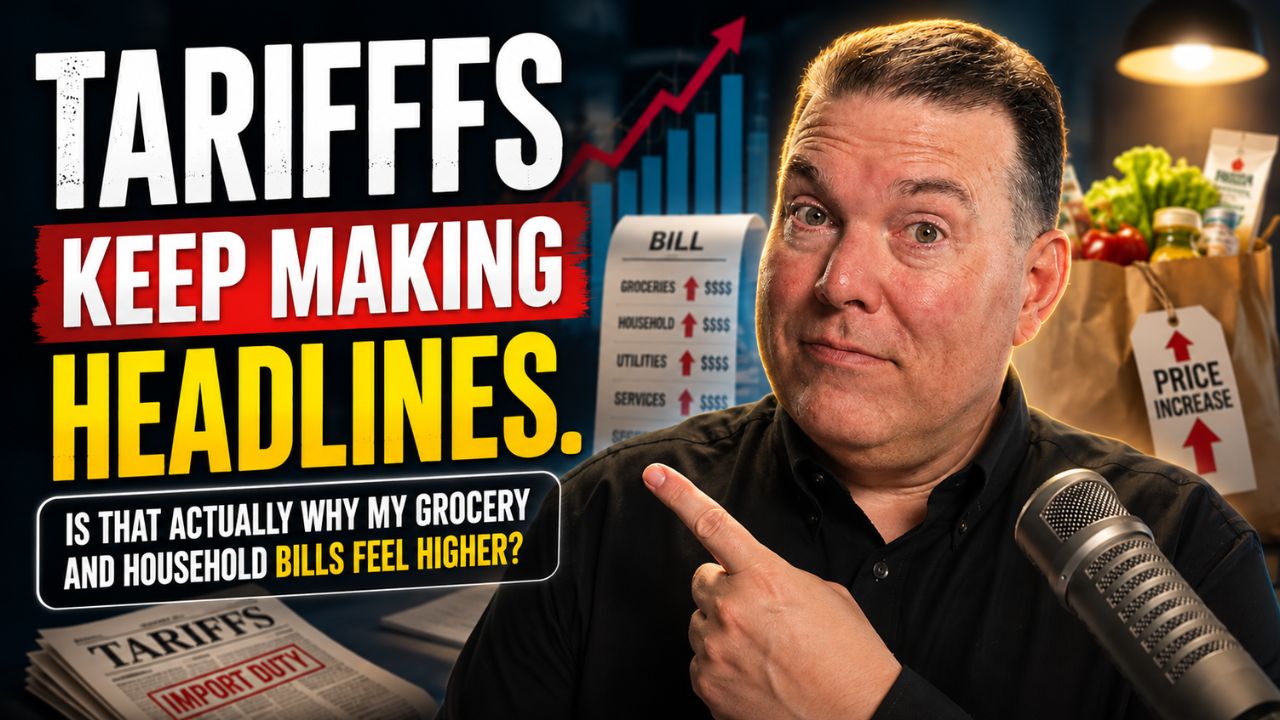
A listener wrote in with this exact confusion. He keeps hearing tariffs mentioned in the news, but it's started to feel like background noise, something blamed for everything without a clear explanation of what it means for a regular household. At the same time, he's noticed his grocery bill, household goods, and a few bigger purchases this year all felt more expensive than expected. He wasn't sure if that was tariffs, general inflation, or just not paying close attention before.
Here's what's real, and what you can actually do about it.
Know the Real Scale of This Year's Tariffs
Average tariff rates this year sit around 10 to 13 percent depending on the category of goods, the highest average rate since the 1940s. Research estimates this adds real, meaningful cost to the average household's budget over the course of a year. This isn't a talking point. It's a documented, measurable shift in how much goods cost to import.
Identify Where Tariffs Actually Show Up in Your Spending
Tariffs tend to hit imported goods hardest: electronics, clothing, footwear, certain food categories, and household goods. Look at your recent purchases and note which ones fall into these commonly affected categories. Not every price increase is a tariff. Some of it is general inflation, some is other supply factors. Separating the categories helps you respond with the right strategy instead of a vague one.
Shift Toward Store Brand or Domestic Options Where It Makes Sense
Store brand and domestically produced goods are often less exposed to import tariffs, and that doesn't mean sacrificing quality since many store brands perform identically to name brands. Prioritize this shift specifically in the categories most affected by tariffs, not across the board. A few targeted swaps can meaningfully offset the increase without an overall lifestyle change.
Time Bigger Purchases With This Year's Price Pressure in Mind
If a bigger purchase like electronics or appliances is coming up, research whether prices are trending upward due to tariffs right now. Sometimes buying sooner rather than later genuinely saves money in a tariff-affected category. This isn't panic buying. It's simply factoring real cost trends into timing decisions you're already making.
Build a Slightly Wider Buffer Into Your Budget
Given the real, documented cost increase this year, a modest buffer in the household categories most affected makes sense. This isn't about fear. It's about budgeting for the actual conditions of this year rather than last year's assumptions.
A Word on Faith and Understanding
Proverbs 18:15 says, "Intelligent people are always ready to learn. Their ears are open for knowledge." Seeking to actually understand what's happening instead of just absorbing the noise reflects exactly this kind of openness. You don't have to understand every headline. You just have to understand your own kitchen table.
Today's Win
Review your last month of purchases and flag which items fall into commonly tariff-affected categories. Identify one or two categories where a store brand or domestic swap makes sense. Knowing exactly where this shows up in your spending turns a confusing headline into a specific, workable plan.
Have a financial question of your own? Send it to financiallyconfidentchristian.com/question, or leave a voicemail at financiallyconfidentchristian.com/voicemail and Ralph might answer it on the show.

Christian Financial Consulting
Ralph V. Estep, Jr. is a Delaware-based licensed accountant, author, rancher, and media host with more than 30 years of experience in finance, taxation, and small-business leadership. As the founder of Saggio Accounting+PLUS and the creator of the Ask Ralph Media network, Ralph helps entrepreneurs, creators, and everyday families replace money confusion with clarity, confidence, and practical next steps—without shame and without hype.
Ralph’s work blends deep professional expertise with a coach’s mindset and a communicator’s heart. He has held leadership roles across public accounting, financial institutions, law firms, and technology organizations, bringing a rare combination of traditional accounting rigor and modern systems thinking to the people he serves. A graduate of the University of Delaware and Wilmington University (MBA), Ralph is known for turning complex money topics into simple, repeatable frameworks that help people make wiser decisions and build lasting financial stability.
Through Ask Ralph Media, Ralph hosts multiple shows designed to meet people where they are and guide them forward. He is the host of Financially Confident Christian, a daily, faith-based show offering warm, pastoral encouragement for listeners who want peace and practical wisdom with their finances.
He also hosts Truth Unveiled with Ralph, a weekly program that contrasts cultural pressure with biblical truth and invites listeners into deeper spiritual and practical alignment. For small business owners, Ralph leads Grit and Growth Business, spotlighting real sto… Read More
Adult Child Moved Back Home? Here's How to Tell Helping From Enabling