
When Your Parents' Money Problems Become Your Problem

When Your Parents' Money Problems Become Your Problem
One of our listeners sent in a message that's been sitting with me. Her parents sold their house. They're living out of a van. And every time she tries to bring up money, they shut the conversation down.
She's not asking for a budget template. She's asking: Is this my problem to fix?
That's the real question, and it's harder than any debt payoff plan. When Your Parents' Money Problems Become Your Problem
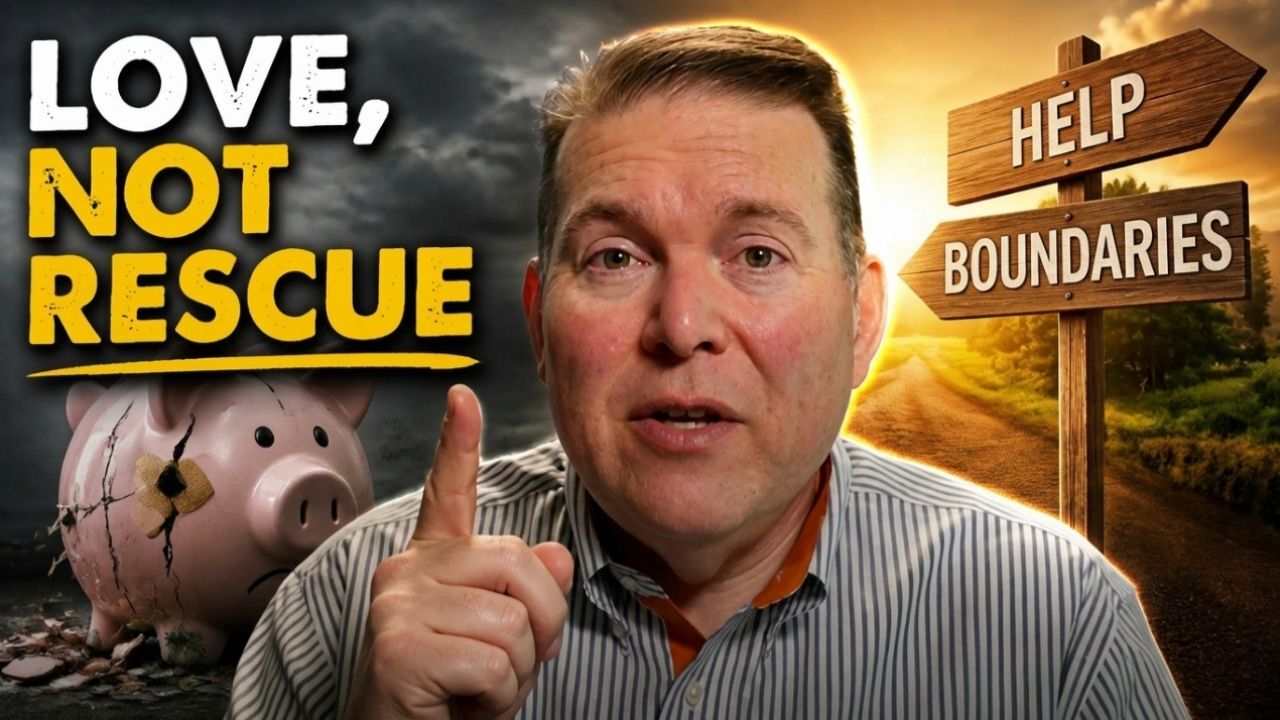
 The fear nobody talks about
Most personal finance content covers your debt, your savings, and your retirement. Not your parents'. But plenty of us are quietly watching mom and dad make financial decisions that terrify us, and we have no idea what our role is supposed to be.
The anxiety hits different when it's your family. You love them. You don't want to see them struggle. And underneath all of it is this nagging worry: What happens if they come to me?
That fear is worth naming, because you can't set a boundary around something you haven't admitted you're afraid of.
What you can't control
Here's a hard truth: their financial situation is theirs.
Parents often hide money problems out of shame. They're supposed to have figured life out by now. Admitting otherwise feels like failure. So they deflect, change the subject, or insist that everything is fine when, clearly, it isn't.
You can see the problem. You can't fix it for them. Their choices, their debt, their decisions. Not yours to manage, as much as you want to jump in and make it right.
What offering help actually looks like
There's a difference between being supportive and taking over. If you want to help, ask first. Something like: "Would it be okay if I shared some thoughts on this?" or "Is there anything I can do that would actually be useful?"
Then accept the answer. If they say no, that's the boundary telling you where your role ends. Overriding it doesn't help them. It just adds resentment on both sides.
Setting your own limits before a crisis hits
This is the part most people skip, and it's the most practical thing you can do right now.
Before any emergency forces the question, decide what you're willing to do. Fill in the blank honestly: If my parents hit a financial crisis, I'm willing to ___, but I can't ___.
That's not cold. That's clarity. Knowing your own limits ahead of time means you won't be making these decisions under pressure, when guilt is loudest, and boundaries are hardest to hold.
Finding peace when you can't control the outcome
What if they never figure it out? What if it does fall to you?
These are real fears, and I'm not going to tell you to just trust God and stop worrying. But I do think there's something freeing in recognizing that love and responsibility aren't the same thing. You can love your parents deeply and still acknowledge that certain burdens aren't yours to carry.
Prayer, reflection, and being honest with yourself about what you're actually capable of. That's not giving up. That's taking care of yourself so you have something left to give.
The bottom line
Love them. Offer help if they'll take it. Let go of what you can't control. Draw your lines before the worst-case scenario forces you to.
If you're wrestling with something similar, send in your question at financiallyconfidentchristian.com/question. Financial anxiety in families is something we talk about honestly here, because you're probably not the only one going through it.

Christian Financial Consulting
Ralph V. Estep, Jr. is a Delaware-based licensed accountant, author, rancher, and media host with more than 30 years of experience in finance, taxation, and small-business leadership. As the founder of Saggio Accounting+PLUS and the creator of the Ask Ralph Media network, Ralph helps entrepreneurs, creators, and everyday families replace money confusion with clarity, confidence, and practical next steps—without shame and without hype.
Ralph’s work blends deep professional expertise with a coach’s mindset and a communicator’s heart. He has held leadership roles across public accounting, financial institutions, law firms, and technology organizations, bringing a rare combination of traditional accounting rigor and modern systems thinking to the people he serves. A graduate of the University of Delaware and Wilmington University (MBA), Ralph is known for turning complex money topics into simple, repeatable frameworks that help people make wiser decisions and build lasting financial stability.
Through Ask Ralph Media, Ralph hosts multiple shows designed to meet people where they are and guide them forward. He is the host of Financially Confident Christian, a daily, faith-based show offering warm, pastoral encouragement for listeners who want peace and practical wisdom with their finances.
He also hosts Truth Unveiled with Ralph, a weekly program that contrasts cultural pressure with biblical truth and invites listeners into deeper spiritual and practical alignment. For small business owners, Ralph leads Grit and Growth Business, spotlighting real sto… Read More

Why Your Budget Keeps Failing By Week Two (And How to Finally Build One That Lasts)