5 Things I Tell Anyone Drowning in Medical Debt They Never Asked For
5 Things I Tell Anyone Drowning in Medical Debt They Never Asked For
You didn't overspend. You didn't make a dumb choice. You got sick, or someone you love did, and the bills buried you anyway.
That's the reality a listener wrote to me about recently. A year ago he was healthy and stable. Then came a medical emergency, a hospital stay, and a string of follow-ups. Even with insurance, he came out the other side owing more than $40,000. He hadn't run up credit cards on vacations — he got sick, and now he feels punished for it. Collection notices have started, and shame has crept in even though he knows logically it isn't his fault.
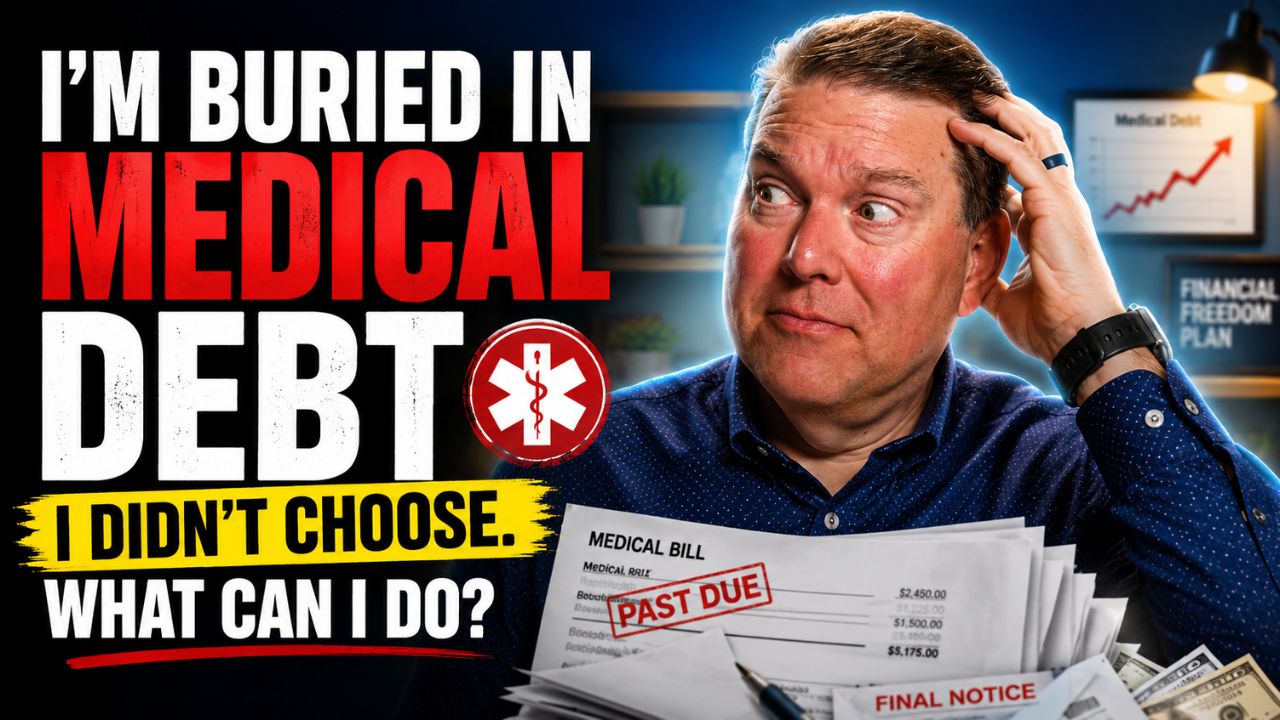
If any part of that sounds familiar, I want you to hear this first: medical debt is different from almost every other kind of debt, and there are real options most people are never told about. Here's what I walked him through on the show.
Medical Debt Isn't Like Other Debt
I want to say this plainly: you are not stuck. Most people end up paying more than they have to simply because no one told them what's actually available to them. Medical debt bends in ways credit card debt and other consumer debt don't. Let's go through it step by step.
Step 1: Verify the Bill Before You Pay Anything
Medical bills are notoriously full of errors. Before you pay a dime, request an itemized bill and read every single line.
Watch for:
-
Duplicate charges
-
Services you never received
-
Insurance that wasn't billed correctly, or claims that were wrongly denied
A large share of medical bills contain mistakes, and fixing them can slash the total before you even start negotiating.
Step 2: Ask for Financial Assistance and Charity Care
This is the one most people don't know about. Many hospitals — especially nonprofits — are required to offer financial assistance programs that can reduce a bill dramatically, sometimes erase it entirely, based on your income.
They won't advertise it. You have to ask directly for the financial assistance or charity care application. Ask even if you think you make too much — I've seen the income thresholds run higher than people expect, and I've seen this wipe out enormous bills for people who simply asked.
Step 3: Negotiate the Balance
The listed price on a medical bill is rarely the final price. Call and ask if they'll reduce the balance, or offer a lump sum settlement for less than what's owed. Ask directly what they'd accept to consider the account settled — it's often far less than the number on the page.
Be honest about your situation. Many providers have hardship programs ready to go. That first number isn't a verdict. It's a starting point.
Step 4: Get a Payment Plan — Never a Credit Card
Whatever balance is left after negotiating, ask the provider for an interest-free payment plan. Most offer one.
Here's what you don't want to do: move that balance to a credit card to make it "go away." That turns a no-interest medical bill into a high-interest credit card bill, and it compounds a hard situation.
I think of a man I worked with who had open-heart surgery and was between jobs with no insurance at the time. He called the hospital directly and set up $100 a month. No interest. They may never collect the full balance, but he's making a way — on his terms, without adding interest to an already heavy load.
Step 5: Know Your Protections and Get Support
Medical debt has protections most people don't realize exist, including recent rules limiting how — and whether — it can even hurt your credit. Nonprofit medical billing advocates can negotiate on your behalf, sometimes for free, and on a bill this size, an advocate's fee can pay for itself many times over.
You don't have to face a bill like this alone or uninformed.
You're Not Being Punished
If you're carrying shame over medical debt, I want to say this directly: there's no shame here. Getting sick isn't a moral failure, and it was never a choice. The debt is real, and it's heavy — but it's not a punishment, and it doesn't mean you're stuck forever.
Psalm 55:22 puts it this way: "Give your burdens to the Lord, and he will take care of you. He will not permit the godly to slip and fall." That doesn't mean the bills vanish overnight. It means you don't have to carry the weight of this alone.
Today's Win: Request One Itemized Bill
You don't have to solve this all in one day. This week, pick your largest medical bill and:
-
Call the billing department and request a fully itemized statement.
-
On the same call, ask if they have a financial assistance or charity care application.
-
Write down who you spoke with and what they told you.
That's it. That one call is often what starts shrinking the total.
The Bottom Line
Medical debt you didn't choose doesn't have to define you or trap you. Verify the bill, ask for assistance, negotiate the balance, use an interest-free plan, and know your protections. One call, one step at a time — you have more options than the collection notices want you to believe.
Going through something similar, or have a financial question of your own? I'd love to hear it. Submit a question at financiallyconfidentchristian.com/question, or leave a voicemail at financiallyconfidentchristian.com/voicemail.

Christian Financial Consulting
Ralph V. Estep, Jr. is a Delaware-based licensed accountant, author, rancher, and media host with more than 30 years of experience in finance, taxation, and small-business leadership. As the founder of Saggio Accounting+PLUS and the creator of the Ask Ralph Media network, Ralph helps entrepreneurs, creators, and everyday families replace money confusion with clarity, confidence, and practical next steps—without shame and without hype.
Ralph’s work blends deep professional expertise with a coach’s mindset and a communicator’s heart. He has held leadership roles across public accounting, financial institutions, law firms, and technology organizations, bringing a rare combination of traditional accounting rigor and modern systems thinking to the people he serves. A graduate of the University of Delaware and Wilmington University (MBA), Ralph is known for turning complex money topics into simple, repeatable frameworks that help people make wiser decisions and build lasting financial stability.
Through Ask Ralph Media, Ralph hosts multiple shows designed to meet people where they are and guide them forward. He is the host of Financially Confident Christian, a daily, faith-based show offering warm, pastoral encouragement for listeners who want peace and practical wisdom with their finances.
He also hosts Truth Unveiled with Ralph, a weekly program that contrasts cultural pressure with biblical truth and invites listeners into deeper spiritual and practical alignment. For small business owners, Ralph leads Grit and Growth Business, spotlighting real sto… Read More
How Do You Talk to Your Kid About Money When You Think They're Wrong