Grocery Prices Keep Rising: Here's the Real Reason and What to Do About It

Grocery Prices Keep Rising: Here's the Real Reason and What to Do About It
A listener sent in her receipts. Same store, same ten items, eight months apart. The total jumped from around $165 a week to $211. Same brands, same family of four, no extra impulse buys. Her husband thinks she's imagining it or just bad at shopping. She isn't. Something bigger is going on, and once you understand it, the number stops feeling so out of control.
Two Forces Are Squeezing Your Cart at Once
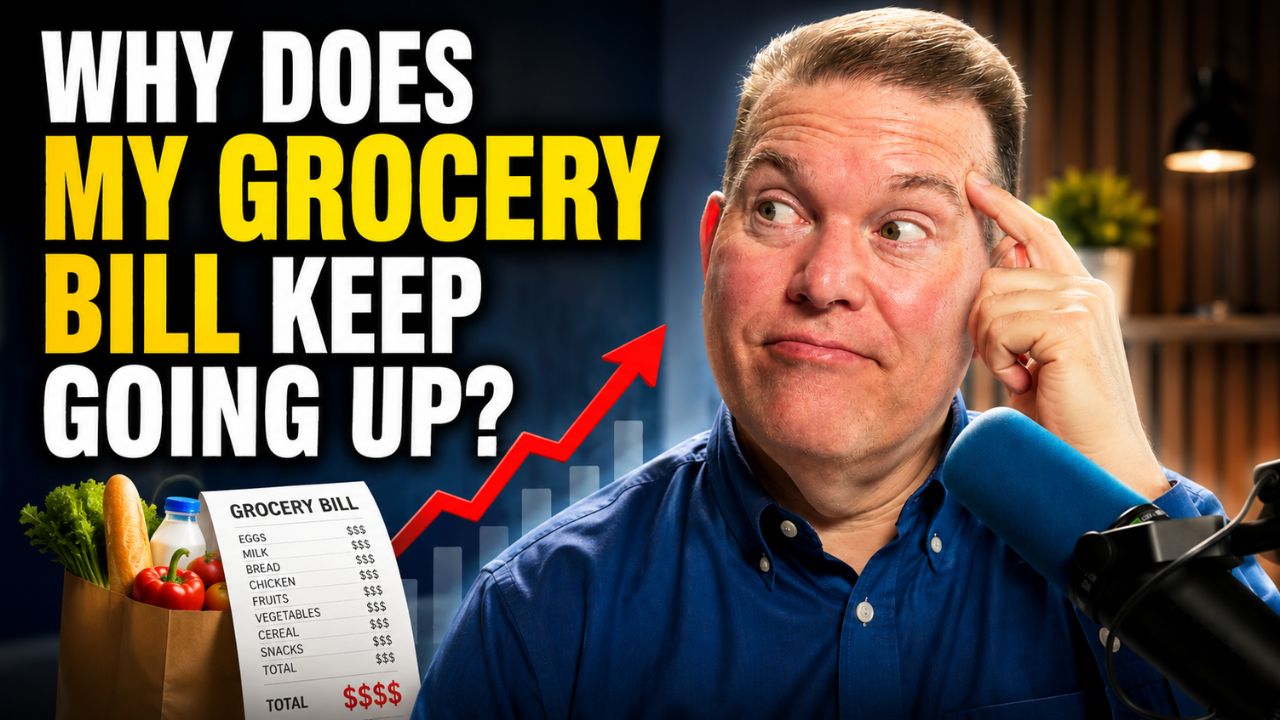
Most people only notice one side of this. The first is straightforward price inflation, where the same item simply costs more than it used to. The second is shrinkflation, where the package gets smaller while the price stays flat or creeps up anyway. A cereal box that used to hold 18 ounces might now hold 15, at the same shelf price, and it's easy to miss.
Grocery prices overall have climbed faster than general inflation over the last several years. If your spreadsheet says the bill is going up, your spreadsheet is right.
You're not bad at shopping. The math changed underneath you.
Do a Real Unit Price Audit
Most shelf tags print a unit price in small type under the sticker price, usually the cost per ounce or per count rather than the price of the box. A bigger box isn't automatically the better deal anymore, and store brands can run 30 to 40 percent cheaper than name brands for the same unit price.
Pick your five most-bought items and compare unit prices this week. It takes about twenty minutes, and that's where the real number lives, not on the sticker.
Build a Rotating Meal List Instead of a Rigid Budget
A strict dollar budget breaks the moment prices shift, and right now prices are shifting constantly. Instead, build a list of 12 to 15 meals your family actually likes and rotate through them based on what's on sale that week. Shop the sale, not the recipe.
Meat, dairy, and produce swing the most from week to week, so staying flexible there saves the most money over time.
Track Three Numbers, Not Everything
Full itemized tracking tends to burn people out within about six weeks. Instead, track just:
-
Total spent
-
Cost per person per week
-
Your top five most expensive recurring items
Revisit those three numbers once a month rather than every trip. That's enough signal to catch a real trend without turning grocery shopping into a second job.
Stop Apologizing for the Adjustment
Buying a different cut of meat, switching to a store brand, or trimming a portion size isn't failure. It's math responding to reality. If someone in your household thinks you're overreacting, pull up an actual month-by-month comparison. Numbers settle arguments that feelings can't.
Adjusting your cart isn't losing. It's paying attention.
A Word on Provision
It's exhausting to do everything right and still watch the total climb. Faith doesn't promise prices will come back down, and it doesn't promise your effort will always show up as a smaller number at checkout. What it does promise is that God sees the effort itself.
Philippians 4:19 puts it this way: "And this same God who takes care of me will supply all your needs from his glorious riches, which have been given to us in Christ Jesus." It doesn't say the price will drop. It says the need will be met. Tracking your spending and adjusting your list isn't anxiety, it's stewardship, and it matters even when the receipt is frustrating.
Today's Win: A 5-Item Price Check
-
Pick your five most-purchased grocery items
-
Grab last week's receipt or open your store's app
-
Find those five items on the shelf next trip
-
Write down the unit price for both the name brand and the store brand version
This one small check usually uncovers ten to fifteen dollars a week in savings without changing a single meal you eat.
Bible Verse
"And this same God who takes care of me will supply all your needs from his glorious riches, which have been given to us in Christ Jesus." — Philippians 4:19 (NLT)
The Bottom Line
Your grocery bill is being pushed up by both inflation and shrinkflation at the same time. Do a unit price audit on your top five items, build a rotating meal list instead of a rigid budget, track three numbers instead of everything, and let go of the idea that adjusting your shopping means you're failing.
Have a financial question of your own? Send it in at financiallyconfidentchristian.com/question, or leave a voicemail at financiallyconfidentchristian.com/voicemail and Ralph might answer it on the show.

Christian Financial Consulting
Ralph V. Estep, Jr. is a Delaware-based licensed accountant, author, rancher, and media host with more than 30 years of experience in finance, taxation, and small-business leadership. As the founder of Saggio Accounting+PLUS and the creator of the Ask Ralph Media network, Ralph helps entrepreneurs, creators, and everyday families replace money confusion with clarity, confidence, and practical next steps—without shame and without hype.
Ralph’s work blends deep professional expertise with a coach’s mindset and a communicator’s heart. He has held leadership roles across public accounting, financial institutions, law firms, and technology organizations, bringing a rare combination of traditional accounting rigor and modern systems thinking to the people he serves. A graduate of the University of Delaware and Wilmington University (MBA), Ralph is known for turning complex money topics into simple, repeatable frameworks that help people make wiser decisions and build lasting financial stability.
Through Ask Ralph Media, Ralph hosts multiple shows designed to meet people where they are and guide them forward. He is the host of Financially Confident Christian, a daily, faith-based show offering warm, pastoral encouragement for listeners who want peace and practical wisdom with their finances.
He also hosts Truth Unveiled with Ralph, a weekly program that contrasts cultural pressure with biblical truth and invites listeners into deeper spiritual and practical alignment. For small business owners, Ralph leads Grit and Growth Business, spotlighting real sto… Read More

How to Spot a Fake Bank Text Before It Costs You Money