The Simple Way I Tell People to Figure Out If They Need Life Insurance (and How Much)

The Simple Way I Tell People to Figure Out If They Need Life Insurance (and How Much)
It's the financial topic nobody wants to think about. It forces you to picture a world without you in it, so most people just avoid it entirely.
I get it. I've been exactly where a listener wrote to me from recently — 36 years old, married, two young kids, and stuck every time he tried to research life insurance. Term, whole life, universal — every salesperson told him something different, and he'd get overwhelmed and give up. Then he'd think about his wife and kids and what would happen to them financially if something happened to him, and that fear kept pulling him back to a decision he kept avoiding.
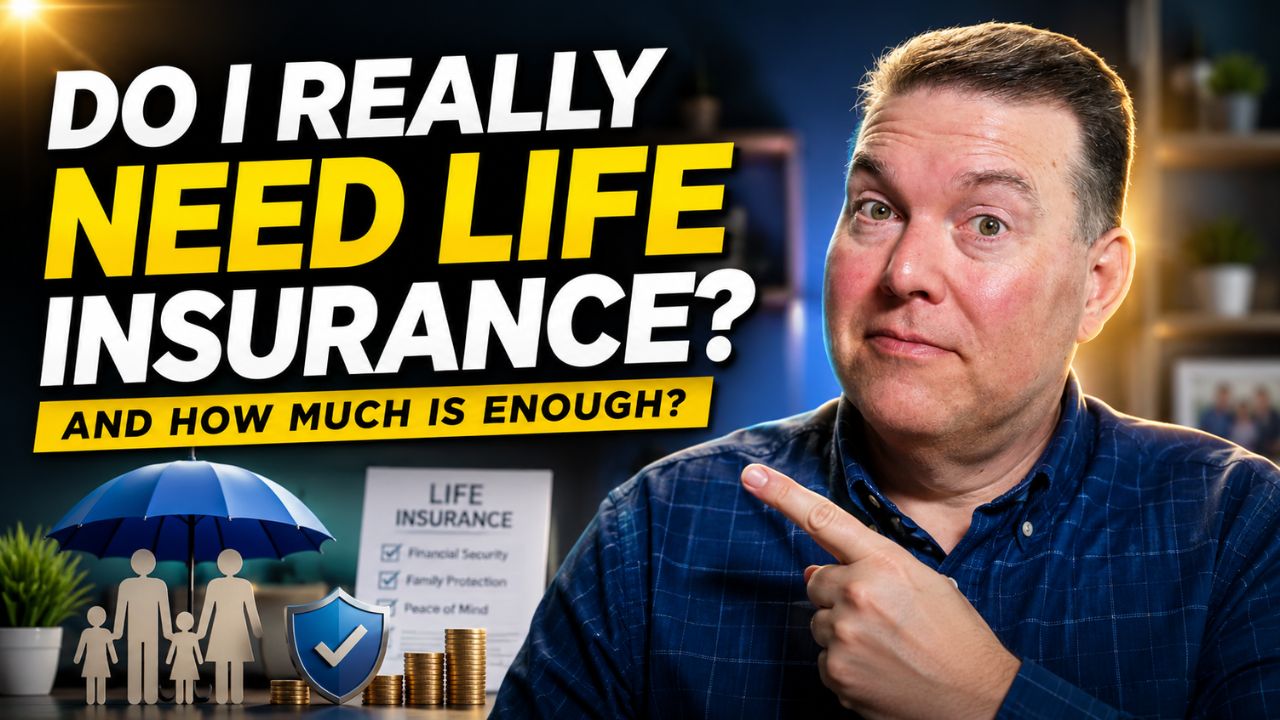
If that sounds familiar, here's what I told him — and it's simpler and cheaper than you probably think.
Do You Actually Need Life Insurance?
Here's the test I use: does anyone depend on your income or your care? If people would struggle financially without you, you need coverage. If truly no one relies on you financially, you may not need much, or any.
I was in this exact spot years ago. My wife was a stay-at-home mom, I was the only one working, and we had two young boys. There was no debate — I needed coverage, and if you're a parent with young kids and a working income, neither do you.
Keep It Simple: Choose Term
For the vast majority of families, term life insurance is the right answer. It covers you for a set period — 20 or 30 years — at a low, fixed cost.
Whole life and universal life mix insurance with investing, and in most cases, the only person who really serves is the salesperson. My advice: buy simple term coverage, and if you want to invest, do it yourself in your own investment account. Don't get talked into a complicated product you don't need.
Do the Math on How Much Coverage You Need
A common guideline is roughly 10 to 12 times your annual income. If you make $50,000 a year, that puts you somewhere between $500,000 and $600,000 of coverage.
You can also build the number from your real needs:
-
Years of income you'd want to replace
-
Remaining mortgage balance
-
Future education costs for your kids
-
Any other debts you'd want cleared
Add it up. That total is your honest coverage target. This isn't the place to scrimp — it's better to be adequately covered than to leave your family short.
Lock In Your Rate While You're Young and Healthy
This is the part people miss: you buy life insurance with your health, and health is cheapest when you're young. Rates only climb as you get older, and a future diagnosis can make coverage far more expensive, or unavailable altogether.
I bought a 20-year level term policy when I was healthy, and locking in that rate early protected it for decades. A healthy 36-year-old can often get substantial coverage for a modest monthly cost — don't wait for a "perfect time" that only makes the price go up.
Buy From a Solid Company and Move On
Once you know your number, get a few quotes from highly rated, financially strong insurers. Simple, level term from a reputable company covers what most families actually need. Name your beneficiaries clearly, revisit the policy every few years as life changes, then let it be. Your family is covered — you can stop worrying.
Life Insurance Is Love Made Practical
I understand the fear behind putting this off. Thinking about it means picturing a world without you in it — I've felt that same discomfort myself. But planning for your family isn't a lack of faith. It's an act of love.
1 Timothy 5:8 puts it plainly: those who don't provide for their household have denied the faith. Providing isn't only for today — it's planning wisely for the people you're responsible for, even for a day you hope you'll never see.
Today's Win: Land on Your Number
You don't have to buy a policy today. Just calculate your coverage target:
-
Take your annual income and multiply it by 10, then by 12, for a range.
-
Add any major upcoming costs — mortgage balance, education expenses.
-
That's the real number to shop with.
You can't shop wisely until you know what you're shopping for.
The Bottom Line
If someone depends on you, life insurance isn't optional — it's protection for the people you love. Keep it simple with term, do the math on how much you actually need, lock in your rate while you're healthy, and buy from a solid company. One decision this month can protect your family for decades.
Facing a financial decision of your own? I'd love to hear about it. Submit a question at financiallyconfidentchristian.com/question, or leave a voicemail at financiallyconfidentchristian.com/voicemail.

Christian Financial Consulting
Ralph V. Estep, Jr. is a Delaware-based licensed accountant, author, rancher, and media host with more than 30 years of experience in finance, taxation, and small-business leadership. As the founder of Saggio Accounting+PLUS and the creator of the Ask Ralph Media network, Ralph helps entrepreneurs, creators, and everyday families replace money confusion with clarity, confidence, and practical next steps—without shame and without hype.
Ralph’s work blends deep professional expertise with a coach’s mindset and a communicator’s heart. He has held leadership roles across public accounting, financial institutions, law firms, and technology organizations, bringing a rare combination of traditional accounting rigor and modern systems thinking to the people he serves. A graduate of the University of Delaware and Wilmington University (MBA), Ralph is known for turning complex money topics into simple, repeatable frameworks that help people make wiser decisions and build lasting financial stability.
Through Ask Ralph Media, Ralph hosts multiple shows designed to meet people where they are and guide them forward. He is the host of Financially Confident Christian, a daily, faith-based show offering warm, pastoral encouragement for listeners who want peace and practical wisdom with their finances.
He also hosts Truth Unveiled with Ralph, a weekly program that contrasts cultural pressure with biblical truth and invites listeners into deeper spiritual and practical alignment. For small business owners, Ralph leads Grit and Growth Business, spotlighting real sto… Read More
5 Things I Tell Anyone Drowning in Medical Debt They Never Asked For