How to Forgive Yourself for a Financial Mistake That Wasn't Really Yours
How to Forgive Yourself for a Financial Mistake That Wasn't Really Yours
A listener wrote back to me this week. You might remember her from a recent episode: 69 years old, lost most of her mother's inheritance to a man she met at church, went from a net worth of negative $1,400 to about $125,000 in eight years. Her follow-up letter had one line I've been thinking about for days. She's still asking how to stop being so hard on herself, and everybody around her has told her to. Nobody has told her how.

Here's how.
You cannot be the prosecutor and the judge
Read her own letter and watch what she does. She extends grace to almost everyone in her story: the scammer gets a fair description, the pastor who referred a bad attorney gets no blame at all. Then she turns around and convicts herself. She's playing prosecutor, judge, and defendant at once, and the defense never gets a turn.
The fix isn't a feeling, it's a rule: use the same standard of evidence on yourself that you'd use on anyone else. If a friend told you this exact story, what would you say to her? Say that to yourself. Out loud.
Learn the difference between conviction and shame
This is the most useful distinction I know. Conviction is specific: "you overrode your attorney's warning." Shame is global: "you are a foolish woman." Conviction comes with an exit. Shame is a locked room.
Here's a five second test: does this thought give you something to do? If yes, that's conviction, act on it. If it only gives you something to feel, cross it out. It didn't come from God.
The warning you ignored is proof he was a professional
She consulted an attorney before handing over her mother's inheritance. He warned her not to proceed. The man she trusted told her the attorney just didn't understand his method, and that she shouldn't heed the warning.
That's not something he improvised. It's a scripted move con artists call isolating the mark. Every serious fraud includes some version of talking you out of outside counsel, because the con man knows exactly what a professional will say once they read the paperwork. If anyone ever tells you not to listen to your attorney, your accountant, or your pastor, that is your answer. You don't even need to evaluate the deal after that.
One correction to the lessons list
Her list of lessons learned was better than most finance books I've read: don't assume a Christian label means safe, never decide out of desperation, don't ignore godly counsel. All correct. But one item needs a correction. She wrote "be humble."
Humility wasn't her problem. Humility was his tool. She deferred to a confident man over a credentialed professional and her own gut, and that's a shortage of authority, not humility. Be humble before God. Be hard to move by men.
Know why self-blame is so hard to put down
Self-blame does a job most people never name. If it was your fault, you have control, you can prevent it next time. If it wasn't your fault, if a professional criminal simply targeted you, the world feels dangerous and unpredictable. Self-blame feels like responsibility. It's actually a bid for control.
You don't need the guilt to prevent it happening again. You need a rule. Third-party custodian, everything in writing, a 48-hour pause on anything someone's rushing you into.
Forgiving yourself is not optional
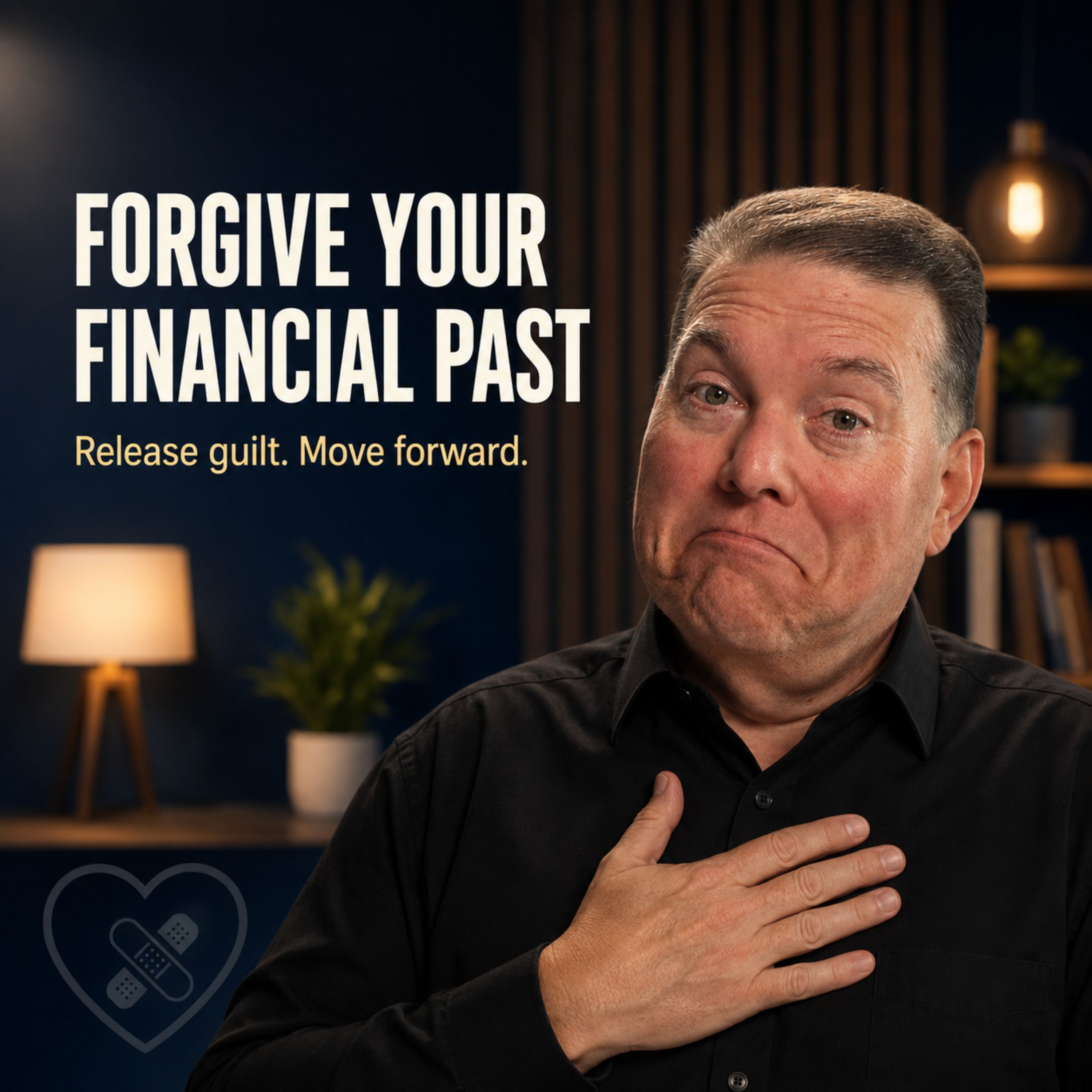
If God has already forgiven you and you refuse to, you've set your own judgment above his verdict. That doesn't feel like arrogance, it feels like humility, but it isn't. Self-forgiveness isn't a feeling you wait for. It's a decision you make repeatedly until the feeling catches up.
Faith moment
Romans 8:1 says there is no condemnation for those who belong to Christ. Read the word "no" slowly. Not less, not manageable, none. That verse doesn't erase the loss. It erases the verdict. You can carry real consequences without carrying condemnation, and those are two different things.
If you've been treating your worst day as evidence about who you are, it was only ever evidence about who someone else was. Put the file down. It was never yours to carry.
Today's win
Write down the harshest sentence you say to yourself about money. The exact words, five minutes. Underneath it, write one question: does this give me something to do? If yes, write the action next to it, that's conviction, go do it. If it only makes you feel something, draw a line through it. That's shame, and it didn't come from God.
Got a story of your own? Send it in at financiallyconfidentchristian.com/question, or leave a voicemail at financiallyconfidentchristian.com/voicemail.
Christian Financial Consulting
Ralph V. Estep, Jr. is a Delaware-based licensed accountant, author, rancher, and media host with more than 30 years of experience in finance, taxation, and small-business leadership. As the founder of Saggio Accounting+PLUS and the creator of the Ask Ralph Media network, Ralph helps entrepreneurs, creators, and everyday families replace money confusion with clarity, confidence, and practical next steps—without shame and without hype.
Ralph’s work blends deep professional expertise with a coach’s mindset and a communicator’s heart. He has held leadership roles across public accounting, financial institutions, law firms, and technology organizations, bringing a rare combination of traditional accounting rigor and modern systems thinking to the people he serves. A graduate of the University of Delaware and Wilmington University (MBA), Ralph is known for turning complex money topics into simple, repeatable frameworks that help people make wiser decisions and build lasting financial stability.
Through Ask Ralph Media, Ralph hosts multiple shows designed to meet people where they are and guide them forward. He is the host of Financially Confident Christian, a daily, faith-based show offering warm, pastoral encouragement for listeners who want peace and practical wisdom with their finances.
He also hosts Truth Unveiled with Ralph, a weekly program that contrasts cultural pressure with biblical truth and invites listeners into deeper spiritual and practical alignment. For small business owners, Ralph leads Grit and Growth Business, spotlighting real sto… Read More
How to Stop Worrying About Money When You're Starting Over Later in Life