
Student Loan in Default? Here's What Happens Before Wage Garnishment Starts

Student Loan in Default? Here's What Happens Before Wage Garnishment Starts
A letter shows up with the Department of Education's name on it. Your student loan is officially in default, and wage garnishment is starting again for the first time in five years. Is your next paycheck about to come up short?
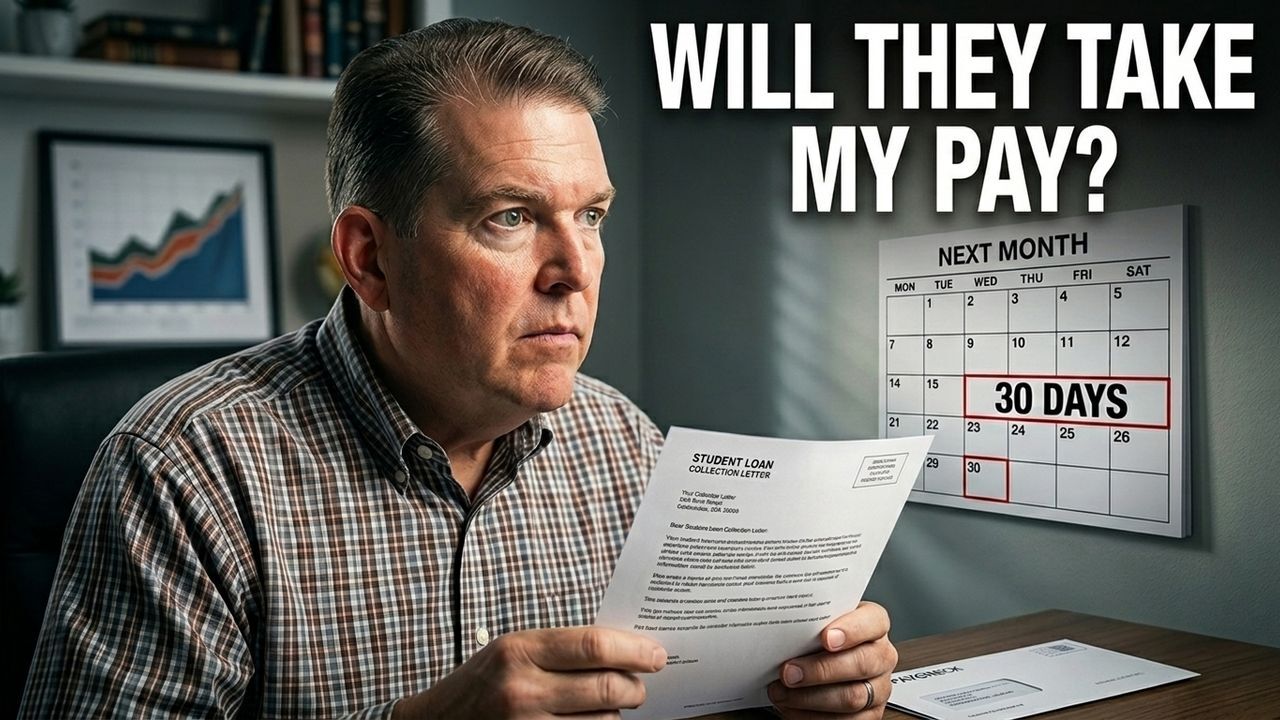
Millions of borrowers are getting this exact letter right now. Payments paused back in 2020, life kept moving, a new job, a move, maybe a new baby, and suddenly a letter shows up like the last five years didn't happen. Here's the good news: default has a specific process with specific deadlines. It isn't a mystery, and there's a real, known path out.
What Default Actually Means
A loan becomes delinquent the day after one missed payment. Default happens after 270 days of missed payments, roughly nine months. Once a loan is in default, the full balance becomes due immediately, you lose eligibility for deferment and forbearance, and the loan gets transferred from your regular servicer to the Department's Default Resolution Group or a collection agency.
Default is a stage with a start date. It isn't the end of the story.
The Garnishment Timeline
The government can garnish up to 15 percent of disposable pay without going to court. Tax refunds and Social Security benefits can be offset too. But by law, you must get at least 30 days written notice before any of that happens, and you have the right to request a hearing during that window.
Nothing happens the moment a default letter arrives. Thirty days notice means thirty days of runway, and that time is meant to be used.
Confirm Who Actually Holds Your Loan
Before calling any number printed on the letter, log in to StudentAid.gov and check the "My Loan Servicers" section. This tells you exactly who to call, rather than relying on a number from a letter that could be a scam. Verifying through the official site protects you from people pretending to be collections agents.
Verify the source before handing anyone your information.
Two Ways Out of Default
Rehabilitation: Make nine on-time payments within ten consecutive months. Payments are based on income and can be as low as a few dollars a month. Once the ninth payment posts, the default comes off and the loan moves back to regular servicing.
Consolidation: Faster, but the default notation can still show up on your credit report. Rehabilitation is generally limited to once per loan, so it's worth knowing which option actually fits your situation before starting either one.
Nine payments is a plan. A default letter alone is just a warning.
Call Before the 30 Days Run Out
Contact the loan holder or the Department's Default Resolution Group directly. Ask about rehabilitation and what income documentation is needed to set a payment amount. Acting inside the 30-day window can stop garnishment before it ever starts. This is a phone call, not a legal battle, and the best time to make it is before the deadline, not after.
A Word of Encouragement
Losing track of a loan during years when the whole country lost track of normal isn't a moral failure. Faith doesn't promise the debt disappears or that the process will feel simple. What it does promise is that wisdom is available, and that acting beats sitting frozen in fear.
Proverbs 22:3 puts it plainly: "A prudent person foresees danger and takes precautions. The simpleton goes blindly on and suffers the consequences." Confirming your servicer and making that first call is exactly the kind of precaution this verse points toward.
Today's Win
Log in to StudentAid.gov and confirm who currently holds your loan. Check the "My Loan Servicers" section and write down the phone number listed there, not just the one on the letter. Knowing exactly who to call turns a scary letter into a concrete next step.
Bible Verse
"A prudent person foresees danger and takes precautions. The simpleton goes blindly on and suffers the consequences." — Proverbs 22:3 (NLT)
The Bottom Line
A default letter is a starting point, not a final verdict. You have a 30-day notice window and two clear paths forward, rehabilitation or consolidation. Confirm your loan servicer this week, and call before the 30 days run out rather than waiting for the deadline to arrive.
Have a financial question of your own? Send it in at financiallyconfidentchristian.com/question, or leave a voicemail at financiallyconfidentchristian.com/voicemail and Ralph might answer it on the show.

Christian Financial Consulting
Ralph V. Estep, Jr. is a Delaware-based licensed accountant, author, rancher, and media host with more than 30 years of experience in finance, taxation, and small-business leadership. As the founder of Saggio Accounting+PLUS and the creator of the Ask Ralph Media network, Ralph helps entrepreneurs, creators, and everyday families replace money confusion with clarity, confidence, and practical next steps—without shame and without hype.
Ralph’s work blends deep professional expertise with a coach’s mindset and a communicator’s heart. He has held leadership roles across public accounting, financial institutions, law firms, and technology organizations, bringing a rare combination of traditional accounting rigor and modern systems thinking to the people he serves. A graduate of the University of Delaware and Wilmington University (MBA), Ralph is known for turning complex money topics into simple, repeatable frameworks that help people make wiser decisions and build lasting financial stability.
Through Ask Ralph Media, Ralph hosts multiple shows designed to meet people where they are and guide them forward. He is the host of Financially Confident Christian, a daily, faith-based show offering warm, pastoral encouragement for listeners who want peace and practical wisdom with their finances.
He also hosts Truth Unveiled with Ralph, a weekly program that contrasts cultural pressure with biblical truth and invites listeners into deeper spiritual and practical alignment. For small business owners, Ralph leads Grit and Growth Business, spotlighting real sto… Read More
Grocery Prices Keep Rising: Here's the Real Reason and What to Do About It