
When your parent is changing, and nobody else seems to notice

You notice things other people don't. When your parent is changing, and nobody else seems to notice. Your mom seems fine in conversation. She laughs. She answers questions. People at church have no idea anything is wrong. But you see something else. A financial decision that doesn't make sense. An accusation that came out of nowhere. A pattern where she's isolating herself, blaming people who actually love her, making choices she would never have made five years ago.
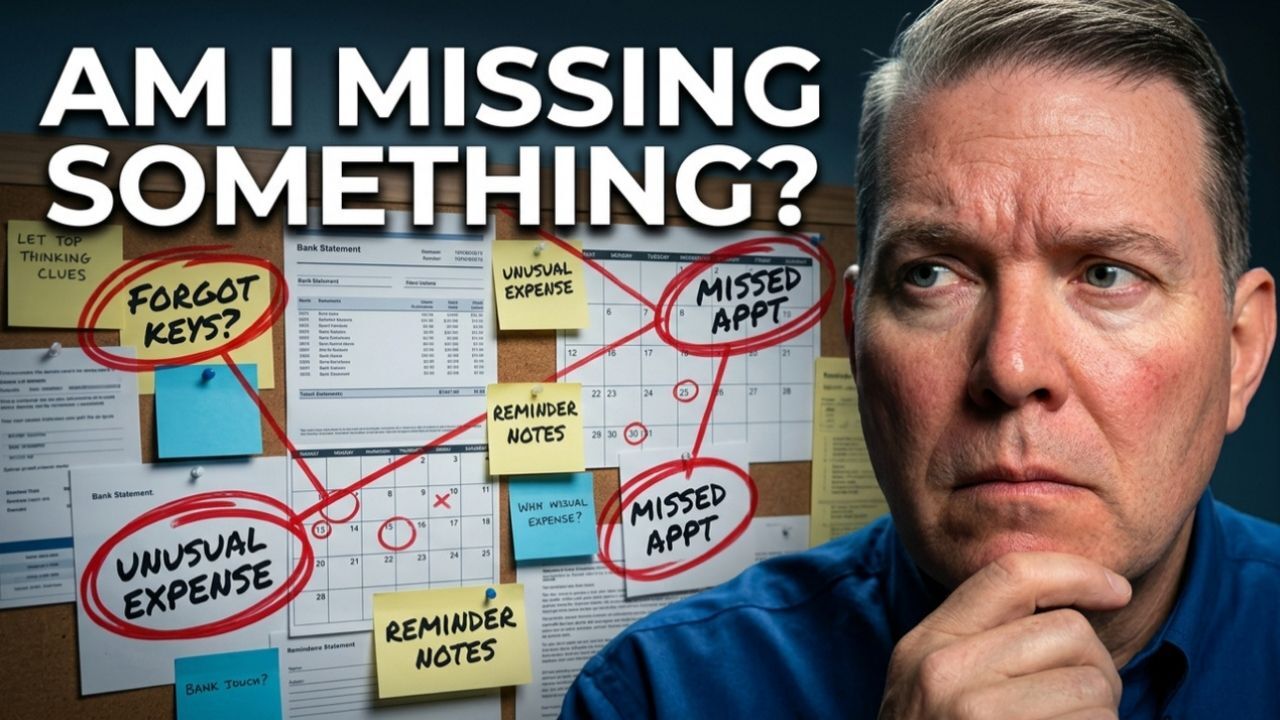
And nobody believes you because she looks fine.
That's the hardest part. You're watching something happen. You're scared. And everyone else thinks you're overreacting.
If you're living with this, I want you to know something first: you're not wrong. Trust what you're seeing.
The gray area nobody talks about
This isn't a crisis yet. There's no diagnosis. Nobody's in the hospital. But there's a shift happening, and only you seem to see it. Memory isn't really the main thing. It's judgment. It's personality. It's the way she reacts to things, the impulsive decisions, the way she's starting to withdraw from people.
A listener reached out about her mother. Independent, sharp, still living on her own. And over the past year or two, financial decisions started getting worse. Impulse purchases that don't make sense. Accusations directed at people who've been helping her. Resistance to conversations about anything that matters.
The listener is caught between two things: respecting her mother's right to make her own decisions and the fear that something bad is coming. Not maybe. When.
That tension is real. And it's lonely because nobody else is seeing what you're seeing.
What you're actually observing
Stop trying to prove dementia or name a diagnosis. You're not a doctor. Your job right now is to document what you're actually seeing.
Write down specific incidents. Not "Mom is confused." Write down: Tuesday, Mom called and accused me of stealing from her. Thursday, Mom spent $2,000 on something she doesn't need and doesn't remember buying. Saturday, Mom forgot we had plans we'd confirmed twice.
What you're tracking isn't memory. It's judgment. Its personality shifts. It's the gap between who she was and who she's becoming.
Keep a simple log. Dates. What happened. Impact if it's financial. Include emails, receipts, messages, whatever captures the moment without editing it.
This seems cold. It's not. This is love. Because later, when you talk to a doctor or a lawyer, they won't care about your feelings. They'll care about facts.
The first real conversation
Don't ambush your parent. Don't gang up with siblings. Have a quiet conversation with your parent alone, early.
Start with what you've observed, not what you think it means. "Mom, I've noticed you've mentioned that I stole from you a few times now. That scares me because that's not something you would have said before. Can we talk about what's going on?"
Don't argue about whether it's true. Don't get defensive. You're not trying to win. You're trying to open a door.
Your parent may deny it. May get angry. May refuse to talk. That's okay. You're planting a seed. You're on record. You've said it out loud.
The next step: her doctor
Call your parents' primary care doctor. Do this alone. Don't tell your parent you did it.
Tell the doctor what you've observed. Be specific. "Over the past year, Mom has made financial decisions that are out of character. She's accused family members of things they didn't do. She's forgetting appointments. And she's resistant to talking about any of this."
The doctor may want to see her. May suggest testing. May say nothing yet. That's between them and your parent.
But you've told someone. You've made the record official. You're not alone with this anymore.
If your parent resists
They probably will. Nobody wants to admit something's wrong. Nobody wants to lose independence or face a diagnosis.
You can't force your parent to get tested. You can't make her see a doctor. You can suggest it. You can be persistent. But ultimately, it's her choice, and you have to live with that.
What you can do is prepare. Talk to an elder law attorney. Not to go to court, but to understand what your options actually are if things get worse. Know what a power of attorney looks like. Know when guardianship becomes necessary. Know what Adult Protective Services can and can't do.
Know the landscape before you're in crisis. It helps.
Prepare for resistance from your family
Your sibling may think you're overreacting. Your other parent may be in denial. People will defend your aging parent because they love her. That doesn't make you wrong.
Bring them your documentation. Show them the incidents. Don't argue about what it means. Just present what happened.
If they still don't see it, that's their choice. You still see it. You still have to act.
The hardest part: your own heart
This is going to be heavy. There will be moments when your parent accuses you of things you didn't do. Where she blames you for trying to control her. Where she pushes you away.
That's the disease, not your parent. But it won't feel that way.
You may feel guilty. Like you should do more. Like, you should be able to fix it. You can't. This is grief. The parent you knew is changing, and you're grieving that while it's still happening.
Let yourself grieve. Talk to someone. A therapist, a pastor, a friend who gets it. Don't carry this alone.
What to do this week
If you're noticing these changes in your parent:
First, write down three specific incidents you've observed. Not interpretations. Just facts.
Second, call your parents' doctor. Have the conversation. You don't need her permission.
Third, talk to an elder law attorney. Ask about power of attorney and what you'd need to do if it became necessary. It costs a little money. It saves enormous problems later.
That's it. That's your start.
The spiritual reality
God sees what you're seeing. He knows you're scared. He knows you're trying to do right by someone you love while they're changing in front of you.
This is one of the hardest things you can do. It requires you to be both strong and gentle. To respect your parent while protecting them from their own declining judgment. To act when you want to deny. To grieve while you're still in the middle of it.
That takes more courage than almost anything else.
If you're dealing with this, you're not overreacting. Your observations matter. And you need help.
Reach out at financiallyconfidentchristian.com/question if you're carrying this weight. Your story matters, and there are people who understand what you're going through.
Stay financially savvy.

Christian Financial Consulting
Ralph V. Estep, Jr. is a Delaware-based licensed accountant, author, rancher, and media host with more than 30 years of experience in finance, taxation, and small-business leadership. As the founder of Saggio Accounting+PLUS and the creator of the Ask Ralph Media network, Ralph helps entrepreneurs, creators, and everyday families replace money confusion with clarity, confidence, and practical next steps—without shame and without hype.
Ralph’s work blends deep professional expertise with a coach’s mindset and a communicator’s heart. He has held leadership roles across public accounting, financial institutions, law firms, and technology organizations, bringing a rare combination of traditional accounting rigor and modern systems thinking to the people he serves. A graduate of the University of Delaware and Wilmington University (MBA), Ralph is known for turning complex money topics into simple, repeatable frameworks that help people make wiser decisions and build lasting financial stability.
Through Ask Ralph Media, Ralph hosts multiple shows designed to meet people where they are and guide them forward. He is the host of Financially Confident Christian, a daily, faith-based show offering warm, pastoral encouragement for listeners who want peace and practical wisdom with their finances.
He also hosts Truth Unveiled with Ralph, a weekly program that contrasts cultural pressure with biblical truth and invites listeners into deeper spiritual and practical alignment. For small business owners, Ralph leads Grit and Growth Business, spotlighting real sto… Read More

CD Interest Rates Are High Right Now: Is a Certificate of Deposit Right for You?